Why Everyone Is Talking About Water Reuse in 2026 (And Why Your Utility Bill Needs It)
In the world of industrial facility management, 2026 has emerged as a watershed year for operational efficiency. As utility costs continue to experience unprecedented volatility and global water scarcity moves from a distant concern to a local regulatory reality, facility managers and business owners are forced to re-evaluate their fundamental consumption patterns. In today’s competitive market, the ability to reclaim and repurpose resources is no longer a niche environmental initiative; it is a vital strategy for fiscal survival.
For high-volume operations: ranging from luxury hotels and regional hospitals to large-scale commercial laundries: water has traditionally been a "use-and-discard" commodity. However, the introduction of advanced water reuse technology has shifted this paradigm. By integrating sophisticated filtration and recycling systems into on-premise laundry (OPL) operations, businesses are seeing a dramatic reduction in overhead, proving that sustainability and profitability are, in fact, inextricably linked.
The Escalating Necessity of Water Conservation
The shift toward water reuse is driven by a convergence of economic and environmental pressures that have reached a boiling point in 2026. Industrial water rates across the country have risen at a pace that far outstrips general inflation, largely due to the aging infrastructure of municipal systems and the increasing costs of wastewater treatment. For facilities operating 24/7, these utility bills represent a significant and often unpredictable percentage of total operating expenses.
Furthermore, regulatory bodies have intensified their scrutiny of industrial discharge. Stricter standards for wastewater effluent mean that businesses are not only paying more for the water they consume but are also facing higher surcharges for the water they send down the drain. This dual-cost pressure has made the implementation of OPL laundry solutions that incorporate water recycling an essential investment for any forward-thinking organization.
Understanding Water Reuse Technology in 2026
The technology behind water reuse has matured significantly over the last few years. While early recycling systems were often cumbersome and required high maintenance, the 2026 generation of industrial laundry equipment is designed for seamless integration and high-modality performance.
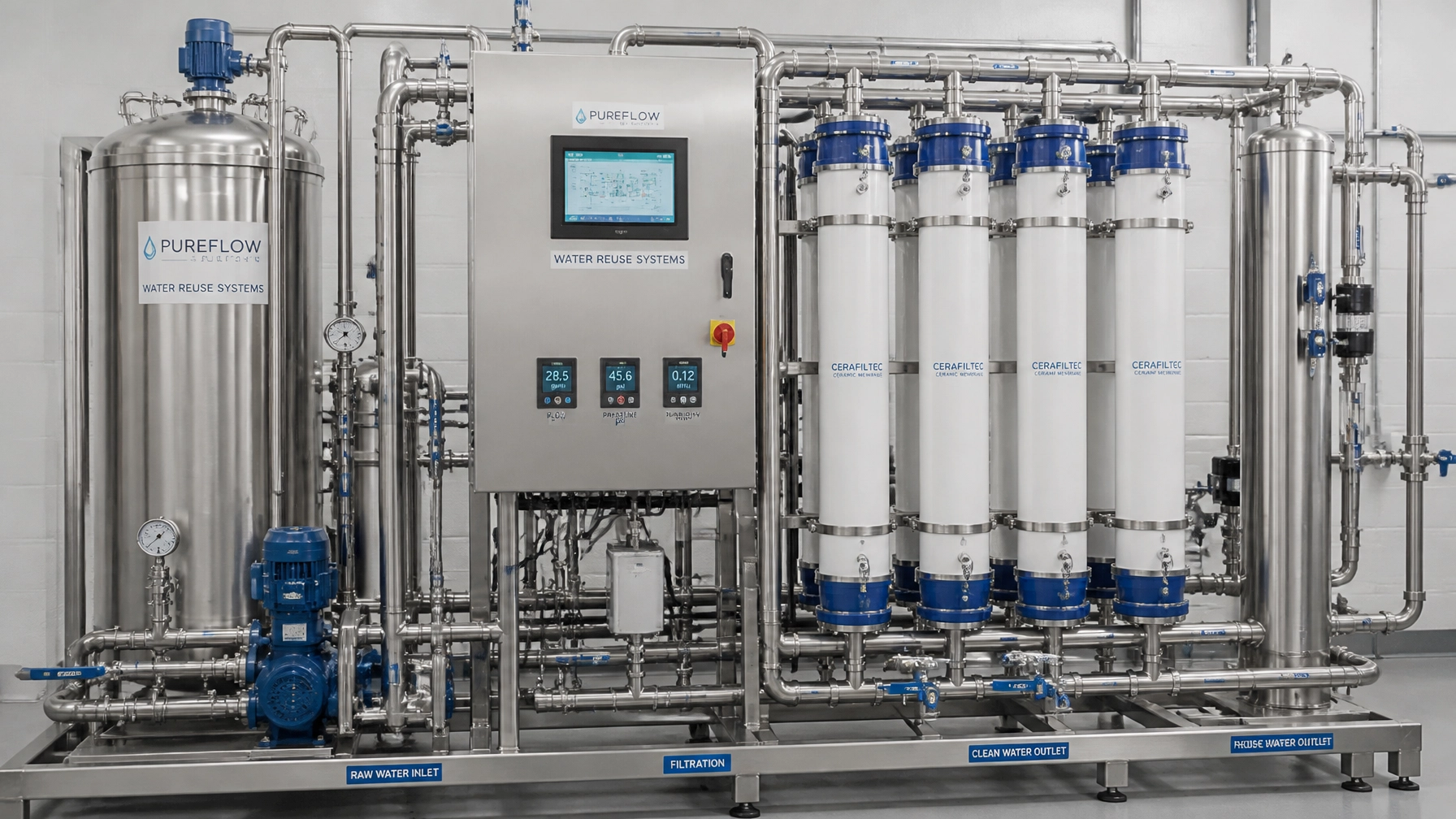
Modern systems typically employ a combination of ceramic filtration, membrane technology, and ozone treatment to achieve remarkable results. These systems are capable of recovering between 75% and 85% of wash water, with some specialized closed-loop configurations reaching as high as 95% reuse.
The Role of Advanced Filtration

At the heart of these systems are high-efficiency filtration units. Unlike traditional sand filters, modern ceramic membranes can filter out microscopic contaminants, including oils, microplastics, and heavy metal residues, without the need for constant replacement. This ensure that the recycled water is not just "clean enough" for reuse, but often exceeds the quality of the original municipal supply in terms of softness and consistency.
Thermal Energy Recovery
A crucial, yet often overlooked, benefit of water reuse is the preservation of thermal energy. In a standard laundry cycle, a vast amount of energy is expended to heat water to the required temperatures for sanitization and soil removal. When this water is discarded, that energy is literally flushed away. Water reuse systems capture the heated water, filter it, and return it to the machine while it is still warm. This significantly reduces the load on water heaters, leading to energy savings that are just as impactful as the water savings themselves.
The Strategic Advantage of OPL Laundry Solutions
As businesses look to regain control over their operational costs, there is a renewed focus on OPL laundry solutions. Moving laundry operations in-house: or optimizing existing on-premise facilities: allows for a level of precision and oversight that third-party services simply cannot match.
1. Direct Control Over Costs
When a facility relies on an external commercial laundry service, they are at the mercy of that provider’s pricing structure, which includes the provider’s own utility costs, labor, transportation, and profit margins. By utilizing an on-premise setup equipped with water-saving technology, the facility captures 100% of the savings. The reduction in water and energy consumption directly lowers the facility's utility bill, providing a much clearer and more favorable return on investment (ROI).
2. Enhanced Linen Longevity
The quality of the water used in the washing process has a direct correlation with the lifespan of your linens. High-end filtration systems used in water reuse provide consistent water quality, reducing the mineral buildup that can lead to fabric degradation and greying. When paired with high-quality industrial washers, OPL operations can extend the life of their linens by up to 30%, further reducing replacement costs.

3. Operational Agility
In 2026, the ability to pivot quickly is a competitive necessity. Whether it’s an unexpected surge in hotel occupancy or a heightened need for sanitization in a healthcare setting, an OPL facility provides the flexibility to adjust wash cycles and throughput in real-time. This eliminates the dependency on external pickup schedules and reduces the inventory of linens required to be kept on-hand.
Quantifying the Financial Impact
The decision to implement water reuse technology is ultimately a financial one. For an industrial laundry facility, the utility bill is often the second or third largest expense after labor. Let’s examine the logic of the savings:
- Water Volume Reduction: By recycling 80% of wash water, a facility that previously used 10,000 gallons a day now only requires 2,000 gallons of fresh water. This is an 80% reduction in water purchase costs.
- Sewer Surcharge Mitigation: Because the volume of water sent to the sewer is drastically reduced, the associated discharge fees: often calculated based on incoming water volume: plummet as well.
- Energy Efficiency: Since the recycled water is already pre-heated, the energy required to reach wash temperatures can be reduced by up to 50%. According to industry data, this can shave thousands of dollars off monthly gas or electric bills for larger operations.
At Wash IQ, we specialize in helping businesses identify these specific opportunities through our Efficiency Reports. These comprehensive audits analyze every aspect of your laundry operation: from water and chemical usage to equipment performance: to provide a data-driven roadmap for cost reduction.
Integrating Chemicals and Equipment for Maximum Efficiency
Efficiency is a holistic pursuit. It is not enough to simply recycle water; the chemicals used in the wash must be compatible with the reuse system and optimized for the specific soil types of the facility.

Modern OPL laundry solutions include advanced chemical dispensing systems that ensure the exact amount of detergent, sanitizer, and softener is used. Over-sudsing or excessive chemical use can hinder the efficiency of filtration membranes. Therefore, a synchronized approach between equipment and chemistry is vital. At Wash IQ, our expertise in Chemical Cost Optimization ensures that your reuse system remains functional and effective, preventing premature membrane fouling and ensuring the highest quality of finished product.
Sustainability as a Pillar of Brand Integrity
In 2026, corporate responsibility is a significant driver of consumer and client preference. Organizations that can demonstrate a measurable commitment to sustainability: such as a 60% reduction in their water footprint: are viewed with greater trust and authority. This is particularly important for the hospitality industry, where "green" certifications can be a deciding factor for corporate event planners and eco-conscious travelers.
Implementing water reuse is a declarative statement of a company’s leadership in environmental stewardship. It moves the conversation from vague promises to concrete data, allowing businesses to market their operations as truly sustainable without sacrificing the luxury or hygiene standards their customers expect.
Maintenance: The Key to Long-Term Reliability
The complexity of modern water reuse and industrial laundry equipment requires a high level of technical expertise to maintain. Inconsistent maintenance can lead to downtime, which is the ultimate enemy of efficiency.
With over 50 years of industry experience, the team at Wash IQ understands that reliability is paramount. We provide comprehensive repair and maintenance services for all brands of laundry equipment. Our approach is proactive; we focus on maintaining peak performance to prevent the small issues that lead to major utility spikes. Our 3-year parts and labor warranty is a testament to the confidence we have in the solutions we provide, ensuring that your investment in efficiency is protected for the long term.

Conclusion: Preparing for the Future of Laundry
The trend of water reuse in 2026 is not a passing fad; it is the natural evolution of an industry forced to adapt to a resource-constrained world. For any business that operates high-volume laundry, the question is no longer if you should adopt these technologies, but when.
Delaying the transition to more efficient OPL laundry solutions is effectively choosing to accept unnecessary costs. By partnering with experts like Wash IQ, businesses can leverage decades of experience to design, implement, and maintain a laundry operation that is as fiscally sound as it is environmentally responsible. From initial design services to ongoing technical support, we provide the tools necessary to master your facility's efficiency and secure your competitive edge in the years to come.