Struggling For Staff? 10 Automation Ideas for Industrial Laundry Equipment
In the world of industrial facility management, the ability to maintain a consistent and reliable supply of clean linens is essential to operational success. However, in today’s competitive market, commercial laundries are facing a pervasive and growing challenge: a significant labor shortage. Industry data from 2026 indicates that approximately 70% of laundry operations are currently struggling to recruit and retain sufficient personnel to meet production demands. This "labor market disruption" is no longer a temporary hurdle but a structural shift that necessitates a strategic pivot toward advanced technology.
For businesses operating in the hospitality, healthcare, and commercial sectors, the reliance on manual labor for repetitive tasks is becoming a liability. Investing in automated industrial laundry equipment is no longer a luxury for large-scale plants; it is a vital necessity for any facility seeking to stabilize costs and maintain throughput. By integrating smart, software-driven solutions, managers can reduce their dependence on an unstable labor pool while simultaneously enhancing the precision and quality of their output.
At Wash IQ, we understand that efficiency is the cornerstone of a profitable laundry operation. With over 50 years of industry expertise, we help businesses navigate these staffing challenges by providing cutting-edge commercial washers and dryers and comprehensive automation strategies. Below, we explore ten critical automation ideas designed to mitigate labor shortages and optimize your facility.
1. Automated Chemical Injection Systems
One of the most labor-intensive and error-prone aspects of traditional laundry management is the manual measurement and distribution of detergents and sanitizers. Automated chemical injection systems eliminate this variable entirely. These systems are programmed to deliver precise doses of chemicals directly into the wash cycle based on the specific load type and soil level.
Not only does this reduce the need for constant human supervision, but it also ensures consistent results. Over-sudsing or under-cleaning: often the results of human error: lead to costly re-washes and equipment wear. By implementing chemical cost optimization, facilities can protect their bottom line while freeing up staff to focus on higher-value tasks.

2. IoT and Remote Real-Time Monitoring
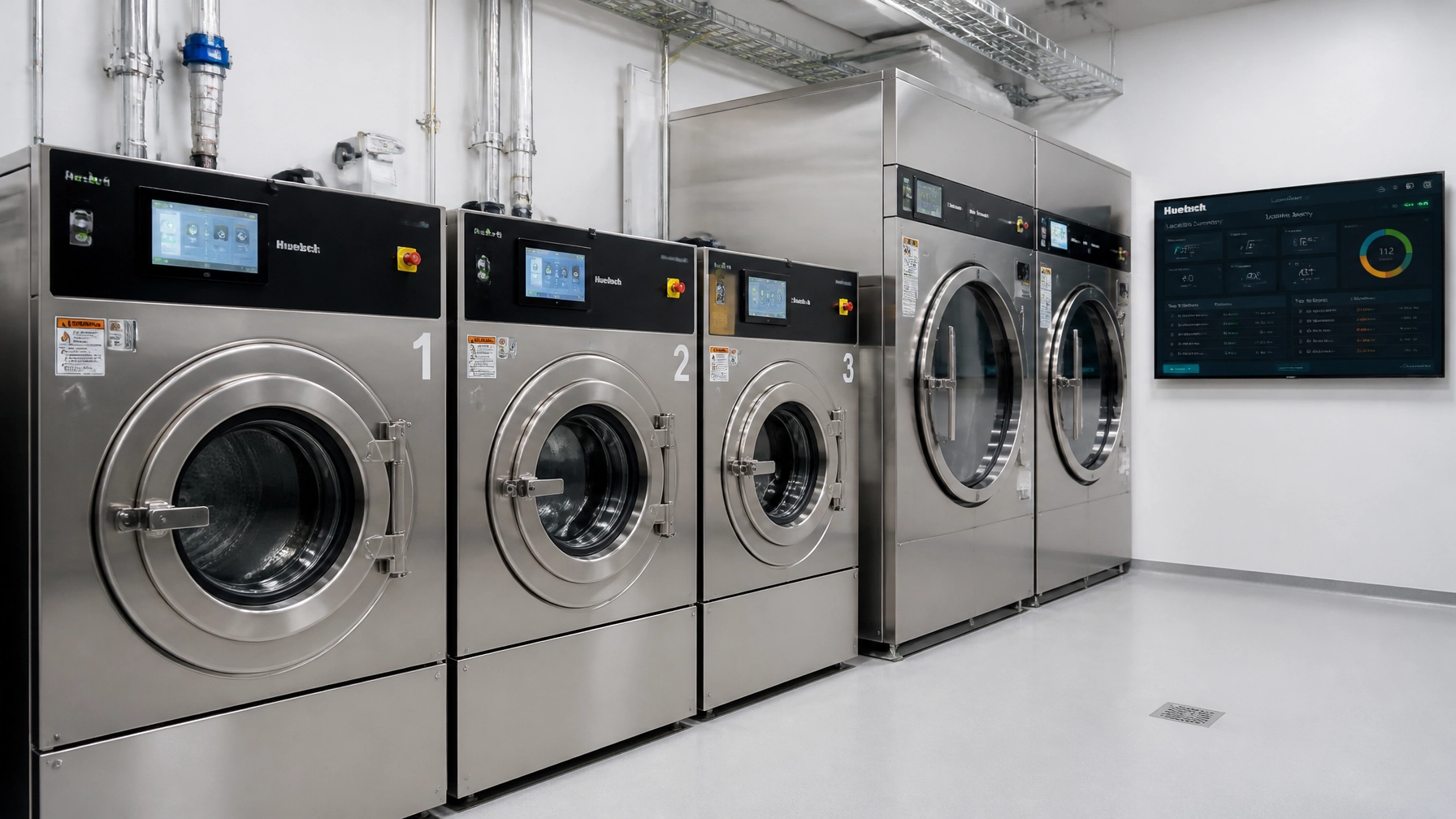
The integration of the Internet of Things (IoT) into industrial laundry equipment has revolutionized how facility managers oversee production. Modern machines now feature interconnected platforms that allow for remote monitoring via smartphones or centralized dashboards. This connectivity enables a single supervisor to manage multiple locations or a massive floor of machines without needing a physical presence at every station.
Real-time data tracking provides insights into machine utilization, cycle times, and water usage. This level of oversight is crucial for identifying bottlenecks before they impact delivery schedules, effectively allowing a smaller team to do the work of a much larger workforce through enhanced coordination.
3. Automated Feeding and Ironing Systems
Finishing is traditionally the bottleneck of any industrial laundry process. Manually feeding, ironing, and folding large volumes of bedsheets or table linens requires a substantial headcount. Automated flatwork ironers and feeding systems can dramatically increase throughput by streamlining the transition from the dryer to the finished stack.
These machines are designed for high-speed operation and consistent quality, ensuring that every piece of linen meets professional standards. By reducing the number of manual "touches" required for each textile, facilities can significantly lower their labor costs per kilogram of linen processed.

4. Moisture-Sensing Drying Technology
Over-drying is a common problem in commercial laundry that leads to wasted energy, increased labor time, and shortened fabric life. Automated moisture-sensing technology in commercial dryers detects when the linens have reached the optimal level of dryness and automatically terminates the cycle.
This automation prevents staff from having to manually check loads or reset timers, ensuring that dryers are immediately available for the next batch. The result is a more efficient workflow that minimizes downtime and reduces the physical demands on the staff tasked with unloading equipment.
5. Automated Stacking and Folding
Folding remains one of the most tedious and time-consuming tasks in the laundry room. Automated folding and stacking machines can handle everything from small towels to large-scale linens with mechanical precision. These systems can be integrated directly with ironers to create a seamless "wash-to-finish" line.
Reducing the manual labor involved in folding not only addresses the staff shortage but also improves the ergonomics of the workplace, reducing employee fatigue and the risk of repetitive motion injuries.
6. Smart Load Optimization and Cycle Selection
Inconsistent load sizes are a major drain on efficiency. Modern industrial laundry equipment now features AI-driven load sensing that automatically adjusts water levels, agitation, and cycle duration based on the weight of the linens.
This automation removes the guesswork from the operator’s hands. By ensuring that every cycle is optimized for the specific load, facilities can maximize machine capacity and minimize the number of cycles required each day, allowing a leaner staff to manage a higher volume of laundry.
7. Predictive Maintenance and Error Alerts
Equipment downtime is the enemy of productivity, especially when technicians are in short supply. Predictive maintenance automation uses sensors to monitor the health of critical components like motors and bearings. When a potential issue is detected, the system sends an automated alert to the maintenance team or a service provider like Wash IQ.
By addressing mechanical issues before they lead to a full breakdown, facilities can maintain a continuous flow of production. This proactive approach is vital in an era where skilled repair labor is increasingly scarce, as it prevents the "emergency" scenarios that often disrupt thin staffing schedules.
8. Ozone Laundry Technology Integration
Ozone laundry systems automate the disinfection process by injecting ozone gas into the wash water. This technology is highly effective at killing bacteria and viruses at lower water temperatures and with fewer chemicals.
From a labor perspective, ozone systems can shorten cycle times and reduce the need for aggressive pre-treating of stains. This efficiency allows staff to move loads through the wash process faster, increasing the total capacity of the facility without requiring additional shifts.
9. Space-Saving Multi-Unit Automation
For facilities with limited square footage, labor efficiency is often hampered by poor layout. High-capacity stack dryer units allow for increased throughput in a smaller footprint. By doubling the drying capacity per square foot, facilities can optimize their workflow and reduce the walking distance for employees moving between machines.
These units are engineered for high-volume use and feature the same advanced digital controls as standalone models, ensuring that space constraints do not become a barrier to technological advancement.

10. Integrated Facility Management Software
The ultimate form of automation is the integration of all laundry operations into a single software suite. This software schedules loads, allocates machines based on priority, and tracks employee productivity in real-time. By automating the administrative and scheduling side of the laundry room, managers can eliminate the confusion and miscommunication that often plague understaffed teams.
Software-driven scheduling ensures that no machine sits idle and that every staff member is utilized effectively, providing a logical progression of work that keeps the facility running like clockwork.
Conclusion: Securing Your Operation’s Future
In today’s challenging labor environment, the choice to automate is a choice to remain competitive. The integration of advanced industrial laundry equipment and smart software is the only sustainable way to overcome the persistent staff shortages facing the industry. By focusing on operational excellence and technological investment, facility managers can ensure long-term reliability and success.
At Wash IQ, we are committed to being your one-stop shop for all laundry needs. Whether you require expert repair services or a complete facility redesign with the latest commercial washers and dryers, our team has the expertise to help you achieve exceptional results. Contact us today to learn how our 3-year parts and labor warranty and custom efficiency reports can transform your operation.