How to Integrate IoT With Your Commercial Washers and Dryers to Stop Downtime Before It Starts
In today’s competitive market, operational efficiency is no longer a luxury but a fundamental requirement for success. For industrial laundry facilities, hotels, and healthcare institutions, the reliability of laundry equipment is the backbone of daily operations. In the world of high-volume processing, even a few hours of unplanned equipment failure can lead to cascading delays, increased labor costs, and a significant blow to the bottom line.
The emergence of the Internet of Things (IoT) has introduced a transformative approach to facility management. By integrating IoT sensors and connectivity into commercial washers and dryers, businesses can transition from a reactive "break-fix" model to a sophisticated predictive maintenance strategy. This integration is essential for those seeking to eliminate the volatility of equipment downtime and secure long-term operational excellence.
The Critical Role of IoT in Industrial Laundry
Traditional maintenance schedules often rely on static timelines or manual inspections, which can frequently miss the early warning signs of mechanical fatigue. IoT technology bridges this gap by providing real-time visibility into the internal health of every machine in your fleet.
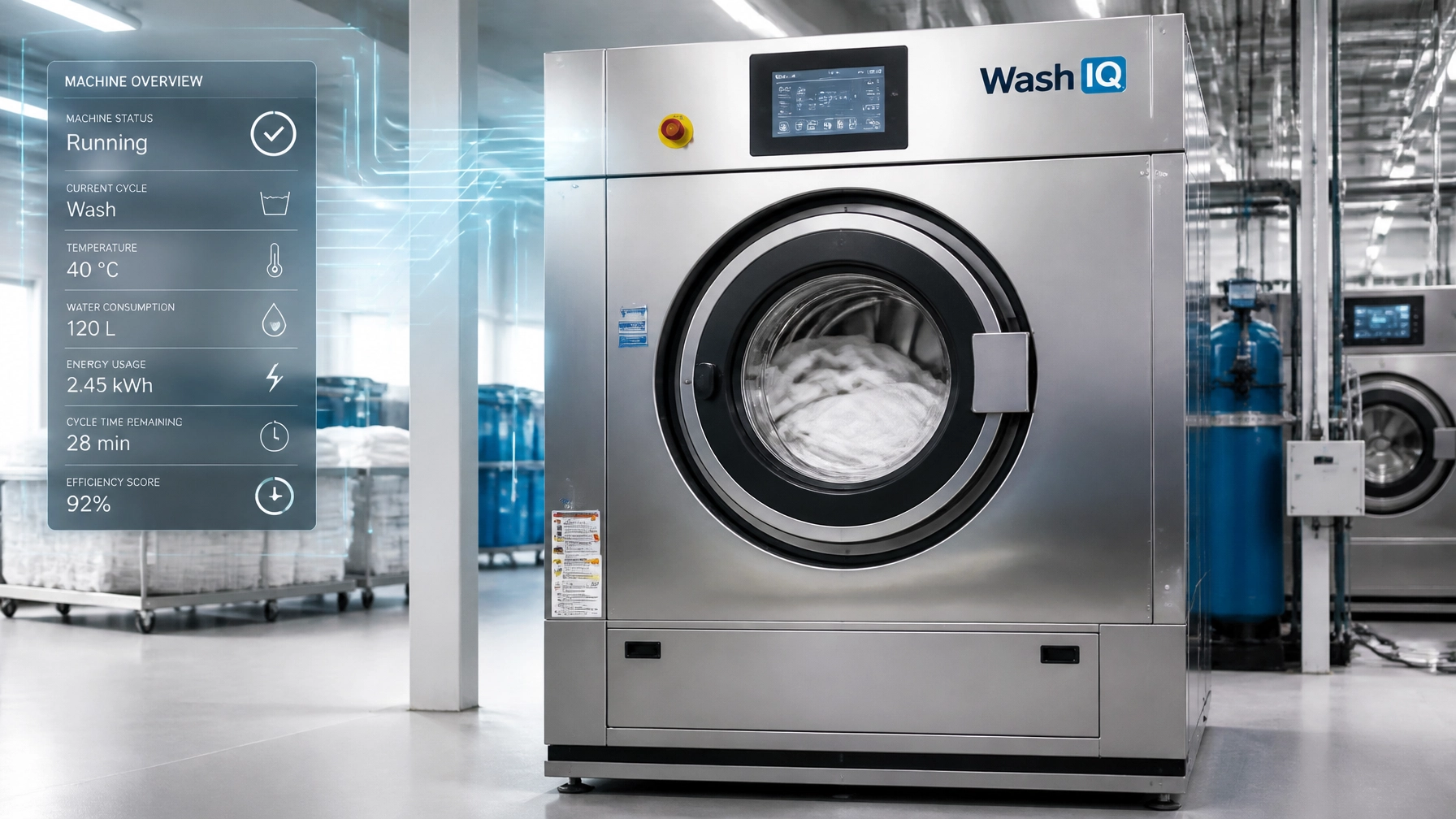
By capturing data on vibration, temperature, water flow, and motor current, an IoT-enabled system can identify anomalies that precede a total breakdown. This foresight is vital for maintaining a consistent workflow and ensuring that your facility operates at peak capacity without the looming threat of catastrophic failure.

Step-by-Step Integration: A Blueprint for Connectivity
Implementing an IoT solution requires a structured, logical progression to ensure the resulting data is both accurate and actionable. For businesses managing complex laundry operations, following a standard integration framework is the most effective way to achieve a high return on investment.
1. Comprehensive Equipment Audit
The first step is a thorough audit of your current inventory. Whether you operate a single-location boutique hotel or a large-scale hospital laundry, you must identify the age, model, and duty cycle of your equipment. Critical components such as bearings, pumps, and heating elements should be prioritized for monitoring.
2. Sensor Selection and Hardware Installation
For existing machinery, retrofit sensors are the standard solution. These devices monitor specific parameters:
- Vibration Sensors: Essential for detecting drum bearing wear or motor misalignment.
- Temperature Probes: Vital for ensuring dryers and wash cycles reach the required thermal thresholds for sanitation.
- Current Sensors: Important for identifying motor strain or electrical inconsistencies before they lead to motor failure.
For those looking to upgrade, modern units often come with built-in smart controllers that already expose this operational data, simplifying the integration process.
3. Establishing Connectivity Gateways
Once sensors are installed, the data must be transmitted securely. An IoT gateway acts as the central hub, collecting signals from various machines and routing them to a centralized management platform via Wi-Fi, cellular, or hardwired Ethernet connections. Reliability in this layer is crucial, as any gap in data transmission could lead to a missed alert.

4. Baseline Data Collection and Normalization
Before the system can predict failures, it must understand "normal." Operating the system in a monitor-only phase for several weeks allows the platform to establish baselines for every cycle type. This data normalization is essential for reducing false positives and ensuring that alerts are triggered only by genuine anomalies.
5. Deployment of Predictive Analytics
The true power of IoT lies in the analytics layer. By applying rules-based thresholds and machine learning models, the system can detect patterns that signify impending failure. For instance, a subtle but consistent increase in motor current over several days: combined with a slight rise in vibration: can signal a pump failure weeks before it occurs.
The ROI of Foresight: Preventing Downtime
Integrating IoT into your laundry operations is a strategic move that addresses several core business challenges simultaneously. The primary benefit is the dramatic reduction in unplanned downtime. By identifying issues early, maintenance can be scheduled during off-peak hours, ensuring that machine availability remains high during critical windows of operation.
Furthermore, predictive maintenance is proven to lower overall repair costs. Addressing a minor component issue, such as a worn belt or a clogged filter, is significantly more cost-effective than replacing a seized motor or repairing damage caused by a thermal event. This proactive approach not only saves money on parts and labor but also extends the maximum life of a commercial washer.

Enhancing Operational Excellence with Wash IQ
At Wash IQ, we understand that industrial laundry is about more than just washing clothes; it is about maintaining a seamless, efficient process that supports your entire business. With over 50 years of industry expertise, we specialize in providing the tools and services necessary to achieve this level of excellence.
Our commitment to quality is reflected in our comprehensive support services, including repair and maintenance for all major brands and our industry-leading 3-year parts and labor warranty. We help businesses save money through routine commercial laundry maintenance while leveraging the latest technology to ensure your equipment is always performing at its best.
Whether you are looking to retrofit your current fleet or invest in a new, fully connected facility layout, our design services and efficiency reports provide the data-driven insights you need to succeed.

Conclusion: Securing Your Competitive Advantage
The integration of IoT with commercial washers and dryers is a vital step for any business that prioritizes reliability and cost control. By moving beyond reactive maintenance, you protect your operation from the disruptive costs of equipment failure and position your facility as a leader in operational efficiency.
In the world of industrial laundry, being informed is being empowered. By embracing connectivity and predictive analytics, you can stop downtime before it starts and ensure that your facility remains a high-performing asset for years to come.