Why Energy Efficiency Matters More Than Ever in Commercial Laundry
In today’s competitive market, facility managers and business owners are navigating a landscape defined by volatile utility costs and increasingly stringent environmental regulations. In the world of industrial-grade operations, energy efficiency is no longer a secondary consideration or a "green" initiative; it has become a fundamental pillar of operational viability. As we move through 2026, the intersection of technological innovation and economic necessity has made the pursuit of efficiency a critical priority for any organization relying on large-scale laundry services.
The stakes are exceptionally high. For modern hospitality, healthcare, and commercial laundry facilities, utility expenses now frequently account for 30% to 50% of total operating costs. With energy prices reaching historic levels, the difference between a legacy system and high-performance industrial laundry equipment can represent tens of thousands of dollars in annual profit or loss. Achieving operational excellence in this environment requires a strategic approach to equipment selection, chemical management, and technical maintenance.
The Financial Imperative: Navigating the 2026 Energy Landscape
The economic reality for facility managers in 2026 is one of rising overhead and tightening margins. The cost of process heat: specifically the energy required to heat water and dry fabrics: dominates the laundry budget. It is essential to recognize that heating water remains the single largest energy demand in most laundry operations. Recent industry data suggests that reducing wash temperatures significantly can yield substantial savings; for instance, a facility running ten loads per day could save approximately $16,500 annually simply by optimizing thermal energy use.
Furthermore, regulatory frameworks, such as the 2026 California Title 24 requirements, are pushing the industry toward a standard where resource conservation is mandated. In this context, staying ahead of the curve is not merely about compliance; it is about securing a competitive advantage. High-modality investments in efficient technology provide a hedge against future utility spikes and ensure long-term stability.
High-Efficiency Industrial Laundry Equipment: The New Standard
The most direct route to reducing operational costs is the implementation of advanced commercial washers and dryers. Modern technology has transformed these machines from simple utility tools into data-driven assets capable of self-optimization.

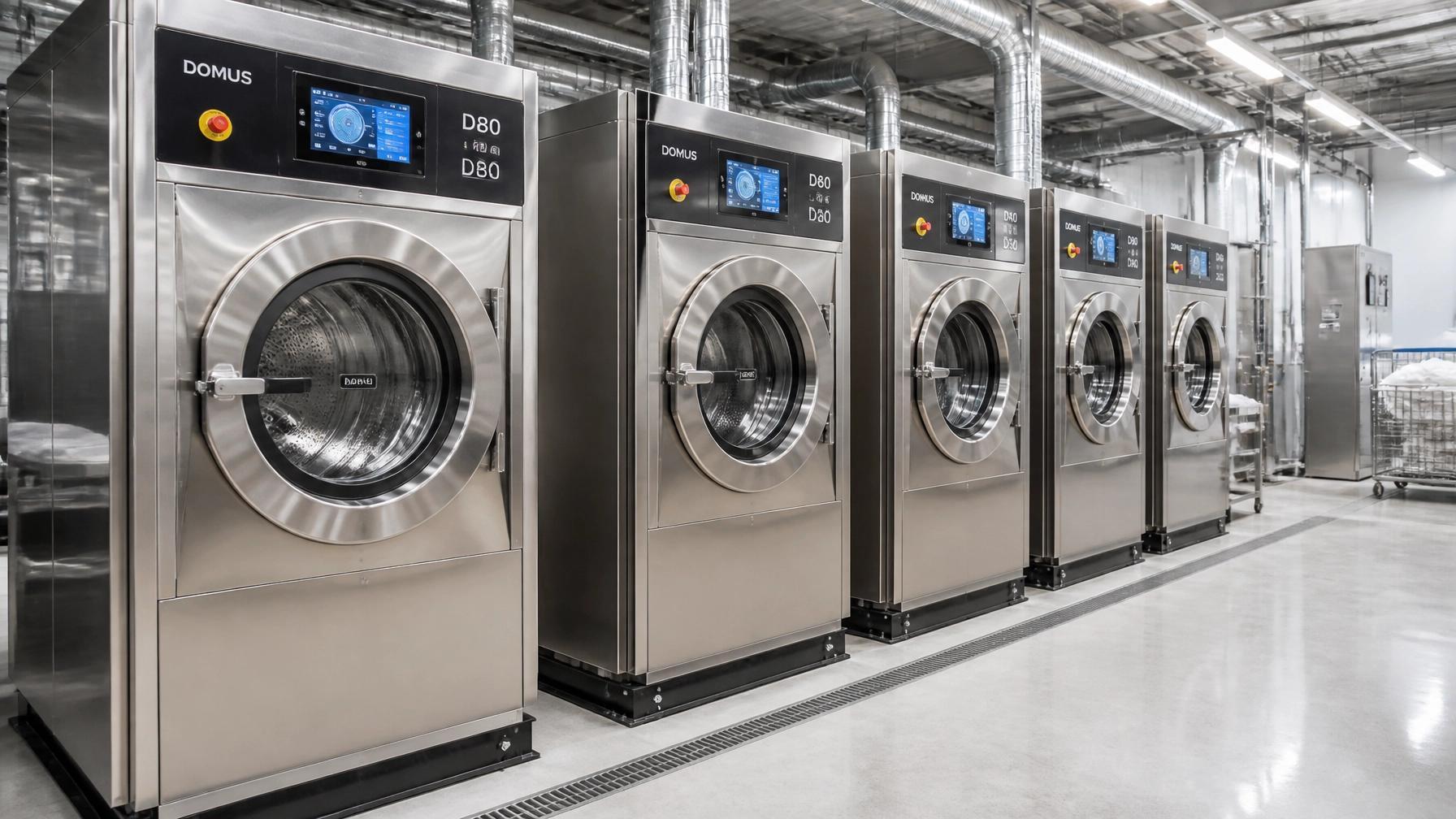
Current industrial laundry equipment designs, such as the BC HE-Series, are engineered to minimize resource consumption without compromising wash quality. Key features include:
- Inverter Motors: These allow for precise control of drum speed, reducing energy consumption by up to 35% compared to conventional motors.
- Smart Load Sensing: Integrated weighing cells and sensors adjust water and energy levels based on the actual weight of the load, preventing the waste associated with half-full cycles.
- High G-Force Extraction: Modern washers utilize high-speed extraction to remove more water during the spin cycle. This is vital because it reduces the mechanical work required by the dryer, which is the most energy-intensive part of the process.
By transitioning to equipment that carries modern efficiency certifications, facilities often see a 40% to 50% reduction in water usage and a 25% to 35% decrease in electricity consumption per cycle.
Optimizing OPL Laundry Solutions through Smart Design
For hotels, hospitals, and banquet halls, OPL laundry solutions (On-Premise Laundry) must be designed for maximum throughput within a minimal footprint. Space efficiency often translates directly into energy efficiency; more compact, high-capacity machines allow for better airflow and shorter cycles.

Utilizing stackable units or high-density layouts can optimize the thermal environment of the laundry room. Modern dryers now frequently incorporate heat recovery systems and moisture sensors that automatically terminate the cycle the moment fabrics are dry. This prevents "over-drying," which not only wastes significant amounts of energy but also causes unnecessary wear and tear on linens, shortening their replacement lifecycle. At Wash IQ, we leverage over 50 years of expertise to assist facilities in designing layouts that maximize these efficiencies.
Chemical Optimization: The Silent Efficiency Driver
While hardware is crucial, the "chemistry" of laundry plays an equally important role in the energy equation. Chemical optimization involves the precise calibration of detergents, softeners, and sanitizers to achieve desired results at lower temperatures.

Traditional washing often relied on high heat (160°F or more) to activate chemicals and ensure disinfection. However, modern chemical solutions and ozone laundry systems enable effective cleaning at much lower temperatures (90°F to 100°F). By implementing a comprehensive chemical strategy, businesses can:
- Reduce the energy required for water heating by up to 50%.
- Decrease the number of rinse cycles needed, saving thousands of gallons of water annually.
- Extend the life of textiles by avoiding the harsh effects of high-heat processing.
Integrating a tailored chemical program is a vital component of any efficiency-focused operational plan.
Maintenance and Expert Repair: Sustaining Peak Performance
Even the most efficient commercial washers and dryers will suffer from energy degradation if they are not properly maintained. A machine that is out of calibration or suffering from mineral buildup can consume significantly more energy to achieve the same results.
Expert repair and routine preventative maintenance are essential for protecting your investment. Scale buildup on heating elements, for example, acts as an insulator, forcing the machine to run longer and hotter to reach the desired temperature. Similarly, clogged dryer vents increase backpressure, extending dry times and increasing fire risks.
Following a routine maintenance schedule is the most effective way to ensure that your equipment continues to operate at its nameplate efficiency levels. Proactive care involves:
- Checking and cleaning intake filters and exhaust vents.
- Calibrating water levels and chemical injection pumps.
- Inspecting seals and bearings to prevent mechanical drag and leaks.
At Wash IQ, we understand that reliability is paramount. Our commitment to excellence is backed by a 3-year parts and labor warranty, providing facility managers with the peace of mind that their operations will remain efficient and uninterrupted.
High-Throughput Finishing and Holistic Efficiency
Efficiency should be viewed through a holistic lens that encompasses the entire laundry workflow, from the first wash to the final fold. In high-volume environments, finishing equipment such as industrial flatwork ironers can play a decisive role in energy management.

By utilizing advanced ironing systems that can process linens directly from the washer (with high-extraction speeds), facilities can bypass the tumble-drying stage entirely for certain items. This significantly reduces total energy consumption per pound of processed linen. Optimizing the flow of work ensures that no machine sits idle while consuming standby power, and every BTU of heat is utilized to its fullest potential.
Conclusion: The Wash IQ Advantage
In the world of industrial laundry, the move toward energy efficiency is a rational response to a demanding economic climate. The implementation of high-efficiency industrial laundry equipment, combined with meticulous chemical optimization and a commitment to expert repair, provides a clear pathway to reduced operating costs and enhanced sustainability.
With over 50 years of industry expertise, Wash IQ is dedicated to being your one-stop shop for all laundry needs. From designing the initial facility layout to providing long-term maintenance and custom solutions, we empower businesses to achieve operational excellence. In 2026 and beyond, the choice to prioritize efficiency is a choice to prioritize the long-term success of your organization.
For more information on how to optimize your facility's performance or to explore our latest line of equipment, visit our services page.