A Step-by-Step Chemical Optimization Framework for Hotels and Hospitals
In today’s competitive market, laundry operations must control costs without compromising linen quality, hygiene, or service continuity. Chemical use is a crucial part of that balance. Too much product can increase supply costs, contribute to residue, and wear down textiles; too little can lead to poor soil removal, rewashes, and inconsistent results.
Chemical optimization is not simply a matter of reducing a dose. It is a repeatable process for matching chemistry, wash formulas, water conditions, and staff practices to the work being processed. The six-phase framework below can help facility managers at hotels, hospitals, banquet halls, assisted living centers, and commercial laundries identify opportunities while protecting linen life.
Phase 1: Establish a reliable baseline
Before changing a formula or dispenser setting, document how the laundry currently performs. A baseline makes it possible to distinguish real improvement from guesswork.
Track chemical use alongside relevant operating measures, such as:
- Chemical consumption and cost by product and load type
- Pounds or kilograms processed and typical load size
- Rewash, stain-reject, and linen-replacement patterns
- Cycle selection, wash time, and water temperature
- Finished-linen appearance, feel, odor, and absorbency
- Dosing alarms, service calls, and staff-reported issues
Use consistent units and records across shifts. Where possible, compare the same linen category over similar operating periods. A single total chemical-cost figure may hide important differences: lightly soiled guest sheets, kitchen table linen, and patient linen may require different processes.
Record the current wash formulas and dispenser settings before adjusting them. This creates a reference point and helps the facility and its chemical provider understand what changed if results shift.
Phase 2: Sort linen by textile and soil profile
A practical chemical program starts with knowing what is going into each load. Group linen by both textile type and the kind of soil it carries. Similar-looking items may need different treatment.
| Linen category | Typical considerations |
|---|---|
| Terry towels and bath mats | Soil removal, residue, and preserving absorbency |
| Sheets and pillowcases | Consistent appearance, fabric condition, and skin-contact considerations |
| Food-and-beverage linen | Food, grease, oils, and stains from banquet or kitchen service |
| Patient linen | Facility infection-prevention procedures, textile requirements, and approved processing protocols |
These categories are starting points, not fixed recipes. A towel load may contain makeup or body oils; a banquet linen load may have food soil; and patient linen processing must follow the facility’s infection-control policies and applicable requirements. Separate items that need different handling rather than relying on one formula for every load.

Also consider fiber content, color, and finish requirements. A formula suited to durable white cotton may not be appropriate for colored blends or delicate textiles. The goal is to connect each distinct load profile to an appropriate, documented wash process.
Phase 3: Review wash formulas against results
Once load categories are clear, review the entire wash sequence, not only the main-wash detergent. Check the purpose, timing, temperature, water level, and duration of each step, including prewash, main wash, bleach or other approved treatment, rinse, and final neutralization where used.
For each formula, ask:
- Does it match the textile and soil profile?
- Are products introduced at the intended point in the cycle?
- Are temperature and cycle time consistent with the product’s directions and facility requirements?
- Is a step repeated unnecessarily, or is a necessary step missing?
- Do finished results justify the current chemical use?
Review formulas with the chemical supplier and equipment service provider before making changes, particularly where healthcare processing or disinfection is involved. Follow product labels, safety data sheets, and facility protocols. The CDC’s laundry and bedding guidance provides a healthcare context; it does not replace your facility’s infection-prevention procedures or product-specific instructions.

A sound formula is one that delivers the required clean and hygiene outcome while avoiding unnecessary chemical input, textile damage, and repeat processing. That is the central purpose of chemical optimization.
Phase 4: Test water and calibrate dispensing
Water quality can affect how well chemistry performs. Hardness, alkalinity, temperature, and other local water conditions may influence cleaning, rinsing, and deposits. Test the water that actually supplies the laundry, and keep the results with the formula records. If the facility uses water treatment, verify conditions at the washer inlet as well as the treatment system.
Use the test results to review whether the current formulas and water treatment are appropriate. Do not compensate for a water issue by simply increasing detergent: that may raise costs without addressing the cause.
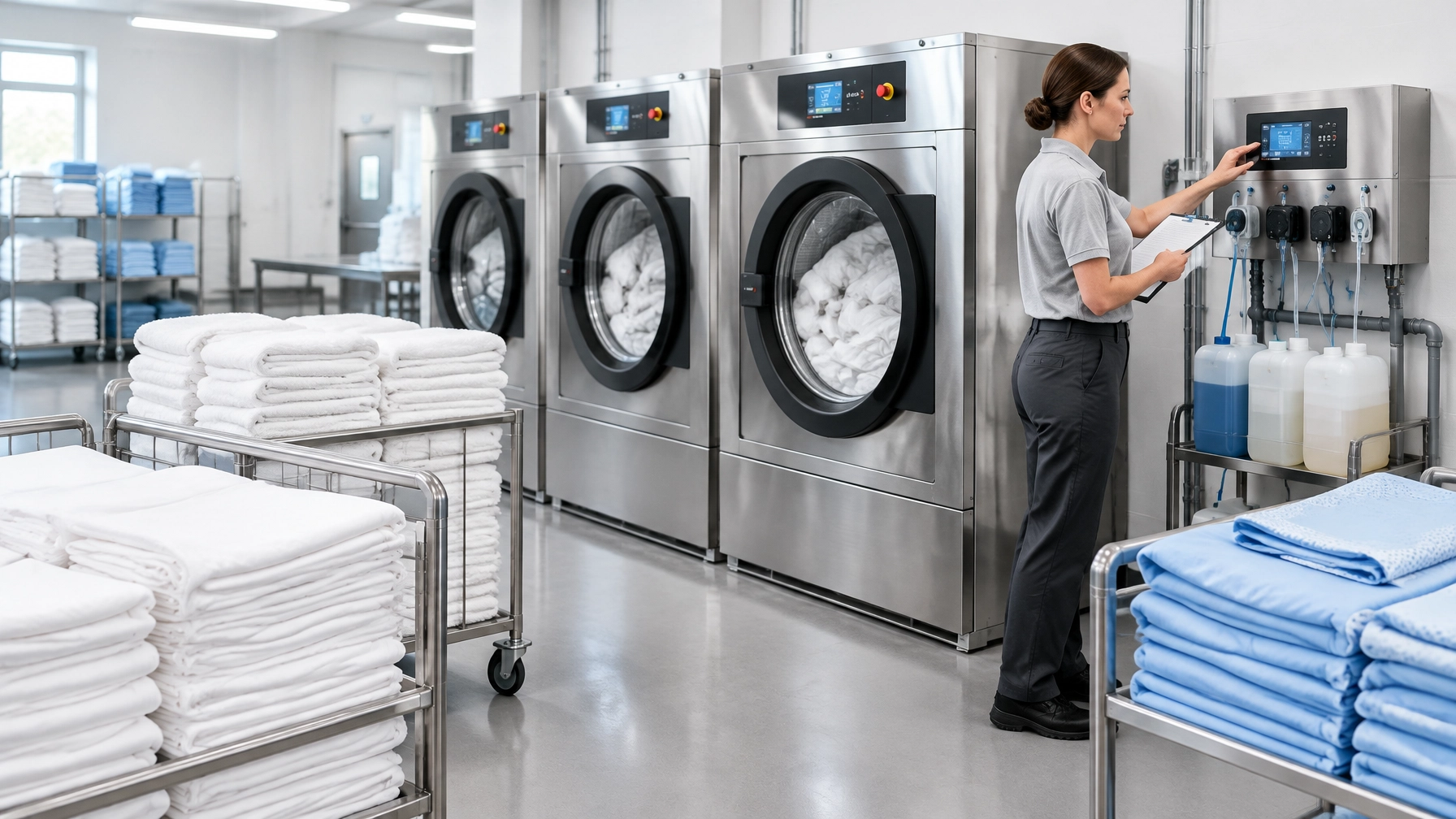
Next, verify chemical dispensing. Check tubing, connections, pickup lines, injection points, and the settings that control product delivery. Confirm that actual delivery corresponds to the programmed amount, and check that the correct product is assigned to each pump and wash step. Calibration should be performed with appropriate tools and procedures, ideally with the chemical provider or a qualified service professional.
Dosing should reflect the intended formula and load conditions. A dispenser setting that is correct for one machine or program may not be suitable for another. Accurate delivery is also important for operational safety: do not mix concentrates or alter product combinations outside the supplier’s instructions.

Phase 5: Train staff on the standard process
A well-designed program depends on consistent execution. Staff should understand how to sort linen, select the correct cycle, report unusual soil, and respond to dispensing alarms. They should also know which changes require approval rather than on-the-spot adjustments.
Keep procedures practical and accessible. A short cycle-selection guide, clear cart-separation system, and simple escalation process can reduce preventable errors. Train new employees and refresh existing teams when formulas, equipment, or facility protocols change.
Include safe handling practices for laundry chemicals, such as following labels and safety data sheets and using required protective equipment. For hospitals and assisted living centers, make sure laundry procedures align with the facility’s infection-prevention program.
Phase 6: Verify, report, and refine
Optimization is ongoing. After an approved change, review results across repeated loads rather than relying on one successful cycle. Check finished linen quality, rewash patterns, chemical consumption, and any staff feedback. For healthcare processing, use the facility’s established verification and documentation requirements; do not assume that a formula change alone demonstrates compliance.
A useful report connects chemical use with operating outcomes. Review results by linen category and track changes against the baseline. If chemical use falls but rewashes or linen damage rise, the program has not achieved its intended benefit. If results remain consistent with lower input and fewer process issues, document the revised formula and train staff on the approved standard.
Repeat the review when water conditions, linen mix, product program, equipment, or operating requirements change. An efficiency report from Wash IQ can help identify operational factors affecting cost and performance. Wash IQ also provides chemical selection and laundry support, combining equipment knowledge with chemical solutions to help address the disconnect that can occur between equipment and chemical providers.
Make optimization a controlled operating practice
A six-phase process (baseline measurement, linen and soil sorting, formula review, water and dosing checks, staff training, and ongoing verification) gives managers a clear way to improve laundry performance without reducing chemistry blindly. It supports cost control while helping extend linen life and maintain dependable results.
The framework applies across hotels, hospitals, banquet operations, and commercial laundries, but each facility needs a program suited to its loads and requirements. Wash IQ supports businesses with chemical cost optimization, efficiency reports, industrial laundry equipment, OPL laundry solutions, and expert repair for commercial washers and dryers.
For an operation-specific review, contact Wash IQ to discuss your laundry process and identify practical next steps.