Hospital OPL Compliance: What Surveyors Are Looking for in 2026
In the world of modern healthcare, the role of an on-premise laundry (OPL) facility has transcended simple utility. Today, it is a critical component of a hospital’s infection control strategy and a primary focus for regulatory bodies. As we move through 2026, the scrutiny from surveyors: including those from the Centers for Medicare & Medicaid Services (CMS) and The Joint Commission (TJC): has reached a sophisticated peak. For facility managers and healthcare administrators, maintaining compliance is not merely a legal obligation but a vital necessity for ensuring patient safety and operational continuity.
Understanding the specific nuances of what surveyors are looking for is essential to navigating an audit successfully. From validated disinfection cycles to the physical separation of workflows, the standards are rigorous and demanding.
The Regulatory Landscape in 2026
The regulatory framework governing hospital OPL operations is complex, involving multiple agencies with overlapping jurisdictions. In 2026, surveyors are prioritizing a holistic approach that integrates laundry processes into the broader hospital infection prevention program.
CMS Conditions of Participation (CoPs)
Under 42 CFR 482.42(a), CMS mandates that hospitals maintain a sanitary environment to prevent the spread of infections. Surveyors now look specifically for evidence that laundry processes are validated. If a facility cannot demonstrate that its laundry meets established hygiene benchmarks, it risks a finding of non-compliance. CMS increasingly expects hospitals using OPL solutions to document processes equivalent to those of accredited commercial laundries.
The Joint Commission (TJC) and Environment of Care
The Joint Commission’s Environment of Care (EC.02.06.05) standards remain the gold standard for hospital audits. Surveyors focusing on this area evaluate facility design, the separation of clean and soiled linens, and the consistency of staff training. They are no longer satisfied with verbal assurances; they require robust documentation and observable, repeatable workflows that mitigate the risk of cross-contamination.
Essential Physical Standards: Design and Equipment
The physical layout of a hospital laundry is often the first thing a surveyor evaluates. Compliance begins with the equipment and the environment in which it operates.

Separation of Workflows (Clean vs. Soiled)
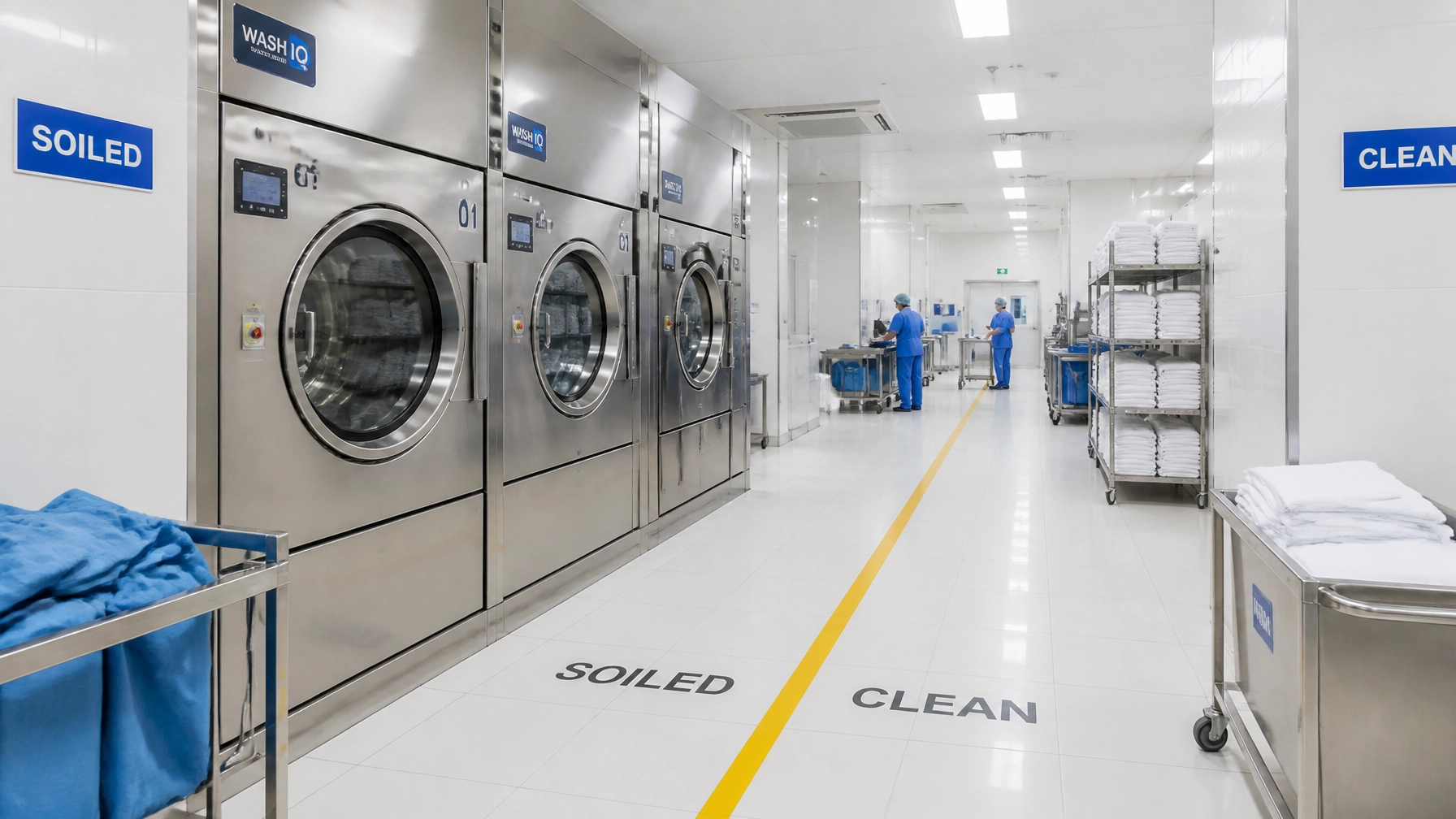
The absolute separation of soiled linen collection and clean linen processing is a fundamental requirement. Surveyors look for a "one-way" workflow that prevents any intersection between dirty textiles and sanitized items.
- Barrier Technologies: The use of barrier washers: where machines are loaded from the "soiled" side and unloaded from the "clean" side through a physical wall: is increasingly becoming the expected standard for new installations.
- Controlled Access: Personnel should not move freely between soiled and clean zones without following specific decontamination protocols.
- Surface Integrity: All surfaces, including floors, walls, and shelving, must be non-porous and easily cleanable to prevent microbial growth.
At Wash IQ, we provide expert design services to help facilities optimize their layouts, ensuring that every square foot of the laundry meets the stringent requirements of modern health surveys.
The Technical Standard: Thermal and Chemical Disinfection
Technical validation of the wash cycle is perhaps the most scrutinized technical aspect of an OPL survey. Surveyors focus on two primary methods of achieving a "hygienically clean" state: thermal and chemical disinfection.

Achieving the 160°F Threshold
According to CDC guidelines, thermal disinfection is generally achieved when linens are exposed to water temperatures of 160°F (71°C) for a minimum of 25 minutes. Surveyors will check:
- Programmable Logic: Are the machines programmed specifically for healthcare cycles that lock in these parameters?
- Data Logging: Does the equipment provide a digital record or printout of the temperatures achieved during each load?
- Calibration: Is there evidence that the temperature sensors in the machines are regularly calibrated for accuracy?
For facilities that cannot maintain these temperatures due to utility constraints, surveyors look for the use of EPA-registered chemical disinfectants. This requires meticulous chemical cost optimization and monitoring to ensure that the concentration of chemicals is sufficient to achieve microbial kill rates without damaging the textile integrity.
Documentation: The Bedrock of Compliance
If a process is not documented, a surveyor assumes it did not happen. This mantra remains the biggest challenge for many hospital OPLs.

Maintenance Logs and Efficiency Reports
Surveyors will request to see comprehensive maintenance records for all industrial laundry equipment. This includes:
- Preventive Maintenance (PM) Schedules: Evidence that equipment is being serviced before it fails, preventing downtime that could compromise hospital hygiene.
- Repair History: Documentation of all repairs performed, ideally by experts with specific training in medical-grade equipment, such as the technicians at Wash IQ who offer over 50 years of repair and maintenance expertise.
- Efficiency Reports: These reports help demonstrate that the laundry is operating at peak performance and that utilities (water and energy) are being used correctly to maintain sanitary standards.
Personnel Safety and OSHA Standards
Compliance is not only about the patient; it is also about the staff. OSHA’s Bloodborne Pathogens Standard (29 CFR 1910.1030) is a constant focus for surveyors.

PPE and Training
Staff must be observed using appropriate Personal Protective Equipment (PPE), including gloves, gowns, and masks, when handling soiled linen. Furthermore, hospitals must provide documented initial and ongoing training for all laundry personnel. This training should cover:
- The proper handling of contaminated "biohazard" bags.
- Emergency procedures for sharps found in linen.
- Ergonomics and safety when operating high-volume machinery like industrial flatwork ironers.
Conclusion: Ensuring Long-term Operational Excellence
In today’s competitive and highly regulated healthcare market, maintaining an OPL facility that meets 2026 standards requires a dedicated partnership with industry experts. Surveyors are no longer looking for "adequate" solutions; they are demanding excellence and transparency.
Wash IQ stands as a one-stop shop for facilities aiming to reach and maintain these high standards. Whether you require industrial laundry equipment sales that features the latest data-logging technology, or comprehensive efficiency reports to validate your operational costs, our team is equipped to support your mission. By focusing on the practical impact of equipment choices and the rigorous prevention of negative outcomes, we help healthcare providers focus on what matters most: patient care.