
OPL Laundry Solutions vs. Outsourcing: Which One Wins in 2026?
In today’s competitive market, facility managers and business owners are increasingly forced to re-evaluate every facet of their operational overhead. In the world of industrial laundry, the perennial debate between maintaining an On-Premise Laundry (OPL) and outsourcing to a third-party service has reached a critical juncture. As we move through 2026, the landscape has shifted significantly, driven by rising logistics costs, labor shortages, and rapid advancements in laundry technology.
For hotels, hospitals, and banquet halls, the choice is no longer a simple matter of preference; it is a strategic decision that impacts long-term profitability and brand reputation. Selecting the wrong model can lead to ballooning expenses or compromised service quality. This analysis explores the nuances of OPL laundry solutions versus outsourcing in 2026 to determine which approach offers the most significant advantages for your facility.
The Shifting Landscape of 2026
For decades, many mid-tier hotels and healthcare facilities viewed outsourcing as a convenient way to avoid capital expenditure and the complexities of managing a specialized workforce. However, the economic environment of 2026 has introduced new pressures. Third-party laundry providers are facing unprecedented increases in driver wages, fuel costs, and linen replacement prices. These costs are invariably passed on to the end customer, often through "escalator clauses" in multi-year contracts that leave businesses with little recourse.
Conversely, the "return of the on-premises laundry" is a documented trend. Organizations are realizing that by bringing volume back in-house, they can reclaim control over their inventory and shield themselves from the volatility of external service fees.
The Case for On-Premise Laundry (OPL): Total Control
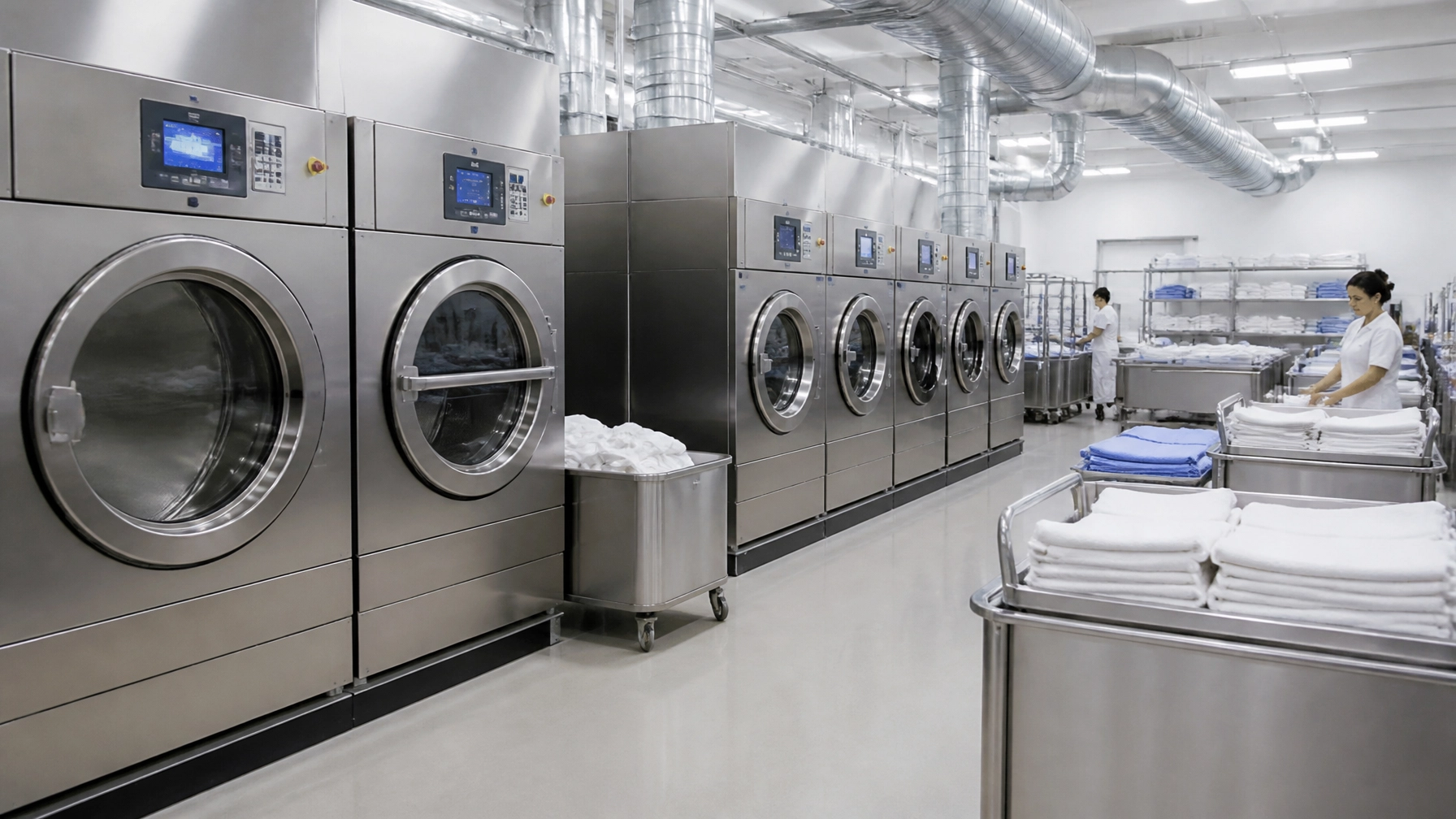
Establishing an OPL setup is an essential investment for facilities that prioritize quality and process consistency. When laundry is processed on-site, the facility has direct oversight of the chemicals used, the water temperature, and the handling protocols. This level of control is vital for maintaining the lifespan of expensive linens and ensuring the hygiene standards required in medical and high-end hospitality settings.

1. Superior Inventory Management
One of the most significant advantages of OPL is the reduction in required par levels. When laundry is sent off-site, it is effectively "in limbo" for 24 to 72 hours. This requires businesses to maintain a much larger inventory of sheets, towels, and linens to cover the gap. With modern industrial laundry equipment, items can be washed, dried, and returned to service in a matter of hours, significantly reducing the capital tied up in textile stock.
2. Quality and Brand Standards
In the hospitality industry, the tactile quality of a towel or the crispness of a bedsheet is a direct extension of the brand. Outsourcing often involves "pooling" linens, where your items are washed with those from other facilities. This can lead to graying fabrics, cross-contamination, or the gradual degradation of fibers due to aggressive, one-size-fits-all chemical formulas. OPL allows for chemical cost optimization, ensuring that the right balance of detergents and softeners is used to preserve fabric integrity while achieving pristine results.
3. Operational Flexibility
An on-premise facility allows for real-time adjustments. If a banquet hall has a sudden surge in demand or a hotel experiences a high-occupancy weekend, the laundry team can scale operations immediately. There is no waiting for a delivery truck or navigating the scheduling constraints of a third-party vendor.
The Outsourcing Alternative: Capital vs. Flexibility
Outsourcing remains an important consideration for businesses with severe space constraints or those that strictly wish to avoid upfront capital investment. In certain regions where the cost of real estate is exceptionally high, repurposing a laundry room into revenue-generating space: such as additional guest rooms or a spa: can sometimes justify the higher per-pound cost of outsourced service.
However, the "pay-as-you-go" model is deceptive. While it removes the burden of machine maintenance and direct labor, it introduces a variable cost that is difficult to budget for during periods of high occupancy. Furthermore, the lack of control over the washing process often leads to higher linen replacement costs, as external plants typically use harsher chemicals and higher heat to ensure rapid throughput, which shortens the lifespan of the textiles.
Economic Realities: Analyzing ROI and Labor
The primary deterrent for OPL has traditionally been the cost of labor. However, in 2026, automation has largely mitigated this challenge. Modern industrial laundry equipment is designed for maximum throughput with minimal human intervention. Features such as automated chemical dosing, moisture-sensing dryers, and high-speed flatwork ironers allow a smaller staff to process significantly more volume than was possible a decade ago.

When evaluating the Return on Investment (ROI) for an OPL upgrade, it is crucial to look beyond the equipment price tag. A comprehensive efficiency report can reveal the "hidden" costs of outsourcing, such as:
- Linen Loss: It is estimated that 3% to 5% of linen is lost or damaged during the outsourcing transport and sorting process.
- Utility Efficiency: Modern machines use 30% less water and energy than older models, significantly lowering the operational cost of OPL.
- Contractual Creep: The gradual increase in service fees that often outpaces inflation.
By investing in high-efficiency machinery and professional design services, facilities can often achieve a break-even point within 18 to 24 months, after which the savings contribute directly to the bottom line.
The Wash IQ Advantage: A One-Stop Solution
Choosing between OPL and outsourcing is a complex decision that requires a deep understanding of your facility’s unique needs. At Wash IQ, we provide the expertise necessary to navigate this choice. With over 50 years of industry experience, we don’t just sell machines; we provide a complete ecosystem of support.

Our approach includes:
- Custom Design: We assist in planning and optimizing your laundry facility layout to maximize space and workflow efficiency.
- Equipment Excellence: We supply a complete line of industrial-grade equipment, backed by a 3-year parts and labor warranty: an industry-leading standard.
- Operational Optimization: Our experts analyze your current processes to identify cost-saving opportunities through efficiency reports and chemical cost optimization.
- Reliable Maintenance: We offer expert repair and maintenance services for any brand of laundry equipment, ensuring your OPL remains operational 24/7.
Conclusion: Which One Wins?
In 2026, the data points toward OPL as the superior choice for high-volume, quality-conscious operations. While outsourcing provides a lower barrier to entry, the long-term benefits of OPL: including lower unit costs, better quality control, and increased textile longevity: are undeniable.
The decision ultimately hinges on your commitment to operational excellence. For facilities that view laundry as a core component of their service delivery, an on-premise solution is not just an option; it is a vital strategic asset.
Whether you are looking to build a new facility or optimize an existing one, Wash IQ is your partner in achieving industrial-grade efficiency. Contact us today to learn how our comprehensive suite of services can transform your laundry operations.