Repair vs. Replace: Which Is Better For Your Commercial Washers and Dryers?
In today’s competitive market, the operational efficiency of an on-premise laundry facility is not merely a logistical detail; it is a vital pillar of business success. Whether you are managing a high-capacity hotel, a healthcare facility, or a large-scale banquet hall, the reliability of your washing and drying equipment directly impacts your bottom line, labor costs, and guest satisfaction.
Facility managers and business owners often find themselves at a critical crossroads when a core piece of equipment falters: is it more prudent to invest in a comprehensive repair, or is it time to authorize a capital expenditure for a modern replacement? Navigating this decision requires a sophisticated understanding of equipment lifecycles, return on investment (ROI), and the evolving standards of energy efficiency. At Wash IQ, we leverage over 50 years of industry expertise to help our clients make data-driven decisions that ensure long-term operational excellence.
Understanding the Equipment Lifecycle: Industry Benchmarks
The first step in any "repair vs. replace" analysis is establishing where your current machinery sits within its expected operational lifespan. Industrial-grade equipment is engineered for durability, but no machine is immune to the laws of mechanical wear.
In the world of professional laundry, typical lifespans vary by equipment type:
- Industrial Front-Load Washers: Generally expected to perform reliably for 10 to 15 years.
- Commercial Tumble Dryers: Often maintain efficiency for 12 to 15 years.
- Top-Load Commercial Washers: Typically have a shorter lifecycle of 5 to 8 years due to lighter-duty mechanical designs.
If your equipment is approaching or has exceeded the 10-year mark, it is essential to monitor its performance more closely. While a machine may still be "running," its efficiency: and the cost to keep it running: often begins to degrade significantly after a decade of heavy use.

When Repair Is the Superior Strategic Choice
For many facilities, a prompt and professional repair is the most efficient way to restore throughput without the disruption of a full installation. Repairing existing equipment is often the preferred route when the following criteria are met:
1. The Machine is Within its "Golden Era"
If a washer or dryer is under seven years old and has been well-maintained, a mechanical failure is usually an isolated incident rather than a symptom of systemic decline. In these cases, preserving the asset is a wise move.
2. The Cost-to-Value Ratio is Low
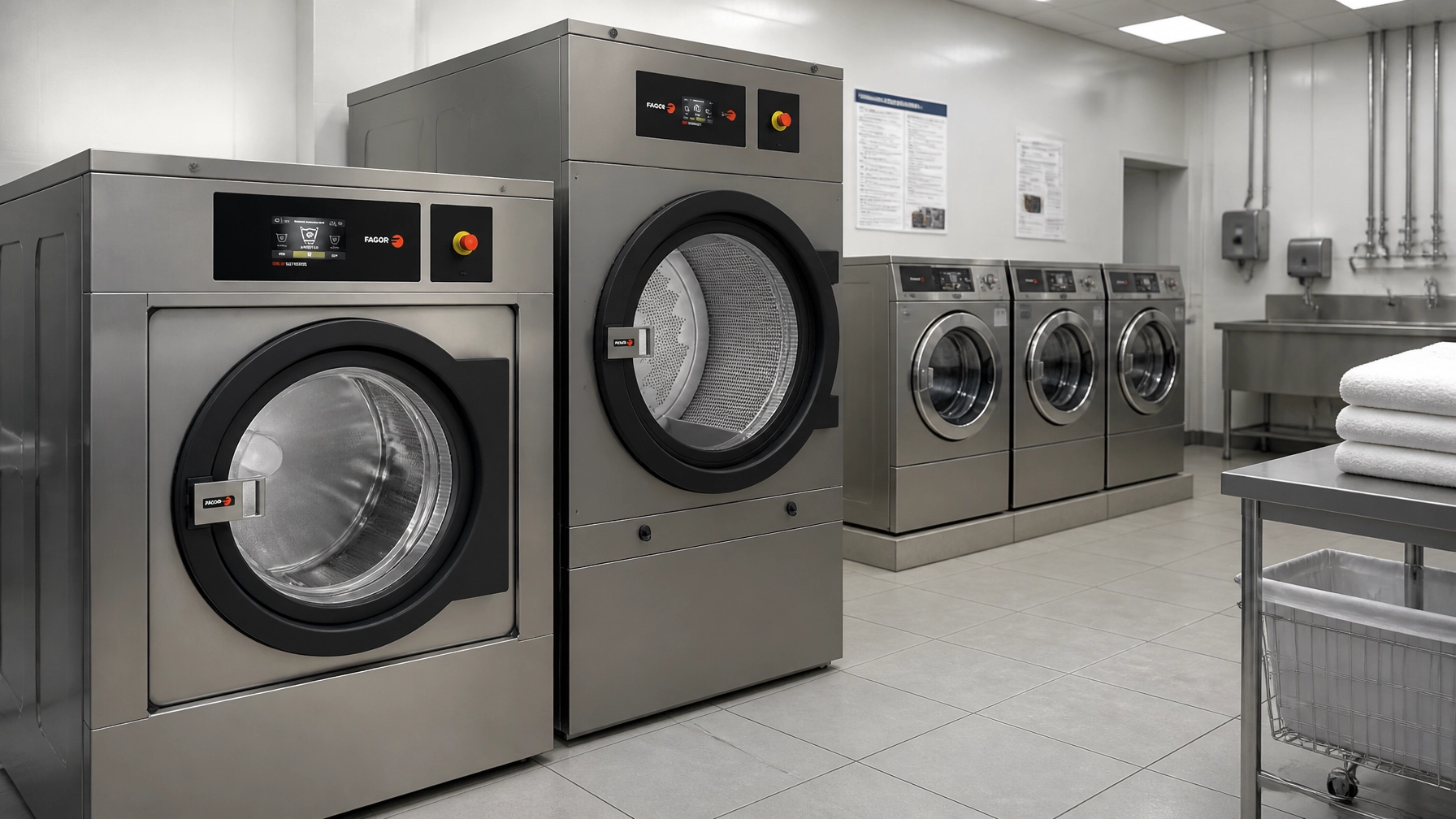
A standard industry rule of thumb is the "40% Rule." If the cost of the repair is less than 40% of the cost of a brand-new replacement unit, the repair is typically justified. This is especially true for high-end industrial models like the B&C HE-Series Washers, where the structural integrity of the frame and drum often outlasts specific electrical or hydraulic components.
3. High-Quality Service is Available
A repair is only as good as the technician performing it. At Wash IQ, we service and repair any brand of laundry equipment, providing a level of expertise that ensures the repair extends the machine's life rather than just delaying the inevitable. With access to a comprehensive library of parts: including bearings, VFD drives, and water valves: we specialize in restoring equipment to peak performance.
The Indicators for Immediate Replacement
There comes a point where continued maintenance transitions from "proactive care" to "sunk cost." Replacing equipment is often the more profitable choice when operational challenges begin to outweigh the cost of new hardware.
Frequent and Recurring Breakdowns
If a specific machine requires more than two significant service calls in a 12-month period, it is likely experiencing cascading failures. The cumulative cost of parts, labor, and: most importantly: downtime can quickly surpass the monthly financing cost of a more reliable, modern machine.
Obsolescence and Parts Scarcity
In the world of industrial machinery, technical support for older models eventually fades. If your technician reports that critical circuit boards or motors are no longer in production, the risk of a "permanent" breakdown becomes too high. Relying on refurbished or "harvested" parts is a precarious strategy for a mission-critical facility.
Escalating Utility Expenses
If your water and energy bills are rising despite consistent laundry volume, your older machines are likely the culprit. Modern units, such as the DE Series Dryers, are engineered with advanced airflow technology and moisture sensors that prevent over-drying, significantly reducing utility consumption.

The ROI of High-Efficiency Equipment
In today’s economic climate, sustainability and profitability are inextricably linked. The primary driver behind the transition to modern equipment is the radical improvement in resource management.
1. Drastic Water and Energy Reductions
According to industry data, ENERGY STAR-certified commercial washers use approximately 45% less water and 25% less energy than standard models from a decade ago. Over the course of a year, these savings represent thousands of dollars in reclaimed operational budget.
2. The Power of High G-Force Extraction
One of the most crucial technical advancements in laundry technology is high G-force extraction. Modern soft-mount washers can reach extraction speeds of 350 to 400 Gs, compared to the 80 to 100 Gs common in older hard-mount units.
- The Result: Significantly less retained moisture in the linens.
- The Benefit: Dry times are slashed by 25–40%, leading to lower gas consumption in the dryers and faster turnover of laundry loads.
3. Integrated Chemical Precision
Newer machines offer sophisticated programmable controls that integrate seamlessly with specialized chemical systems. By precisely calibrating the injection of detergents and sanitizers, you prevent chemical waste and extend the life of your linens: protecting yet another of your facility's major investments.

The Hidden Cost: Understanding Downtime
For a hotel or hospital, a machine being "out of order" is not just a nuisance; it is a bottleneck that threatens the entire service chain. When machines are down:
- Labor Costs Rise: Staff must stay longer to process laundry on the remaining functional units.
- Linen Par Levels Suffer: You may find yourself short on clean towels or bedsheets during peak occupancy.
- Stress Increases: Frequent equipment failure leads to employee frustration and turnover.
When evaluating whether to replace, it is essential to factor in these "soft costs." A new machine with a 3-year parts and labor warranty: standard on many Wash IQ products: provides a level of predictability and peace of mind that an aging, repaired unit simply cannot match.
Final Verdict: Which Path Is Best for You?
To make the final determination, we recommend a structured, two-part assessment:
1. Apply the 50% Rule: If the unit is over 10 years old and the repair cost exceeds 50% of the replacement value, you should almost always replace it.
2. Calculate the Payback Period: If a new, efficient machine can save you $200 a month in utilities and $1,000 a year in repairs, it may pay for itself in as little as three to four years.
At Wash IQ, we believe in being a one-stop shop for our clients' success. We don't just sell machines; we provide efficiency reports and custom design services to ensure your laundry operation is optimized for the highest possible ROI.

Whether your current fleet needs the expert touch of a veteran technician or it’s time to modernize with the latest industrial technology, our team is ready to assist. Ensuring your facility operates at peak capacity is our mission.
Is your laundry room costing you more than it should? Contact Wash IQ today at 1-844-492-7447 for a comprehensive assessment of your equipment and a custom solution tailored to your facility’s needs.