The Cost of Downtime: How Much Does a Broken Washer Really Cost Your Business?
In today’s competitive market, operational continuity is not merely a goal; it is a foundational requirement for sustained profitability and growth. Within the world of hospitality, healthcare, and commercial laundry service, the reliability of industrial laundry equipment serves as the backbone of daily operations. However, when a critical machine fails, the consequences extend far beyond a simple mechanical inconvenience. The financial impact of a broken commercial washer or dryer often manifests as a significant drain on resources, labor efficiency, and brand reputation.
Understanding the true cost of downtime is essential for facility managers and business owners who aim to optimize their bottom line. It is not just the price of a replacement part or a service call that matters: it is the cumulative loss of productivity and the secondary costs associated with equipment failure. At Wash IQ, we leverage over 50 years of industry expertise to help businesses mitigate these risks through expert repair and high-performance equipment solutions.
The Direct Financial Drain: Revenue and Throughput Loss
When a commercial washer is out of commission, the most immediate impact is the loss of revenue-generating capacity. For a high-volume laundromat or a busy hotel laundry room, every hour a machine sits idle represents a measurable loss in cash flow.
In a coin-operated or self-service environment, the math is straightforward but staggering. Consider a 60 lb industrial washer that typically runs six cycles per day at an average vend price of $8.50. If that machine is offline for just four days due to a lack of available parts or slow service response, the business loses over $200 in direct revenue from a single unit. In larger facilities where multiple machines may be aged or poorly maintained, the total capacity loss can quickly escalate into the thousands.
For on-premise laundry (OPL) operations in hotels or hospitals, the loss is not measured in vends, but in throughput. A broken washer creates a bottleneck that prevents linens from reaching the dryers, ironers, and eventually, the rooms or wards. This delay often necessitates the outsourcing of laundry services to third-party providers: a move that typically carries a premium price and significantly higher per-pound costs compared to in-house processing.

The Ripple Effect: Labor Inefficiency and Overtime Costs
One of the most overlooked "hidden" costs of equipment downtime is the impact on human capital. In a well-functioning laundry facility, staff schedules are optimized to match the cycle times of the equipment. When a washer breaks, the workflow is disrupted, leading to several labor-related expenses:
- Idle Labor: Staff members are often forced to wait for machine availability, leading to unproductive hours where employees are paid despite being unable to perform their core duties.
- Overtime Premiums: To clear the backlog once a machine is finally repaired, facilities often must pay overtime wages. This is a vital concern for healthcare facilities that must maintain a constant supply of sanitized linens to meet health and safety regulations.
- Management Distraction: Facility managers and business owners must divert their attention from strategic growth and customer service to handle the logistics of the breakdown, refunding customers, or rescheduling shifts.
In today's labor market, where wages are a significant portion of operating expenses, the inefficiency caused by a single broken dryer or washer can erode monthly profit margins faster than almost any other operational challenge.
Operational Wear and Tear on Secondary Equipment
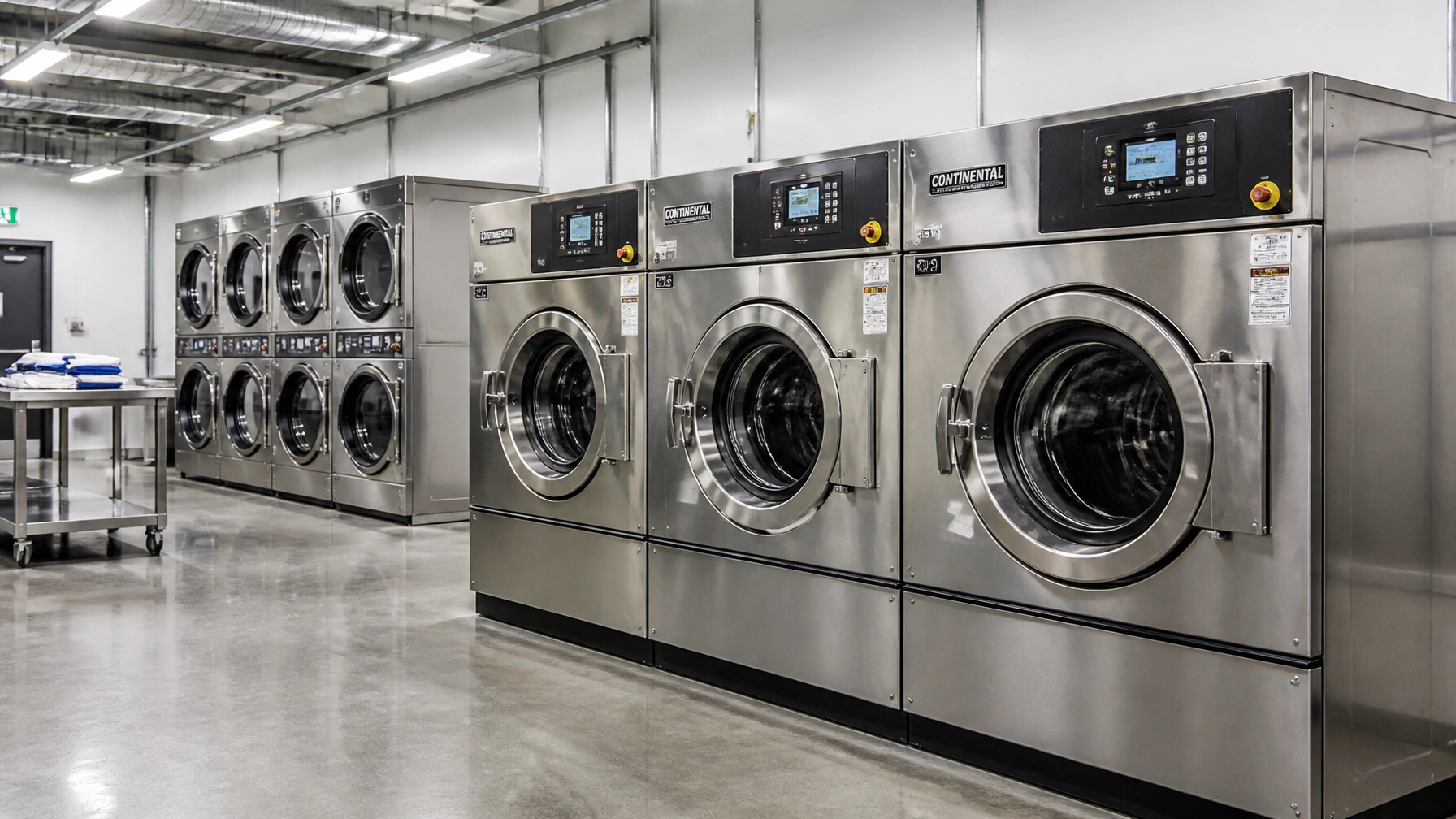
Industrial laundry equipment is designed to operate within specific parameters. When one machine in a battery of four fails, the remaining three machines must pick up the slack. This leads to "over-cycling," where the remaining equipment is run at 100% capacity for extended periods.
This increased demand accelerates the wear and tear on bearings, motors, and belts of the functional machines, essentially pulling forward their maintenance requirements and increasing the likelihood of a secondary failure. A singular breakdown, if not addressed through expert repair immediately, can trigger a domino effect of equipment degradation across the entire facility.

The Reputation Tax: Customer Satisfaction and Churn
In the hospitality and healthcare sectors, the availability of clean linen is non-negotiable. For a hotel, a laundry backlog can lead to "late check-ins" or, in worst-case scenarios, rooms that cannot be sold because clean bedding is unavailable. The loss of a single room night due to laundry issues can often cost more than the repair of the machine itself.
Furthermore, in the digital age, customer dissatisfaction is quickly amplified through online reviews. A single guest complaining about a lack of fresh towels or poor linen quality can deter dozens of potential future customers. For commercial laundry providers, failing to meet contractual turnaround times due to equipment failure can lead to the loss of multi-year contracts, representing a catastrophic blow to the business's valuation.
The Essential Role of Expert Repair and Preventative Maintenance
To avoid the crushing costs of downtime, a proactive approach to equipment health is crucial. Relying on "handyman" solutions or uncertified technicians often results in temporary fixes that lead to more severe failures down the line. Expert repair is not just about fixing what is broken; it is about restoring the machine to its optimal manufacturer specifications.
At Wash IQ, we understand that reliability is the cornerstone of your business. Our technicians bring decades of experience to every service call, ensuring that your commercial washers and dryers are maintained for longevity and peak efficiency. We don't just supply parts; we provide a comprehensive support system designed to keep your facility running without interruption.

Strategic Mitigation: The Wash IQ Advantage
The most effective way to manage the cost of downtime is to prevent it before it starts. This is achieved through three primary pillars of operational excellence:
1. Investing in Industrial-Grade Reliability
While the initial investment in high-quality equipment like Milnor, Fagor, B&C, or Yamamoto may be higher than consumer-grade alternatives, the long-term ROI is significantly better. These machines are engineered for the rigors of 24/7 operation and feature robust components that resist the common failure points of lesser equipment.
2. Comprehensive 3-Year Parts and Labor Warranty
One of the most significant ways to stabilize your maintenance budget is through a robust warranty. Wash IQ offers a industry-leading 3-year parts and labor warranty on our equipment, providing business owners with peace of mind. This warranty ensures that should a failure occur, the direct costs of the repair are covered, allowing you to focus on managing the operational side of your business without the fear of unexpected financial hits.
3. Professional Design and Efficiency Reports
Often, downtime is a symptom of a poorly designed facility. If the workflow is inefficient or the chemical dispensing systems are not optimized, the machines must work harder than necessary. Wash IQ provides custom design services and efficiency reports to ensure your equipment is perfectly matched to your volume and utility constraints.

Conclusion: Turning Downtime into Uptime
In the final analysis, a broken washer is not just a technical problem; it is a financial liability that impacts every facet of a commercial laundry operation. From direct revenue loss and labor inefficiencies to the long-term erosion of brand trust, the costs of downtime are too significant to ignore.
By partnering with an industry leader like Wash IQ, you gain access to 50 years of technical expertise and a commitment to operational excellence. Whether you are looking for new industrial laundry equipment or require immediate expert repair for your current fleet, our team is dedicated to ensuring your facility remains productive, efficient, and profitable. Do not wait for a breakdown to realize the value of reliability: contact Wash IQ today to secure the future of your laundry operations.