The Future of Industrial Laundry: Key Trends Every Facility Manager Should Watch
In today’s competitive market, the landscape of industrial laundry is undergoing a profound transformation. For facility managers in hospitality, healthcare, and commercial laundry sectors, staying abreast of technological shifts is no longer optional; it is a vital prerequisite for maintaining operational excellence. As we progress through 2026, the integration of advanced automation and data-centric strategies is redefining what it means to manage a high-throughput laundry operation.
At Wash IQ, we recognize that the pressure to increase throughput while reducing utility overhead is a constant challenge. To navigate this evolving environment, decision-makers must transition from traditional, reactive management styles to proactive, technology-driven frameworks. This article explores the essential trends shaping the future of industrial laundry, from AI-driven OPL laundry solutions to next-gen chemical optimization and the rising necessity of predictive maintenance.
The Rise of AI-Driven OPL Laundry Solutions
In the world of On-Premise Laundry (OPL), the implementation of Artificial Intelligence (AI) and the Internet of Things (IoT) has shifted from a futuristic concept to a fundamental operational standard. AI-driven OPL laundry solutions allow facility managers to maintain absolute visibility over their entire fleet of machines in real-time.

Modern systems now utilize smart load-sensing technology to adjust water levels and wash durations dynamically based on the weight and fabric type of each load. This precision ensures that every cycle is optimized for maximum efficiency, preventing the waste of water and energy that typically occurs with standardized settings. Furthermore, cloud-integrated platforms provide comprehensive dashboards that track machine health, energy metrics, and hygiene compliance: a crucial benefit for healthcare facilities where sterilization protocols are stringent.
The deployment of these smart systems enables facility managers to identify bottlenecks in production and adjust workflows accordingly. By leveraging data-driven insights, businesses can ensure that their industrial laundry equipment operates at peak performance, significantly extending the lifecycle of their assets.
Next-Generation Chemical Optimization and Sustainability
Chemical cost optimization is no longer just about purchasing bulk detergents; it is about the scientific application of chemistry to achieve superior results with minimal waste. In 2026, the industry has seen a decisive move toward ultra-concentrated formulations and automated, precision-dosing systems.
These next-generation chemical solutions are designed to work in tandem with advanced commercial washers to ensure that exactly the right amount of detergent, sanitizer, and softener is dispensed for every load. This level of accuracy is essential for preventing chemical carryover, which can damage linens and cause skin irritation for end-users, such as hotel guests or hospital patients.

At Wash IQ, we assist businesses in implementing these advanced chemical management strategies to reduce expenses while enhancing the quality of the finished product. Our chemical cost optimization services are designed to help facility managers meet strict environmental standards and corporate ESG (Environmental, Social, and Governance) goals without compromising on the cleanliness or longevity of their textile assets.
Innovations in Commercial Washers and Dryers
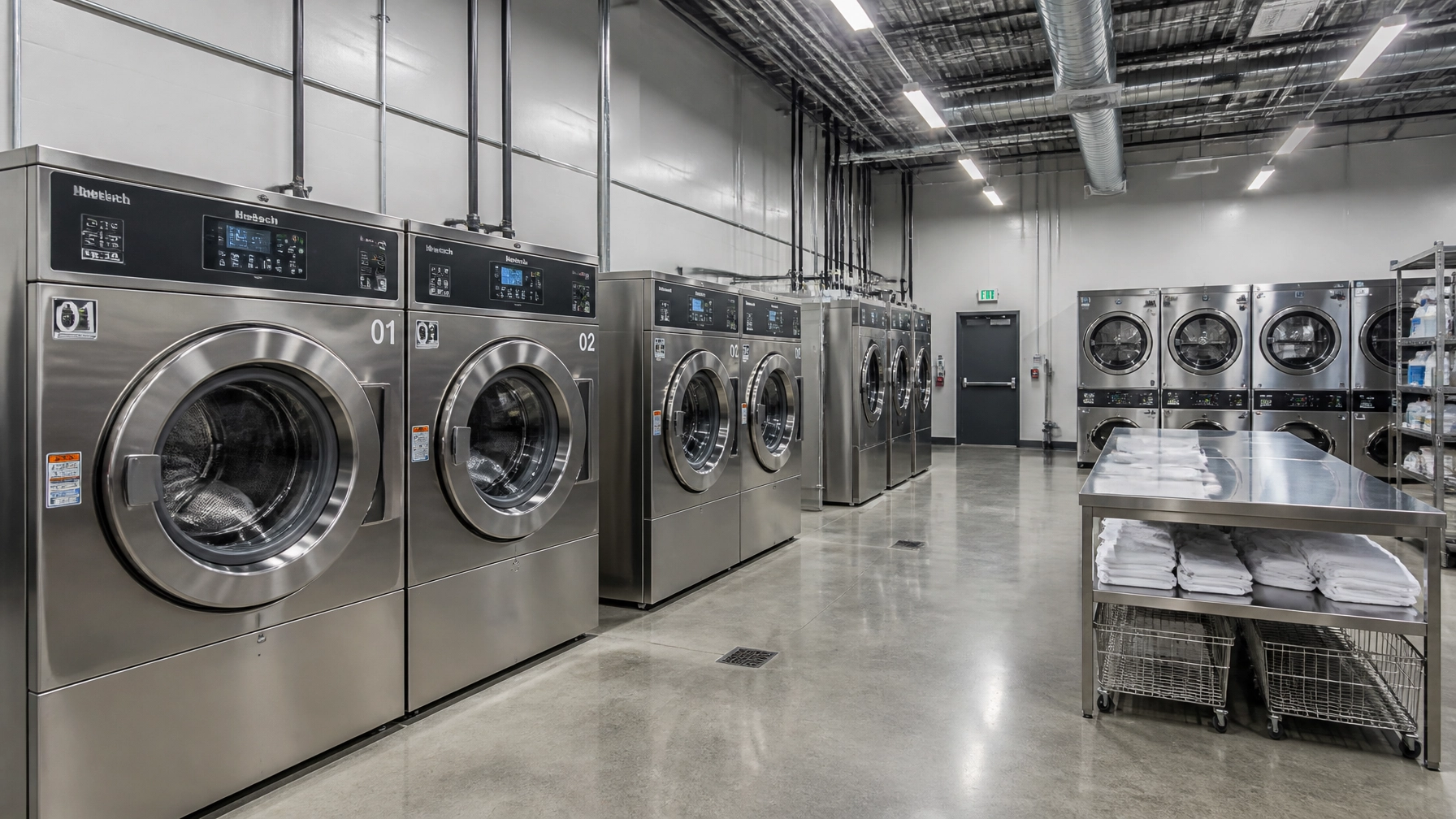
The hardware at the heart of the laundry room is also evolving. Today’s industrial laundry equipment is engineered for unprecedented levels of efficiency and durability. Leading brands like Milnor, Fagor, B&C, and Yamamoto are pushing the boundaries of mechanical design.
Key innovations include:
- High-G Force Extraction: New generation commercial washers utilize high-speed extraction to remove more water from linens before they even enter the dryer. This reduces drying times significantly, which is the most energy-intensive part of the laundry process.
- Heat-Pump Drying Technology: Modern commercial dryers are increasingly adopting heat-pump technology, which can reduce energy consumption by up to 60% compared to traditional gas or electric models.
- Barrier Washers for Healthcare: In medical environments, the use of barrier washers is becoming a crucial standard to prevent cross-contamination between soiled and clean linens.
These technological advancements are not merely about modernizing a facility; they are about securing a competitive edge by lowering the total cost of ownership (TCO) and increasing the speed of service.

The Evolution of Expert Repair Services: Moving Toward Predictive Maintenance
One of the most significant shifts in facility management is the evolution of expert repair services. Traditionally, maintenance was performed either on a fixed schedule or as a reactive response to a breakdown. However, the introduction of predictive maintenance is changing the dynamic.
With over 50 years of industry expertise, Wash IQ has observed that the cost of unplanned downtime far exceeds the cost of a routine service call. By utilizing AI-enabled diagnostics, our technicians can now predict potential component failures before they cause a machine to stop. This proactive approach is essential for high-volume environments like banquet halls and hotels, where even a single day of downtime can cause a significant backlog.

Expert repair services now involve deep-dive efficiency reports and technical audits. These reports analyze the mechanical health of the equipment and the efficiency of the facility's layout. By optimizing the design and maintenance schedule of a laundry room, facility managers can prevent costly emergency repairs and ensure that their operations run smoothly year-round.
Why Facility Managers Must Act Now
In the world of industrial laundry, the gap between traditional operations and technologically advanced facilities is widening. Those who fail to adopt smart OPL laundry solutions or optimize their chemical usage will find themselves burdened by rising utility costs and frequent equipment failures.
Wash IQ serves as a one-stop shop for all industrial laundry needs, providing custom solutions that range from single-location repairs to large-scale facility design. Our commitment to quality is backed by a 3-year parts and labor warranty on our products, ensuring that your investment is protected.
The future of industrial laundry is digital, efficient, and data-driven. By embracing these trends, facility managers can transform their laundry operations from a cost center into a model of operational excellence.
FAQ
What is OPL in industrial laundry?
OPL stands for "On-Premise Laundry." It refers to laundry operations that are managed within a facility (such as a hotel or hospital) rather than being outsourced to a commercial laundry service.
How does AI improve industrial laundry equipment?
AI improves efficiency by using sensors to monitor load size, fabric type, and soil levels, automatically adjusting water, energy, and chemical usage to optimize every cycle and reduce waste.
Why is chemical optimization important for my facility?
Chemical optimization ensures that you are using the correct amount and type of chemicals for your specific needs. This reduces costs, prevents damage to linens, and helps your facility comply with environmental regulations.
What is predictive maintenance for commercial washers and dryers?
Predictive maintenance uses data from machine sensors to identify signs of wear and tear, allowing technicians to perform repairs before a breakdown occurs, thereby minimizing downtime.