

The True Cost of Over-Using Chemicals in Your Commercial Laundry
In today’s competitive market, operational efficiency is no longer an optional advantage: it is a baseline requirement for survival and growth. For facility managers in the hospitality, healthcare, and commercial sectors, the laundry room is a vital engine of daily operations. However, a common misconception persists: the idea that more chemicals equate to cleaner linens. In reality, the overuse of detergents, alkalis, bleaches, and softeners is a silent profit killer that erodes equipment longevity, degrades textile quality, and inflates utility expenses.
Understanding the science of chemical optimization is essential for maintaining a high-performance facility. When the delicate balance of chemistry, temperature, and mechanical action is disrupted by excessive chemical dosing, the negative repercussions ripple through every aspect of the business.
The Financial Impact of Chemical Over-Saturation
The most immediate and obvious consequence of over-using chemicals is the direct increase in procurement costs. When a facility consumes 20% more product than necessary, it effectively discards thousands of dollars annually. However, the direct price of the chemicals is often just the tip of the iceberg.
For professional laundries, the true financial burden lies in "indirect" costs. These include premature linen replacement, frequent equipment repairs, and increased utility consumption. According to industry analysis, improper dosing can shorten the lifespan of high-quality linens by up to 50%. In a large-scale hotel or hospital, where the textile inventory represents a significant capital investment, this level of attrition is financially unsustainable.

Accelerated Linen Attrition: Protecting Your Textile Investment
Linens are among the most fragile assets in any commercial facility. Whether it is high-thread-count bedsheets or heavy-duty surgical scrubs, every textile has a finite number of wash cycles before it must be decommissioned. Over-using chemicals, particularly harsh bleaches and high-alkaline detergents, accelerates this process through a phenomenon known as fiber degradation.
Excessive chemicals weaken the structural integrity of the cotton or polyester fibers. Over time, this leads to:
- Reduced Tensile Strength: Fabrics become prone to tearing and fraying.
- Pilling and Roughness: The surface of the linen becomes abrasive, which is a major concern for guest satisfaction in the hospitality sector.
- Loss of Absorbency: In towels, chemical residue buildup can create a hydrophobic layer, making the product less effective and leading to guest complaints.
- Discoloration: Paradoxically, too much detergent can lead to "graying" as the excess soap traps soil on the fabric instead of rinsing it away.
By implementing chemical cost optimization, businesses can ensure that linens remain in circulation for their maximum intended lifespan, protecting the facility’s bottom line and ensuring a superior end-user experience.
Mechanical Degradation: Why Residue Is the Enemy of Equipment
The industrial-grade laundry equipment supplied by Wash IQ is engineered for durability and high throughput. However, even the most robust machines, such as our high-capacity front-loading washers, can be compromised by chemical abuse.
When excess chemicals are introduced into a wash cycle, they do not simply vanish during the rinse. They leave behind a film: often referred to as "gunk": that accumulates in the drum, drainage lines, and pump systems. This residue acts as a magnet for lint and mineral deposits, leading to several critical issues:
- Sensor Failure: Most modern commercial washers utilize sophisticated sensors to monitor water levels and temperature. Chemical buildup can coat these sensors, leading to inaccurate readings and operational errors.
- Pump and Valve Clogging: Thick detergent residues can obstruct drainage pumps and valves, forcing the machine to work harder and increasing the risk of a catastrophic failure.
- Corrosion: High concentrations of certain chemicals can be corrosive to metal components and rubber seals, leading to leaks that require expert repair and maintenance.
Regular efficiency reports and equipment inspections are crucial for identifying these issues before they lead to unplanned downtime.

Utility Inflation and Operational Friction
The hidden cost of chemical overuse extends into the realm of utility consumption. When a machine is overloaded with detergent, it creates a "suds lock" situation. The excess foam interferes with the mechanical action of the wash, preventing the clothes from being cleaned effectively.
Furthermore, to remove the excess suds, the machine may automatically trigger additional rinse cycles. This results in:
- Increased Water Usage: Each extra rinse cycle consumes gallons of water, significantly impacting utility bills and environmental sustainability goals.
- Higher Energy Costs: Heating water is one of the most expensive aspects of laundry operations. Extra rinses mean more hot water and longer motor run times.
- Labor Inefficiency: When wash cycles take 10 to 15 minutes longer due to excessive rinsing, the total throughput of the facility drops. This can lead to overtime costs or the need for additional shifts to meet laundry demands.
Environmental Responsibility and Safety Compliance
In the world of industrial laundry, environmental stewardship is no longer just a "nice-to-have" corporate social responsibility (CSR) goal; it is often a matter of legal and safety compliance. Excess surfactants and chemicals in the wastewater can lead to higher effluent fees from municipal water treatments.
Moreover, chemical residue left on linens is a significant health concern. In healthcare settings, residual detergent can cause skin irritation, contact dermatitis, or allergic reactions in patients with compromised immune systems. In the hospitality sector, a "scratchy" or "chemical-smelling" towel can damage a brand's reputation instantly.

The Solution: Chemical Optimization and Precision Dosing
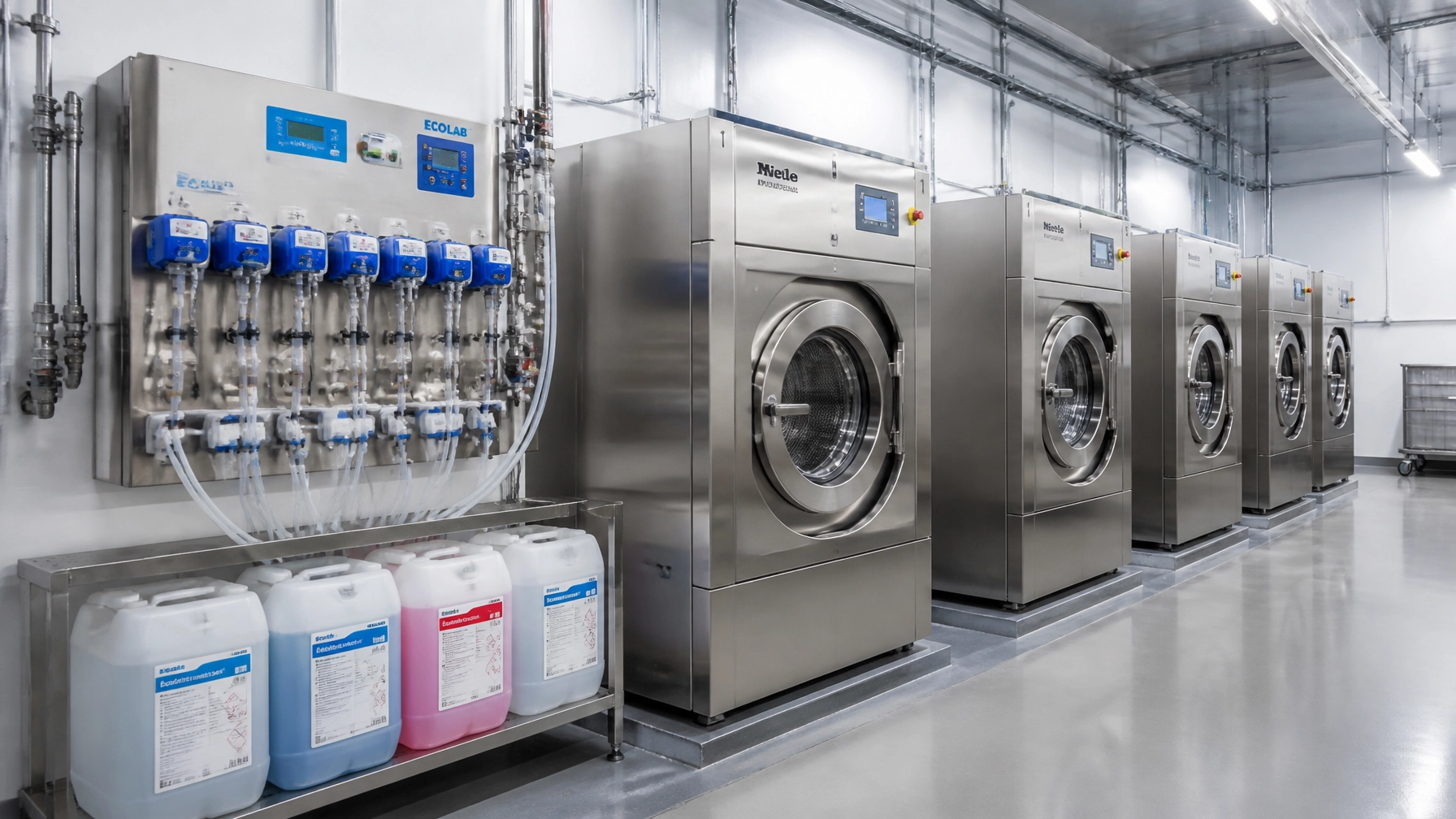
The path to operational excellence begins with precision. Rather than relying on manual pouring or uncalibrated systems, facilities should utilize advanced soap stand dispensers and auto-dosing technology. These systems ensure that the exact amount of chemical required: down to the milliliter: is delivered at the precise moment in the wash cycle.
At Wash IQ, we provide comprehensive support to help businesses navigate these challenges. Our approach includes:
- Custom Chemical Programming: We analyze your water quality, soil levels, and fabric types to create a tailored chemical profile.
- Regular System Calibration: Our technicians ensure that your dispensing systems remain accurate, preventing the "creep" of over-dosing.
- Training and Education: We empower your staff to understand that cleaning performance is a result of balanced variables, not chemical volume.

Conclusion: Prioritizing Precision over Volume
The true cost of over-using chemicals is a multi-faceted drain on business resources. From the accelerated destruction of linen assets to the increased wear on expensive industrial machinery, the habit of "adding a little extra" is a high-priced mistake.
In today’s industrial landscape, successful facility management requires a data-driven approach to every wash cycle. By focusing on chemical optimization and leveraging the expertise of a one-stop-shop provider like Wash IQ, businesses can achieve the dual goals of impeccable cleanliness and maximum operational efficiency.
Don't let your profits wash away. Contact Wash IQ today to schedule an efficiency report and discover how our chemical cost optimization services can transform your laundry operation.