5 Reasons Your Commercial Laundry Is Costing More Than It Should
In today’s competitive market, operational efficiency is not merely a goal; it is a vital necessity for survival and growth. For facility managers in the hospitality, healthcare, and commercial sectors, the laundry room often represents one of the most significant overhead expenses. However, many organizations remain unaware that their commercial laundry operations are hemorrhaging capital due to preventable inefficiencies.
In the world of industrial-grade textile care, costs are rarely static. They are influenced by a complex interplay of utility consumption, chemical precision, and labor throughput. When these factors are not meticulously managed, the resulting financial drain can be staggering. At Wash IQ, we have spent over 50 years analyzing laundry workflows, and we have identified the five most critical reasons your commercial laundry is likely costing more than it should.
1. Utilizing Outdated and Inefficient Equipment
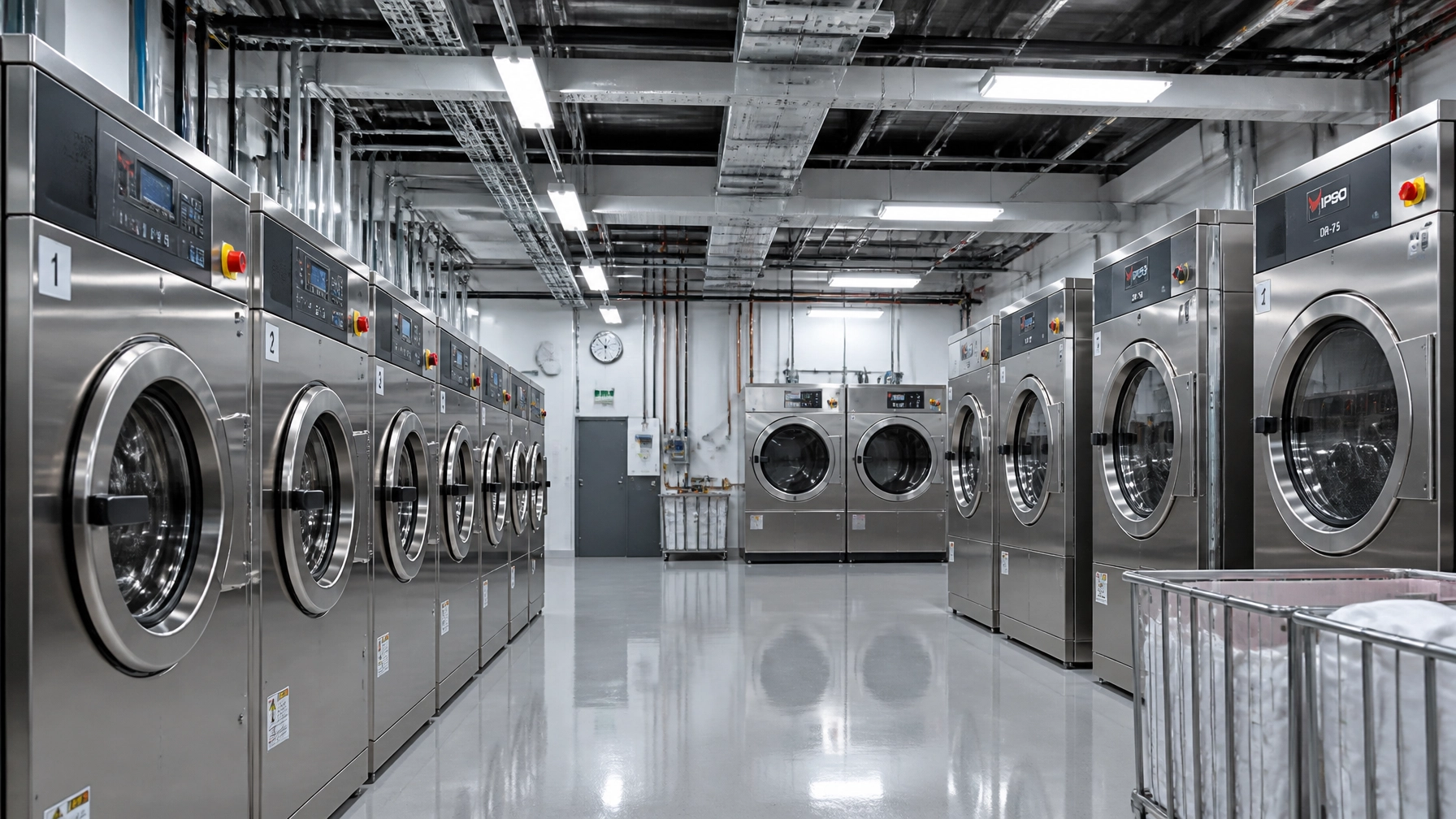
The most fundamental driver of excessive costs is the continued use of legacy equipment. While a twenty-year-old washer may still technically "run," its impact on your bottom line is almost certainly negative. Modern industrial laundry equipment is engineered with advanced extraction technologies that are essential for reducing utility overhead.

Older machines typically operate with lower G-force extraction. This means linens emerge from the wash cycle retaining a significant amount of moisture. Consequently, the drying cycle: which is often the most energy-intensive part of the entire process: must run longer, consuming excessive natural gas or electricity. By upgrading to high-extraction machines, facilities can drastically reduce drying times, sometimes by as much as 30%. This not only lowers utility bills but also extends the life of your linens by reducing their exposure to the high-heat mechanical action of the dryer.
Furthermore, modern machines feature programmable controls that allow for precise water level management. Using a "one-size-fits-all" wash cycle for every load leads to massive water waste. High-efficiency systems ensure that every drop is accounted for, aligning consumption directly with the weight and soil level of the load.
2. Inadequate Chemical Optimization
Chemical expenses represent a substantial portion of the operational budget, yet they are frequently managed with a lack of precision. In many facilities, "more soap" is mistakenly equated with "cleaner laundry." In reality, the overuse of chemicals is a primary cause of accelerated fabric degradation and increased rinsing requirements.

Chemical optimization is the scientific calibration of detergents, bleaches, and softeners to match the specific water chemistry and textile types of your facility. For instance, hard water in a commercial laundry can neutralize the effectiveness of detergents, leading staff to over-pour chemicals to compensate. This creates a cycle of waste that impacts both your chemical budget and your equipment’s longevity.
Without automated dosing systems and regular chemical audits, you are essentially guessing at your costs. Expert chemical optimization ensures that the exact milliliter of product required is delivered at the precise moment in the cycle. This level of accuracy is crucial for maintaining high product quality while simultaneously slashing chemical expenditures by significant margins.
3. Relying on Reactive Rather Than Preventive Maintenance
One of the most expensive mistakes a facility manager can make is adopting a "fix it when it breaks" mentality. Reactive maintenance is inherently more costly than preventive care. When a critical machine fails during peak operation, the costs are not limited to the repair invoice. You must also account for the cost of downtime, potential overtime for staff to catch up, and the risk of delayed service to your guests or patients.

Neglecting regular maintenance leads to minor issues snowballing into catastrophic failures. For example, a simple clogged lint screen or a slightly worn belt in a commercial dryer can force the motor to work harder, increasing energy draw and eventually leading to a complete motor burnout.
Scheduled inspections and routine part replacements are essential for ensuring that your equipment operates at peak efficiency. At Wash IQ, our 50 years of expertise have shown that facilities with a rigorous preventive maintenance schedule experience up to 50% fewer emergency service calls and enjoy a significantly longer equipment lifespan. Investing in expert repair services before a breakdown occurs is a strategic decision that protects your capital.
4. Suboptimal Facility Layout and Labor Inefficiency
Labor is arguably the highest single cost in any laundry operation. If your facility layout requires staff to take unnecessary steps or handle linens multiple times, you are wasting payroll. An efficient laundry room is designed for logical progression: dirty linens enter at one end, move through washing and drying, and emerge at the finishing station without backtracking.

Poorly designed spaces lead to bottlenecks. For example, if your dryer capacity does not match your washer throughput, staff will spend idle time waiting for loads to finish. Conversely, if folding and ironing stations are located too far from the dryers, the physical strain on employees increases, leading to fatigue and reduced productivity.
Design services are vital for optimizing the "flow" of a facility. By aligning machine placement with ergonomic best practices and staff movement, you can increase pounds-per-operator-hour (PPOH), effectively reducing your labor cost per load. Even small adjustments in the placement of folding tables or chemical storage can lead to cumulative time savings that impact the bottom line.
5. Lack of Data and Efficiency Reporting
In the modern industrial landscape, what is not measured cannot be managed. Many laundry operations function in a data vacuum, where managers know the total monthly bills but have no insight into the cost-per-pound of laundry produced. This lack of transparency hides inefficiencies that could easily be rectified.
Efficiency reports are essential tools for identifying hidden costs. These reports analyze water usage, energy consumption, and cycle times to provide a clear picture of operational health. They can reveal, for instance, that a specific shift is consistently over-loading machines or that a particular dryer is taking 15 minutes longer than it should.
Without these insights, you are managing by intuition rather than evidence. Leveraging data allows for the implementation of benchmarked standards and the identification of high-performing vs. low-performing assets. It empowers you to make informed decisions about when to repair and when to replace, ensuring that every dollar spent is an investment in future performance.
Conclusion: Reclaim Your Operational Excellence
The cumulative effect of inefficient equipment, unoptimized chemicals, reactive maintenance, poor design, and data blindness can be devastating to a facility's profitability. However, these challenges also represent opportunities for significant improvement.
By prioritizing industrial-grade solutions and professional oversight, you can transform your laundry room from a cost center into a streamlined, high-performance operation. Whether it is through a comprehensive efficiency report, a custom facility design, or the acquisition of state-of-the-art equipment, taking action today is vital for securing your facility's financial future.