7 Mistakes You’re Making with 2026 Hygiene Compliance (and How to Fix Them)
In today’s competitive market, the standard for hygiene in commercial laundry has shifted from a secondary operational concern to a primary business imperative. In the world of industrial-grade laundry, particularly for healthcare and hospitality sectors, 2026 has introduced rigorous new benchmarks for microbial safety and process validation. As facility managers and business owners strive to meet these evolving standards, many find themselves hindered by legacy practices and equipment that no longer satisfy modern regulatory requirements.
Maintaining hygiene compliance is not merely about aesthetic cleanliness; it is a vital component of infection control and risk management. Failure to adhere to contemporary standards can lead to catastrophic outcomes, ranging from healthcare-associated infections (HAIs) to the total loss of brand reputation. To assist you in navigating this complex landscape, we have identified seven critical mistakes currently being made in the industry and the essential steps required to rectify them.
1. Relying on Thermal Disinfection Without Verification
A frequent and dangerous assumption in laundry management is that selecting a "hot" cycle on an industrial washer automatically results in disinfection. In 2026, compliance standards such as those set by the Healthcare Laundry Accreditation Council (HLAC) and the CDC have become more specific. Proper thermal disinfection requires wash water to maintain a temperature of at least 160°F (71°C) for a minimum of 25 minutes.
Many facilities fail because their equipment does not consistently hit or hold these parameters due to boiler inefficiencies, heating element degradation, or simply incorrect programming. Relying on guesswork is no longer an option for professional operations.
The Fix: Implement real-time monitoring and telemetry. Modern industrial laundry equipment now features integrated sensors that log the temperature and duration of every cycle. Regular validation through temperature test strips or digital logging is crucial to ensure that every load meets the necessary safety thresholds before it leaves the drum.
2. Inadequate Separation of Soiled and Clean Zones
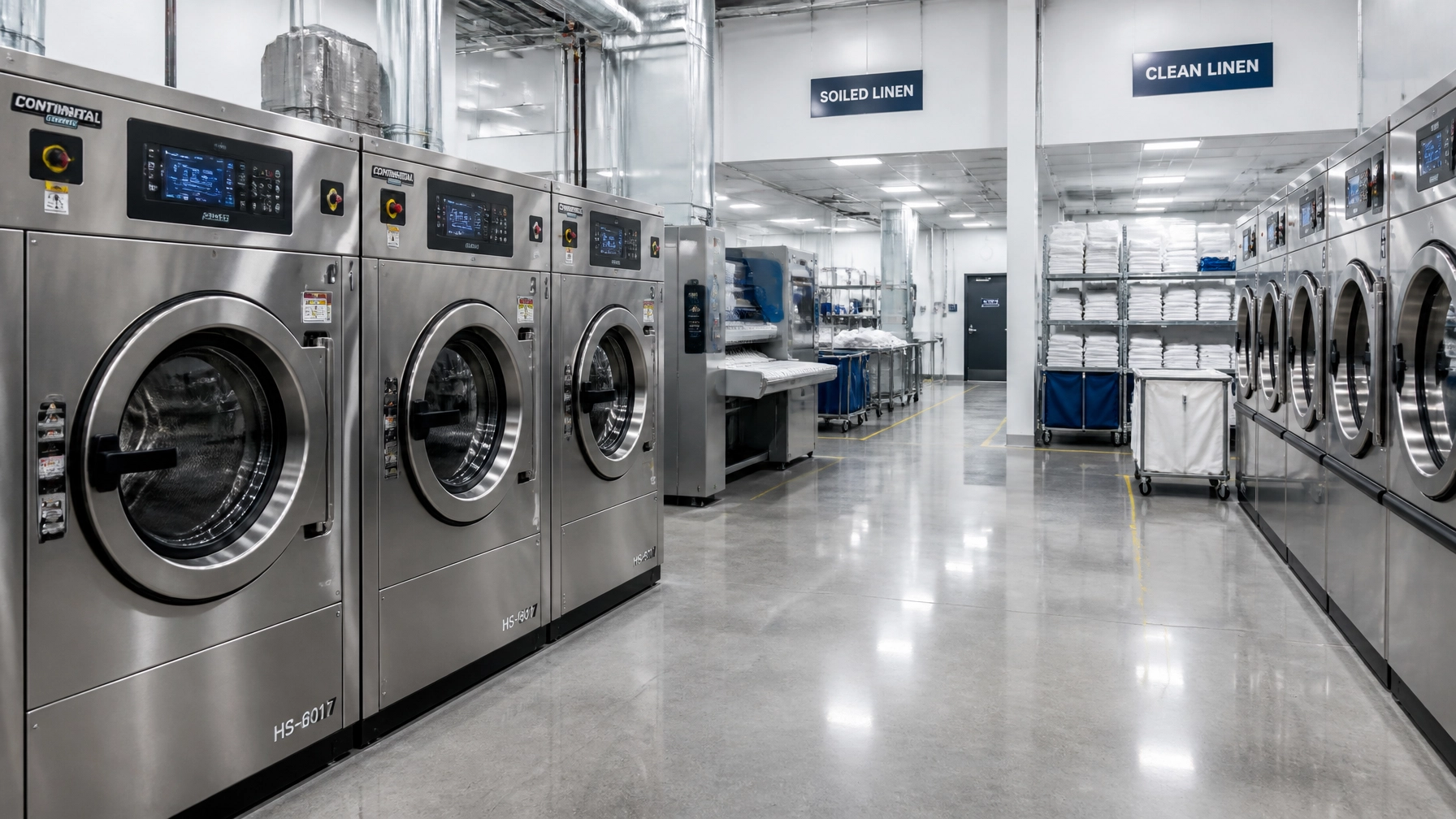
The physical layout of a laundry facility is the foundation of hygiene. A common mistake is allowing cross-contamination through poor facility design. When soiled linens are transported through the same corridors as clean linens, or when workers move between "dirty" and "clean" areas without rigorous sanitization protocols, the risk of pathogen transfer increases exponentially.
In the hospitality sector, this often manifests as using the same carts for dirty and clean towels. In healthcare, it is a failure to maintain negative airflow in soiled sorting rooms, allowing airborne contaminants to migrate into clean folding areas.
The Fix: Invest in professional design services to optimize your facility layout. This includes the installation of barrier walls and, ideally, the use of "barrier washers." These machines are loaded on the soiled side and unloaded on the clean side, physically preventing any overlap between contaminated and sanitized textiles. Furthermore, ensure your facility utilizes a one-way workflow that strictly separates personnel and equipment.

3. Mismanaging Chemical Dosing and Optimization
Chemical optimization is an essential pillar of the washing process. A mistake many facility managers make is treating laundry chemicals as a "set and forget" component of their operation. Over-dosing chemicals leads to fabric degradation and skin irritation for guests or patients, while under-dosing fails to achieve the necessary microbial kill rates, especially in cycles where thermal disinfection is not possible.
Furthermore, the timing of chemical injection is critical. For example, adding chlorine bleach at the very beginning of a cycle can neutralize detergent efficacy and damage fibers prematurely.
The Fix: Partner with experts for chemical cost optimization. Utilizing automated dosing systems ensures that the precise amount of disinfectant and detergent is injected at the optimal moment in the cycle. This not only guarantees compliance with hygiene standards but also significantly reduces operational expenses and extends the lifespan of your linen inventory.
4. Scaling Equipment for Volume Rather Than Compliance
A common pitfall is the selection of equipment based solely on throughput capacity while ignoring the specific technical requirements of 2026 hygiene standards. When a facility outgrows its equipment, the immediate reaction is often to overload machines or shorten cycle times to keep up with demand. This practice is fundamentally incompatible with hygiene compliance, as it prevents proper mechanical action and shortens the necessary contact time for thermal or chemical disinfection.
The Fix: Prioritize the selection of high-capacity industrial washers that are designed for the specific needs of your industry. If you are operating a boutique hotel or a regional hospital, your equipment must be capable of handling peak volumes without compromising the integrity of the disinfection cycle.

5. Neglecting Digital Documentation and Telemetry
In the world of modern auditing, if a process was not documented, it did not happen. Many facilities still rely on manual logs or, worse, no logs at all, to record their hygiene compliance. This creates a significant vulnerability during health inspections or brand audits.
2026 standards place a high premium on traceability. Inspectors now expect to see digital records of wash temperatures, chemical concentrations, and cycle completion data to verify that the facility is operating within safe parameters.
The Fix: Transition to equipment with user-friendly digital controls and data-logging capabilities. Efficiency reports and telemetry systems allow you to pull detailed data for every load processed. This documentation provides an authoritative defense during audits and ensures that your facility maintains a consistent standard of excellence.
6. Lack of Standardized Training for Laundry Personnel
The most advanced equipment in the world cannot compensate for a lack of human protocol. A prevalent mistake is failing to provide ongoing, specialized training for laundry staff. Hygiene compliance often breaks down at the point of handling: employees failing to bag contaminated items at the source, improper use of personal protective equipment (PPE), or neglecting hand hygiene between tasks.
The Fix: Establish a formal training program that covers the science of laundry hygiene, including the risks of cross-contamination and the proper handling of hazardous textiles. This training should be reinforced by a comprehensive Quality Assurance Manual and a Hazard Analysis and Critical Control Points (HACCP) plan.
7. Overlooking the Impact of Equipment Maintenance
Reliability is the cornerstone of hygiene. When machines are not properly maintained, their ability to reach required temperatures or distribute chemicals evenly is compromised. A malfunctioning pump or a faulty thermostat can lead to entire batches of laundry that are technically "clean" but microbiologically unsafe. Many businesses wait for a total breakdown before calling for repair and maintenance services, a reactive approach that is both costly and risky.
The Fix: Move toward a proactive maintenance model. Regular professional inspections ensure that all technical parameters: heating, dosing, and mechanical action: are performing at 100% efficiency. This not only secures your compliance but also prevents the high costs associated with emergency repairs and unplanned downtime.

Conclusion: A Strategic Approach to Hygiene
Navigating the landscape of 2026 hygiene compliance requires more than just high-quality machines; it requires a strategic partnership with industry experts who understand the nuances of industrial laundry. At Wash IQ, we provide the essential tools: from industrial laundry equipment sales to expert repair and chemical optimization: to ensure your facility operates with maximum efficiency and total compliance.
By identifying and fixing these seven common mistakes, you can transition your laundry operation from a point of risk to a pillar of operational excellence. Whether you are managing a major hospital or a high-end resort, the commitment to hygiene is the ultimate investment in your business’s long-term success and the safety of those you serve.