
Chemical Optimization Matters: How to Slash Utility Costs and Extend Fabric Life
In the world of industrial laundry operations, efficiency is not merely a performance metric; it is the fundamental pillar of profitability and long-term sustainability. For hotels, hospitals, and commercial laundry facilities, the daily pressure to deliver high volumes of pristine linens while managing rising operational costs is immense. In today’s competitive market, facility managers must look beyond simple machine maintenance to find significant savings. One of the most effective, yet often overlooked, levers for operational excellence is chemical optimization.
Chemical optimization is the precise calibration of wash formulas, water temperatures, and detergent concentrations to achieve maximum cleaning results with minimal resource waste. It is a technical discipline that blends chemistry with mechanical precision. By shifting from a "one-size-fits-all" approach to a data-driven chemical strategy, businesses can realize substantial reductions in utility consumption and a dramatic extension of fabric life. This deep dive explores the financial and operational necessity of chemical optimization and how it serves as a crucial component of a modern laundry strategy.
The Economic Landscape of Industrial Laundry
To understand why chemical optimization is vital, one must first analyze the cost structure of a typical industrial laundry facility. Industry benchmarking studies reveal that the most significant expenses are not actually the chemicals themselves: which typically account for only 5% to 10% of total costs: but rather the cascading effects of improper chemical use.
The major cost drivers in a laundry operation include:
- Linen Replacement: 15% to 25% of total costs.
- Energy and Utilities: 10% to 25% of total costs.
- Labor and Maintenance: 15% to 25% of total costs.
When wash chemistry is not optimized, the frequency of "rag-outs" (linens that must be discarded due to wear or staining) increases, and the energy required to process each load skyrockets. Therefore, a modest investment in professional chemical management can yield an outsized return on investment (ROI) by targeting these larger expenditure categories.

Slashing Utility Costs: The Water-Energy Nexus
Utility costs represent a significant portion of the monthly overhead for any high-volume facility. Traditional laundry practices often rely on high-temperature wash cycles (ranging from 140°F to 160°F) to ensure disinfection and stain removal. However, modern chemical advancements have made these extreme temperatures largely unnecessary for many fabric classifications.
The Low-Temperature Advantage
Implementing optimized, low-temperature chemical formulas is an essential strategy for reducing gas and electricity consumption. Professional-grade surfactants and enzymes are now engineered to activate at 100°F to 120°F. By lowering the required wash temperature, a facility can cut the energy needed to heat water by up to 30%. This transition not only reduces the carbon footprint of the operation but directly impacts the bottom line by lowering utility bills.
Reducing Over-Drying and Rewashes
Chemical optimization also plays a crucial role in the drying stage. When fabrics are processed with the correct balance of softeners and neutralizing sours, they retain less moisture and exhibit fewer wrinkles. This allows for shorter dryer cycles, preventing the common industry problem of over-drying. According to industry data, nearly 90% of on-premise laundries over-dry their loads by an average of six minutes per cycle. Correcting this through better chemical management can save hours of equipment run time daily.
Furthermore, precision dosing reduces the "rewash rate." When chemistry is inaccurate, linens often require a second wash to remove residual stains, doubling the water and energy consumption for that specific load. Achieving a 99% "first-time-clean" rate is a hallmark of an optimized facility.
Protecting Your Investment: Maximizing Fabric Longevity
For hospitality and healthcare providers, linens are a significant capital investment. The harsh reality of industrial laundry is that the combination of mechanical agitation and aggressive chemical exposure can rapidly degrade textile fibers. Chemical optimization is the most effective way to prevent premature fabric failure.

The Role of pH Balancing and Sours
The final stages of a wash cycle are vital for fabric health. During the wash, alkaline detergents are used to break down soils. If these alkalis are not properly neutralized during the rinse cycle, they remain trapped in the fibers. Residual alkalinity causes fabrics to become brittle, leads to yellowing (graying), and can even cause skin irritation for the end-user.
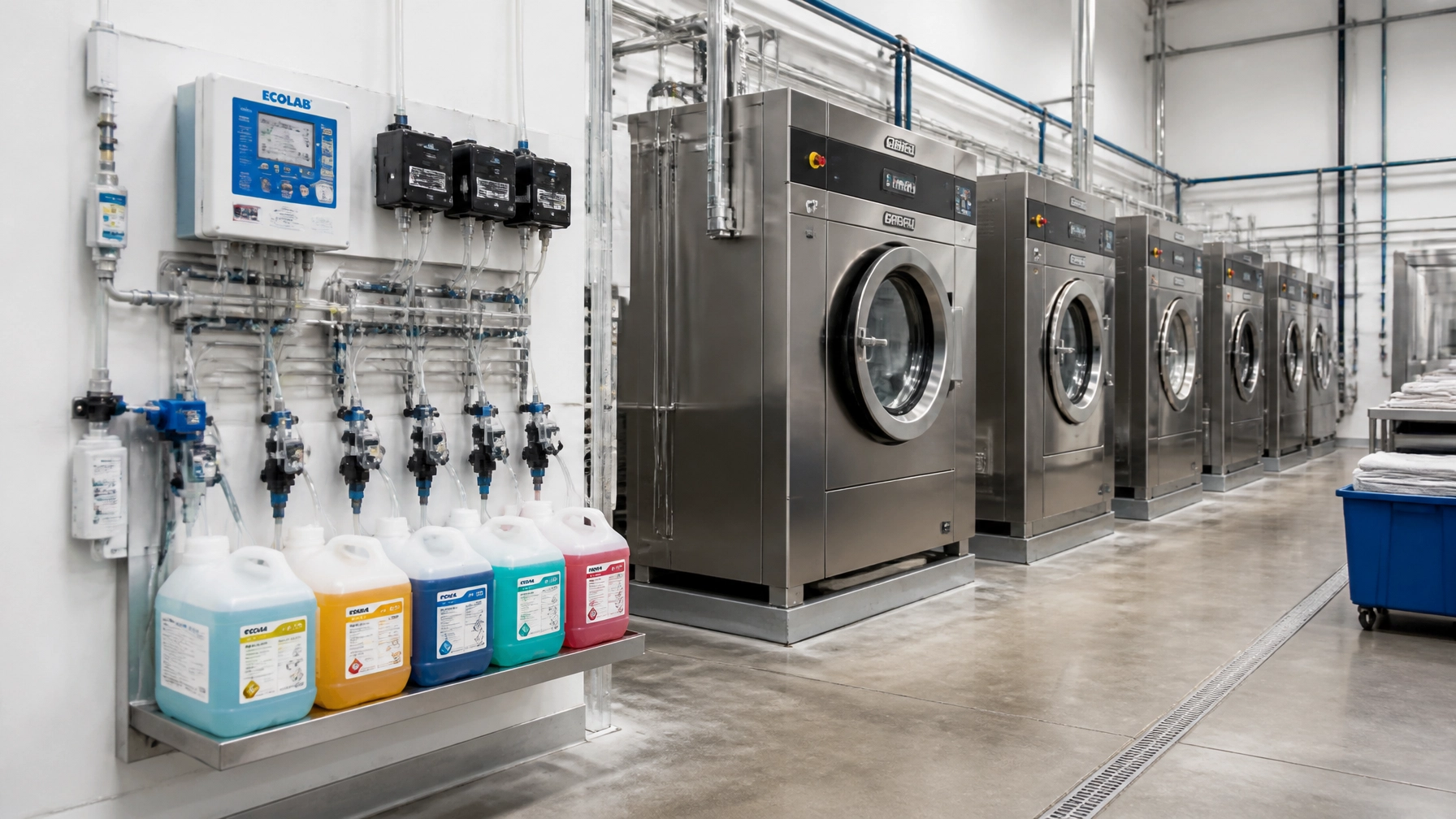
Using automated dispensing systems to inject "sours" (acidic neutralizing agents) ensures that the final pH of the fabric is balanced. This process smooths the fibers, reducing the friction that occurs during both the wash and use, thereby extending the lifecycle of the linen by as much as 20% to 30%.
Controlled Bleaching and Oxidation
Over-bleaching is one of the leading causes of "pinholing" and thinning in towels and sheets. While chlorine bleach is essential for disinfection, its use must be strictly controlled based on titration results. Optimized chemical systems monitor the oxidation levels to ensure that stains are removed without compromising the structural integrity of the cotton or polyester fibers. By preserving the tensile strength of the fabric, facilities can significantly delay the need for replacement purchases.
Operational Excellence: Calculating the ROI
The business case for chemical optimization is clear when viewed through the lens of ROI. Consider a mid-sized hotel laundry with an annual operating budget of $500,000. If an optimized chemical program achieves a 15% reduction in linen replacement and a 15% reduction in energy costs, the facility could save approximately $30,000 per year.
| Category | Typical Annual Cost | Potential Savings (15%) |
|---|---|---|
| Linen Replacement | $100,000 | $15,000 |
| Energy/Utilities | $100,000 | $15,000 |
| Chemicals | $50,000 | $5,000 (via precision dosing) |
| Total Estimated Annual Savings | $35,000 |
Given that the implementation of advanced dosing equipment and professional chemical formulas often pays for itself within 6 to 12 months, the long-term financial benefits are indisputable. Facilities that fail to optimize are essentially allowing a significant portion of their profit margin to literally go down the drain.

The Wash IQ Approach to Optimization
At Wash IQ, we understand that industrial laundry equipment and wash chemistry are two sides of the same coin. We provide a comprehensive, "one-stop-shop" solution designed to maximize the efficiency of every machine in your facility. Our expertise spans over 50 years, allowing us to service any brand of equipment and provide custom chemical solutions tailored to your specific water quality and soil types.
Our services include:
- Efficiency Reports: We conduct a deep analysis of your current operations to identify hidden costs and utility waste.
- Chemical Cost Optimization: We help you select and calibrate the precise chemicals needed to reduce expenses while enhancing product quality.
- Advanced Equipment: From our HE-Series Washers to our HP-Series Washer, our machines are built to integrate seamlessly with automated chemical dispensing systems.
- Repair and Maintenance: We ensure your equipment is operating at peak mechanical efficiency, which is essential for the chemistry to work as intended.
In today’s industrial landscape, a lack of precision is a lack of profit. Whether you are managing a single location or a large-scale multi-site operation, the shift toward optimized chemistry is an essential step toward professional excellence.

Conclusion
Chemical optimization is not a luxury; it is a fundamental requirement for any industrial laundry facility seeking to remain competitive and profitable. By focusing on the scientific balance of wash cycles, businesses can slash their utility bills, preserve their linen investments, and deliver a superior product to their customers.
In the world of facility management, the most important decisions are often those that happen behind the scenes, inside the drums of your machines. To learn more about how we can help you achieve these results, visit our About Us page or consult our FAQ for technical insights. Investing in precision today ensures operational success for years to come.