Heat-Pump Drying Explained in Under 3 Minutes
In today’s competitive market, operational efficiency is no longer a luxury: it is a baseline requirement for survival and growth. In the world of industrial laundry, where energy costs and labor shortages frequently squeeze margins, the adoption of high-performance technology is essential. Among the most significant advancements in recent years is the rise of heat-pump drying.
While conventional drying methods have remained largely unchanged for decades, heat-pump technology has undergone a rapid evolution. In 2026, this technology has matured into a standard for facilities prioritizing sustainability, cost-reduction, and infrastructure flexibility. For facility managers and business owners, understanding how this system works: and why it matters: is vital for making informed capital investment decisions.
What is Heat-Pump Drying?
At its core, a heat-pump dryer is a closed-loop system designed to recycle energy that would otherwise be wasted. In a traditional vented dryer, air is heated (typically via gas burners or electric resistance coils), tumbled through the drum to pick up moisture, and then exhausted through a vent to the outside environment. This process is inherently inefficient, as it requires a constant supply of new air to be heated and subsequently discarded.
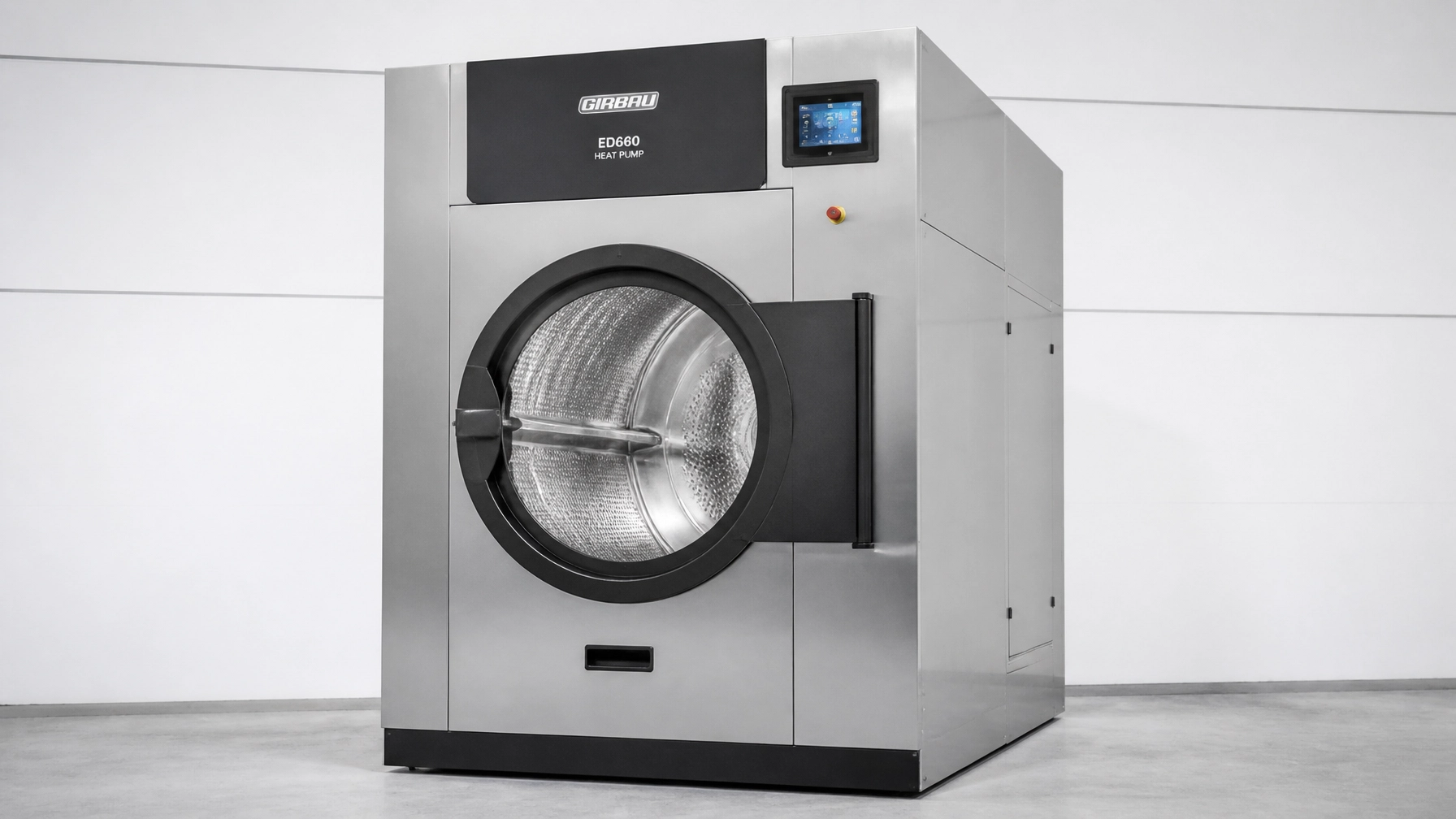
Heat-pump drying disrupts this cycle. Instead of exhausting hot, moist air, the system passes that air through a heat pump module. Within this module, the air is cooled to condense and remove the moisture, then immediately reheated and recirculated back into the drum. By capturing and reusing the latent heat, the system operates with remarkable thermal efficiency.
The Technical Mechanism
Modern industrial heat-pump dryers utilize inverter-driven compressors and electronically controlled valves to maintain precise temperature stability. This allows the equipment to dewater fabrics effectively at lower temperatures than conventional dryers, which is crucial for preserving the integrity of delicate linens and synthetic textiles often found in high-end hospitality and healthcare settings.
Why the Industry is Switching: The Three Major Pillars
The transition to heat-pump technology is driven by three primary factors: energy conservation, infrastructure simplified, and long-term financial performance.
1. Unprecedented Energy Savings
The most immediate benefit of heat-pump drying is a drastic reduction in utility consumption. On average, commercial heat-pump dryers utilize 50–70% less energy than conventional vented electric or gas models. In high-volume operations: such as those found in hospitals or large-scale banquet halls: this translates into tens of thousands of dollars in annual savings.
By recycling the same heat multiple times, the machine ensures that every kilowatt-hour of electricity performs significantly more work. This level of efficiency is important not only for the bottom line but also for meeting increasingly stringent energy-efficiency targets and green-building certifications.

2. Infrastructure and Installation Flexibility
One of the most significant challenges in facility design is the requirement for extensive venting and high-capacity gas lines. Conventional dryers require large exhaust ducts to move moisture and combustion byproducts outside the building. This often restricts equipment placement and increases the complexity of laundry facility design services.
Heat-pump dryers are largely ventless. Because the moisture is condensed into a drain line rather than exhausted as steam, these machines can be installed in areas where traditional venting is impractical, such as basements, inner-building rooms, or retrofitted spaces. This flexibility allows business owners to optimize their floor plans and reduce the initial costs associated with HVAC and ductwork installation.
3. Superior Textile Care
Traditional dryers often subject linens to "thermal shock": high bursts of heat that can degrade fibers over time. Heat-pump technology operates at lower, more consistent temperatures. This gentler approach is essential for extending the lifespan of expensive hotel linens and surgical textiles. For a facility manager, the reduction in "linen replacement costs" is a hidden but vital component of the overall ROI of heat-pump equipment.
Performance Breakthroughs in 2026
Historically, the primary criticism of heat-pump dryers was their cycle time. Early models often took twice as long as gas dryers to complete a load, which created a bottleneck in high-throughput facilities.
However, the equipment available in 2026 has largely closed this gap. Leading manufacturers have optimized the airflow and compressor technology to the point where a full industrial load can now be dried in approximately 35 to 40 minutes. This is typically within five to ten minutes of a conventional vented dryer. When balanced against the massive energy savings, this minor difference in time becomes negligible for most OPL laundry solutions.

The Financial Logic: ROI and Efficiency Reports
Investing in industrial laundry equipment is a long-term commitment. While the initial purchase price of a heat-pump dryer is often higher than that of a standard vented unit, the payback period has shortened considerably.
For a typical high-cycle operation, the ROI (Return on Investment) is now often achieved within two to five years. When you factor in the reduced utility bills, the elimination of duct cleaning and maintenance, and the extended life of linens, the total cost of ownership (TCO) is significantly lower than that of traditional equipment. Businesses looking to quantify these savings should utilize efficiency reports to compare their current utility expenditure against the projected performance of a heat-pump-based system.
Synergizing the Laundry Cycle
To achieve maximum results, heat-pump dryers should not be viewed in isolation. They are most effective when paired with high-G-force industrial washing machines.
The more water a washer can extract during the final spin cycle, the less work the dryer has to do. High-spin washers can reduce the moisture retention in fabrics to a level where the heat-pump dryer can complete its cycle even faster, further enhancing the throughput of the entire facility. This holistic approach to equipment selection: combining high-extraction washers with high-efficiency heat-pump dryers: is the standard for operational excellence in 2026.

Strategic Implementation
Transitioning to heat-pump technology requires a strategic assessment of your facility’s specific needs. Factors such as local utility rates, peak volume requirements, and existing infrastructure all play a role in determining the ideal equipment mix.
At Wash IQ, we bring over 50 years of expertise to help businesses navigate these choices. From initial design services to ongoing repair and maintenance services, our goal is to provide a one-stop shop for all your industrial laundry needs. Whether you are managing a single-site hotel or a large multi-site hospital operation, the integration of heat-pump drying technology can offer a crucial competitive advantage.

Conclusion
In the world of industrial laundry, the move toward heat-pump drying represents a shift toward a more sustainable and profitable future. By recycling energy, eliminating venting constraints, and protecting textile quality, this technology addresses the most pressing challenges faced by facility managers today.
As we look toward the remainder of 2026 and beyond, the question is no longer whether heat-pump drying is viable: it is how soon your facility can afford to implement it. For those seeking to reduce overhead and improve consistency, the path forward is clear: it is time to embrace the efficiency of the heat-pump.