How to Choose the Best Commercial Washers and Dryers (Compared)
In today’s competitive market, operational efficiency is not merely a goal; it is a fundamental requirement for business sustainability. For enterprises within the hospitality, healthcare, and commercial laundry sectors, the selection of industrial laundry equipment represents one of the most significant capital investments an organization will undertake. The choice between various commercial washers and dryers directly impacts labor costs, utility consumption, and the longevity of textiles.
Selecting the appropriate machinery requires a technical understanding of capacity, extraction capabilities, and long-term maintenance requirements. This guide provides a comprehensive comparison of the factors essential to securing high-performance equipment that aligns with specific organizational objectives.
Defining Your Operational Requirements
Before evaluating specific models, it is essential to conduct a thorough analysis of your facility's throughput requirements. A common industry standard involves calculating the peak pounds of laundry generated per hour during the busiest shifts. For example, a 100-room hotel may require a vastly different equipment profile than a specialized healthcare facility processing surgical linens.
Failure to accurately size equipment leads to two primary inefficiencies: over-investment in underutilized machines or operational bottlenecks caused by undersized units. At Wash IQ, our design services assist facility managers in planning and optimizing layouts to ensure that workflow remains fluid and productive.
Key Technical Specifications for Washers
When comparing commercial washers, business owners must look beyond the initial purchase price and focus on technical performance metrics that drive long-term ROI.
Extraction Speed and G-Force
G-force is perhaps the most crucial specification in a commercial washer. High G-force extraction (the force exerted during the spin cycle) removes more water from the linens before they enter the dryer.
- Standard G-Force (80–100 G): Suitable for basic applications but leaves significant moisture in the fabric.
- High G-Force (350–400+ G): Essential for high-volume operations. By removing more water during the wash cycle, these machines drastically reduce drying times.
Reducing drying time is vital because it minimizes the use of gas or electricity and extends the life of the linens by reducing heat exposure.

Programmable Controls and Flexibility
Modern industrial machines should feature programmable microprocessors. This flexibility allows for specialized cycles tailored to specific fabric types or soil levels. Advanced controls enable the management of water levels, temperature, and chemical injection timing, ensuring consistent results across multiple shifts.
Optimizing the Drying Process
The relationship between the washer and the dryer is fundamental to facility efficiency. A common technical error is pairing a high-capacity washer with an undersized dryer, creating a "bottleneck" where wet laundry accumulates.
Dryer Capacity and Airflow
As a standard rule, a dryer’s capacity should be approximately 1.5 to 2 times the capacity of the companion washer to allow for proper airflow and "tumbling" space. Effective airflow is the primary driver of drying efficiency. Machines engineered with axial airflow systems ensure that heated air passes through the linens more effectively, resulting in faster cycle times.

Space Optimization: Stack Units
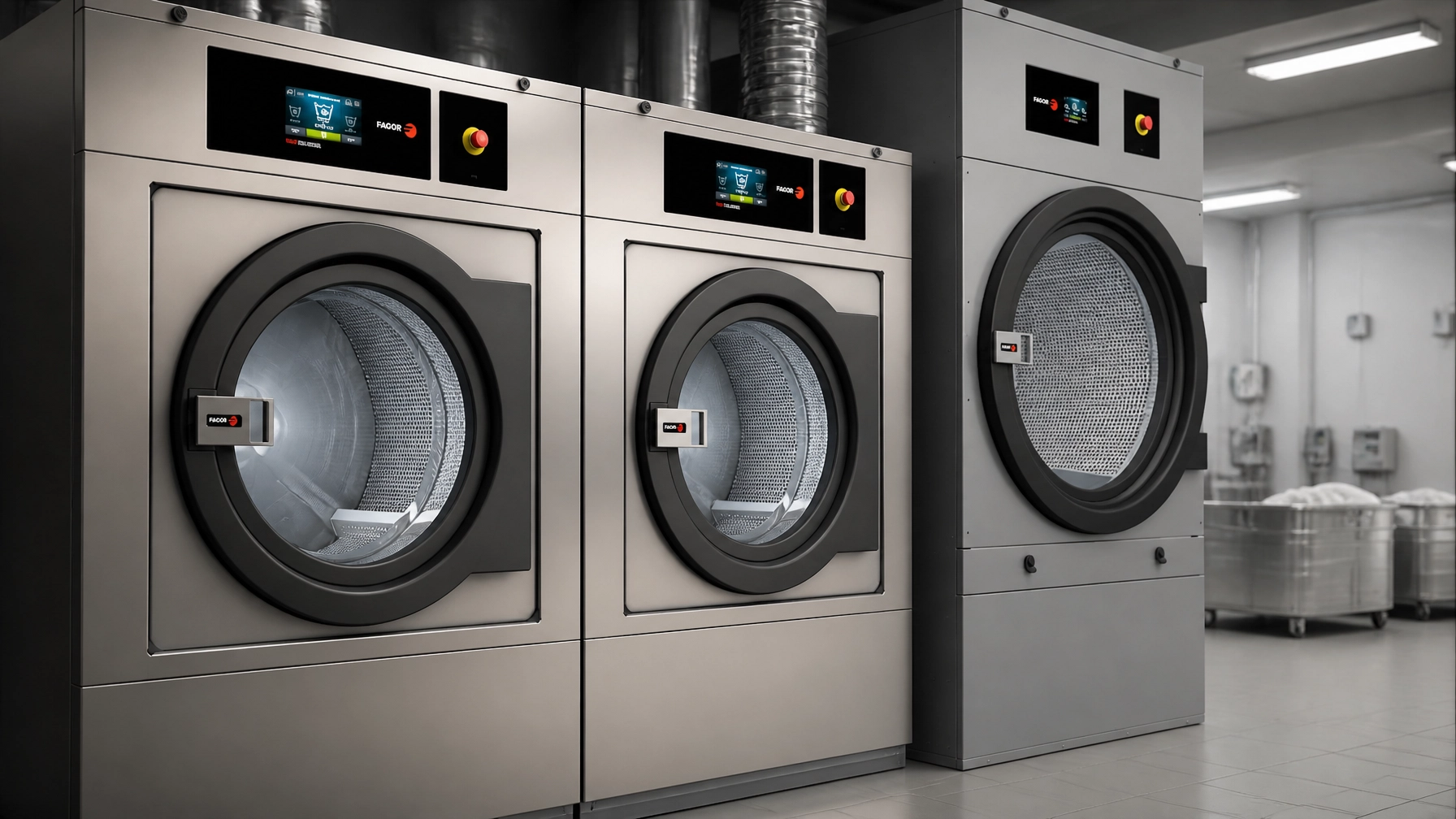
For facilities where square footage is limited, such as boutique hotels or urban multi-housing units, industrial stack dryer units are an important solution. These configurations provide double the throughput without increasing the machine's footprint, allowing for a more versatile floor plan.
Chemical Cost and Resource Optimization
The performance of industrial laundry equipment is inextricably linked to the chemicals used during the wash process. Inefficient chemical dosing can lead to premature textile degradation or unsatisfactory hygiene standards, particularly in healthcare settings.
Effective chemical cost optimization involves integrating automatic liquid injection systems with your washer-extractors. This ensures that the precise amount of detergent, softener, and bleach is utilized for every load, preventing waste and ensuring that product quality remains exceptional.

Long-Term Reliability and Support
In the world of industrial operations, downtime is the enemy of profitability. When choosing between brands, the quality of the technical support and the robustness of the warranty are as important as the hardware itself.
The 3-Year Parts and Labor Warranty
Many manufacturers offer limited warranties that cover parts but exclude the high cost of specialized labor. Wash IQ distinguishes itself by providing a comprehensive 3-year parts and labor warranty on our products. This level of protection is crucial for businesses that cannot afford unexpected capital outlays for repairs.
Maintenance and Expert Repair
With over 50 years of industry expertise, we recognize that even the most robust machines require regular maintenance. It is vital to choose a partner capable of providing repair and maintenance services for all brands of equipment. Preventive maintenance schedules: including lint screen cleaning, belt inspections, and bearing lubrication: are essential to preventing catastrophic failures.
Specialized Finishing Equipment
For high-end hospitality and banquet settings, standard washing and drying are often insufficient. Achieving a professional finish on large textiles, such as bed linens and tablecloths, requires specialized equipment.

An industrial flatwork ironer allows facilities to automate the pressing process, ensuring a crisp, high-quality finish that enhances guest satisfaction. These machines are designed for high throughput and consistent results, making them an essential addition to any full-service commercial laundry operation.
Summary: A Strategic Choice
Selecting the best commercial washers and dryers is a technical decision that impacts every facet of your business operations. By focusing on G-force extraction, appropriately matched capacities, and a robust support infrastructure, you can ensure that your facility operates at peak efficiency.
Key Comparison Checklist:
- G-Force Rating: Is the extraction speed sufficient to minimize drying costs?
- Utility Efficiency: Have you requested efficiency reports to analyze potential savings?
- Serviceability: Does the provider offer localized repair services and a comprehensive warranty?
- Scalability: Is the equipment designed to handle your projected volume growth over the next decade?
At Wash IQ, we pride ourselves on being a one-stop shop for all industrial laundry needs. Whether you require a single high-capacity washer or a complete facility design, our team leverages decades of experience to provide custom solutions that drive success.
For a comprehensive evaluation of your current operations or to explore our latest equipment offerings, visit Wash IQ today.