Maximizing the Lifespan of Commercial Washers and Dryers: Maintenance Hacks Every Facility Manager Should Know
In today’s competitive market, commercial laundry equipment must deliver consistent performance under demanding conditions. Hotels, hospitals, banquet halls, and commercial laundries depend on reliable washers and dryers to process high volumes of linens, uniforms, towels, and other textiles every day. When a machine fails, the consequences extend beyond a repair invoice. Delays can affect room turnover, patient care, banquet operations, labor scheduling, and customer satisfaction.
A structured maintenance program is therefore essential. Preventive maintenance, correct operating practices, water quality control, lint management, and chemical optimization can significantly reduce mechanical stress and unplanned downtime. The following maintenance hacks provide facility managers with a practical framework for extending the useful life of commercial washers and dryers.
1. Establish a Preventive Maintenance Schedule
The most important maintenance strategy is to service equipment before a failure occurs. A preventive program should be based on both time and usage. A low-volume operation may schedule service annually, while a high-volume laundry may require inspections every few months or after a defined number of cycles.
Always follow the equipment manufacturer’s recommendations. As a practical starting point, facility managers should establish:
- Daily operator inspections
- Weekly cleaning and hose checks
- Monthly mechanical and airflow inspections
- Quarterly water quality and descaling reviews
- Annual professional service
Maintain a written log for each machine. Record cycle counts, error codes, drain and fill times, vibration, unusual noises, repairs, and replaced parts. These records help maintenance teams identify gradual performance changes before they become expensive failures.
For example, a washer that begins filling more slowly may have restricted inlet filters or a failing water valve. A dryer that takes longer to reach the target temperature may have reduced exhaust airflow. Tracking these changes makes it easier to correct the cause before the equipment suffers additional damage.
2. Perform Daily Washer Maintenance
Daily care requires only a few minutes but can prevent substantial repair costs.
Clean Door Seals and Gaskets
Wipe door gaskets at the end of each operating period to remove lint, soil, detergent residue, and moisture. Buildup can prevent a proper seal, leading to leaks and premature gasket deterioration. In healthcare and hospitality environments, regular cleaning also supports hygienic laundry processing by reducing areas where residue and microorganisms may collect.
Inspect the gasket for cracks, hardening, or deformation. Replacing a worn seal early is considerably less disruptive than responding to a leak that damages flooring, electrical components, or nearby equipment.
Leave Washer Doors Open When Idle
Unless the manufacturer specifies otherwise, leave the washer door slightly open between operating periods. This allows the drum and gasket to dry, helping prevent mildew, odors, and chemical residue. Closing a damp washer for extended periods accelerates deterioration of rubber components.
Clean Chemical Dispensers
Detergent and softener buildup can restrict dispenser flow and interfere with accurate chemical delivery. Clean dispenser compartments regularly with an approved method, and inspect the lines connected to automatic dosing systems.
Accurate delivery is especially important for OPL laundry solutions, where a consistent wash formula must perform across multiple loads and soil classifications. A clogged dispenser can lead to underdosing, rewash, poor linen quality, or operators adding chemicals manually.
Check for Leaks, Vibration, and Noise
During operation, staff should look for water leaks, excessive movement, unusual bearing noise, and repeated imbalance errors. These symptoms should be logged immediately. A machine that vibrates more than usual may be out of level, overloaded, underloaded, or developing a problem with its suspension, bearings, or drive system.
3. Protect Washers From Improper Loading
Correct loading is a critical but often overlooked maintenance practice. Commercial washers should be loaded according to the rated capacity and the fabric type being processed.
Overloading can place excessive force on:
- Bearings
- Door seals
- Suspension components
- Drive belts and motors
- Drain systems
- Water extraction components
Underloading can also create problems. A small, uneven load may collect on one side of the drum during extraction, causing severe imbalance and repeated high-impact movement.
Train operators to distribute textiles evenly and avoid mixing items with significantly different weights or absorbency when the wash program is not designed for that combination. Consistent loading improves cleaning quality while reducing mechanical stress and shortening cycle interruptions.
Modern industrial laundry equipment may include balance-control systems designed to support smoother operation. These systems are valuable, but they do not eliminate the need for proper loading and machine leveling.
4. Manage Water Quality and Mineral Buildup
Water quality directly affects washer performance. Hard water can deposit minerals on heating elements, valves, hoses, drum surfaces, and other internal components. Scale buildup can restrict flow, increase heating time, reduce cleaning performance, and place additional demand on pumps and valves.
Monitor Fill Times
Track how long washers take to fill. A gradual increase may indicate clogged inlet screens, mineral buildup, reduced water pressure, or a failing valve. Cleaning inlet filters on a regular schedule helps maintain proper flow and prevents debris from entering the machine.
Use Descaling Procedures Where Appropriate
Facilities operating in hard-water areas should establish a documented descaling schedule. The appropriate frequency depends on water hardness, temperature, cycle volume, and manufacturer instructions. Do not introduce acids or descaling products without confirming compatibility with the machine, seals, stainless steel, and chemical system.
Water softening or filtration may be a cost-effective investment for high-volume facilities. Reducing mineral deposits can lower repair frequency and help equipment maintain consistent performance over a longer service life.
5. Make Lint Management a Dryer Priority

Lint management is vital for dryer efficiency and fire prevention. Lint screens should be cleaned after every load, not only when they appear full. Even a partially restricted screen can reduce airflow and extend drying time.
Restricted airflow causes several operational problems:
- Longer cycles
- Higher gas or electrical consumption
- Excessive heat buildup
- Premature wear on heating components
- Reduced productivity
- Increased fire risk
Clean the lint screen housing and accessible areas around the dryer regularly. Lint can accumulate below the screen, around the drum, behind panels, and near exhaust connections.
Inspect Exhaust Ducts and Exterior Vents
A clean lint screen cannot compensate for a blocked exhaust system. Inspect ductwork, elbows, exterior hoods, and termination points for lint accumulation or obstructions. Verify that warm air is exiting freely during operation.
High-volume facilities should arrange professional exhaust cleaning and airflow testing at intervals appropriate for their cycle volume and site conditions. Dryer exhaust maintenance should be treated as both an equipment-longevity measure and a safety requirement. The CPSC dryer fire safety guidance also reinforces the importance of maintaining clear dryer exhaust systems.

6. Use Chemical Optimization to Reduce Wear
Chemical selection and dosing affect more than linen quality. Excessive detergent, alkalinity, oxidizer, or sour can leave residue and contribute to the deterioration of seals, hoses, dispensers, sensors, and stainless surfaces.
A proper chemical optimization program should include:
- Matching chemistry to water quality and soil type.
- Calibrating automatic chemical pumps on a regular schedule.
- Verifying that injection tubes are not blocked, cracked, or incorrectly positioned.
- Reviewing dosage after changing products or suppliers.
- Confirming that wash formulas provide adequate rinsing.
- Training employees not to pour concentrated chemicals directly into the drum or onto rubber seals.
Use manufacturer-approved products and follow the chemical supplier’s safety data sheet. Strong oxidizers and concentrated acids should be handled with appropriate personal protective equipment and never mixed unless specifically approved by the manufacturer.
Wash IQ’s commercial laundry detergent selection includes products intended for institutional and commercial applications. For example, a commercial-grade detergent, builder, destainer, or sour may be selected according to the facility’s textiles and wash process. The correct formula can reduce rewashes, improve fabric life, and prevent residue-related equipment problems.
7. Inspect Belts, Bearings, Hoses, and Electrical Components
Monthly or scheduled mechanical inspections should cover the components most likely to wear under heavy use.
Inspect belts for cracking, glazing, fraying, or loss of tension. Check bearings for abnormal noise, heat, or vibration. Examine water and drain hoses for bulges, cracks, abrasion, and loose connections. Proactively replacing aging hoses can prevent flooding and emergency shutdowns.
Electrical connections should be inspected by qualified personnel. Heat discoloration, damaged insulation, loose terminals, recurring breaker trips, or error codes require prompt attention. Gas dryers also require qualified inspection of gas connections, burner operation, ignition systems, and safety controls.
Do not remove guards or service electrical, gas, or high-voltage components unless the employee is trained and authorized to do so. Lockout/tagout procedures should be followed whenever equipment is being serviced.
8. Know When to Call for Expert Repair
Routine cleaning and visual inspections are appropriate for trained operators. Certain issues, however, require Expert repair to prevent injury, further equipment damage, or a more expensive breakdown.
Call a qualified technician when you observe:
- Repeated imbalance faults
- Persistent leaks after tightening approved connections
- Grinding, knocking, or high-pitched bearing noise
- Unexplained electrical shutdowns
- Gas odors or burner irregularities
- Dramatically extended drying times
- Repeated error codes
- Failure to drain, fill, heat, or extract correctly
- Visible damage to wiring, motors, bearings, or suspension components
A technician can identify whether a symptom is caused by a failed part, incorrect installation, poor airflow, water quality, improper programming, or chemical interaction. Wash IQ provides repair and maintenance support for any brand of laundry equipment, backed by more than 50 years of industry experience.
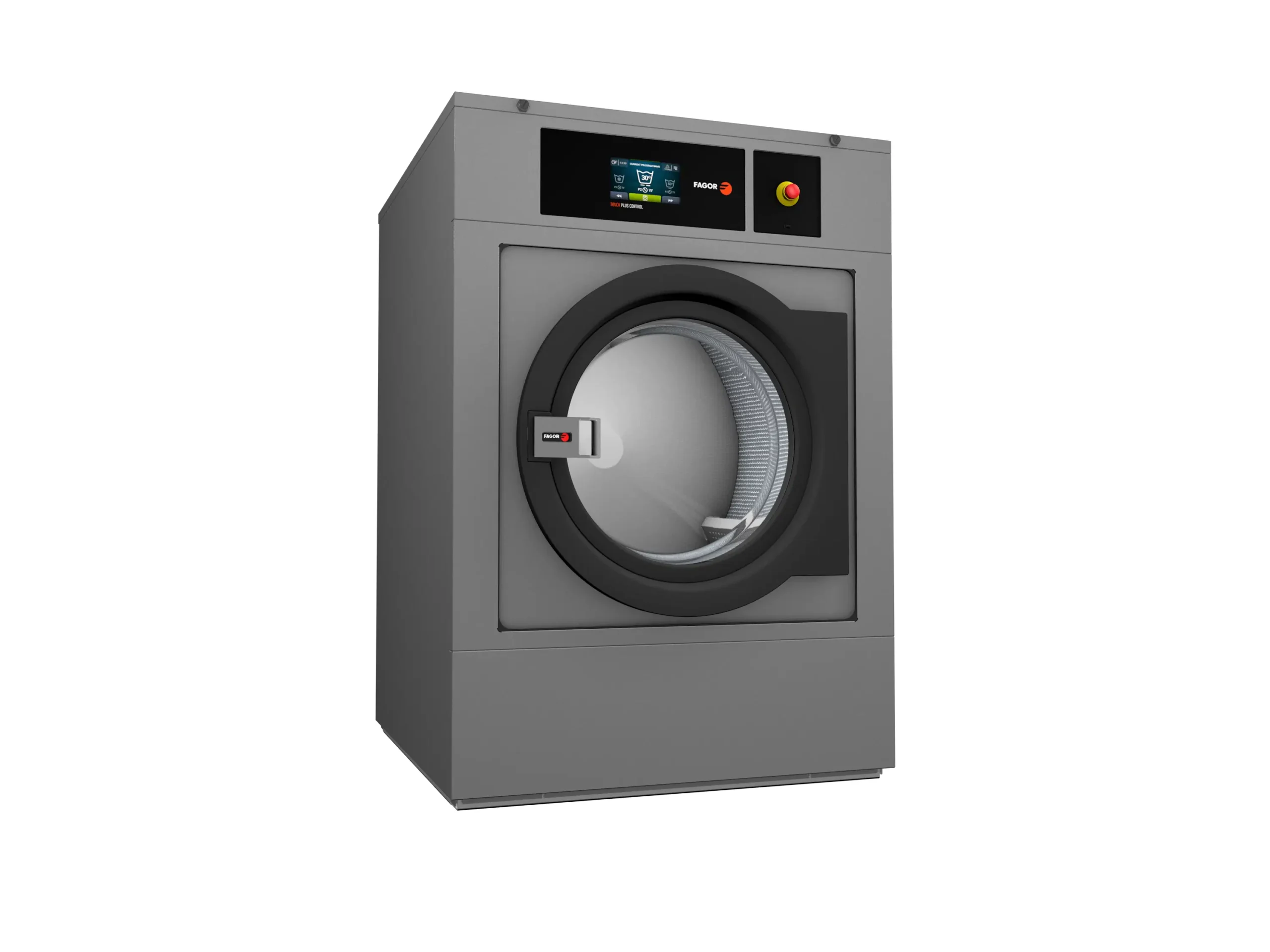
The Fagor FWS washer line illustrates the importance of serviceable design. These machines include balance control, programmable operation, multiple water inlets, and accessible maintenance components. Regardless of brand, equipment performs best when its installation, programming, loading, and maintenance are managed as one complete system.
9. Review Maintenance Data for Cost Savings
Maintenance records should support operational decisions, not sit unused in a binder. Review machine performance monthly and compare:
- Cycles completed
- Utility consumption
- Average wash and dry times
- Rewash rates
- Repair frequency
- Parts costs
- Downtime hours
- Chemical usage
- Linen quality complaints
This information can reveal which machines are becoming inefficient and where a process change may produce savings. A dryer with repeatedly extended cycles may need duct cleaning, airflow testing, or burner service. A washer with frequent residue complaints may need formula adjustment or chemical pump calibration.
Wash IQ can support this process through equipment recommendations, efficiency reports, facility planning, chemical cost reviews, and service for single-site or multi-site operations.
Protect Your Equipment Investment
Commercial washers and dryers are essential production assets. Their service life depends on disciplined daily operation, preventive maintenance, clean airflow, controlled chemistry, stable water quality, and timely repairs.
Facility managers who address small warning signs early can reduce downtime, control operating costs, protect textile quality, and improve workplace safety. Wash IQ supplies industrial laundry equipment, OPL laundry solutions, chemical programs, and service support designed around the practical needs of hotels, hospitals, banquet facilities, and commercial laundries.
Contact Wash IQ to review your equipment maintenance requirements and identify opportunities to improve reliability and reduce long-term laundry costs.