The 4 Most Expensive Mistakes in Laundry Chemical Optimization
In today’s competitive market, the difference between a profitable industrial laundry operation and one struggling with overhead lies in the precision of its technical processes. For facility managers in hospitality, healthcare, and commercial sectors, laundry is often viewed as a utility: a necessary but fixed cost. However, experienced operators understand that laundry chemistry is a variable that, when left unmanaged, can become a significant financial drain.
Chemical optimization is not merely about choosing a detergent; it is a complex intersection of mechanical action, water temperature, time, and chemical concentration. When these variables are misaligned, the financial repercussions extend far beyond the monthly chemical invoice. They manifest in accelerated fabric degradation, increased utility consumption, and unnecessary labor costs. At Wash IQ, our Efficiency Reports consistently reveal that most facilities are losing thousands of dollars annually due to preventable oversight.
Identifying these inefficiencies is the first step toward operational excellence. Here are the four most expensive mistakes in laundry chemical optimization and how professional intervention can safeguard your bottom line.
1. Systematic Overdosing and Fabric Degradation
Perhaps the most pervasive misconception in the industrial laundry sector is the belief that "more chemical equals more clean." In reality, excessive chemical usage is one of the primary drivers of unnecessary expenditure. While the immediate cost of the wasted product is significant, the long-term damage to your linen inventory is often far more expensive.
When detergents, bleaches, and alkalis are overdosed, they become difficult to rinse out. Residual chemicals trapped within the fibers of towels, sheets, and uniforms cause "chemical bruising." This leads to a loss of tensile strength, causing linens to fray, tear, or develop holes long before their expected lifecycle ends. For a hotel or hospital, the cost of replacing high-par linen inventories prematurely can easily exceed the total annual chemical budget.
Furthermore, overdosing forces industrial washing machines to run additional rinse cycles to clear the suds. This increases water consumption and energy usage, effectively negating any perceived cleaning benefit. High-performance industrial washers are designed to operate within specific chemical parameters; exceeding these parameters places undue stress on the machine’s drainage and filtration systems, leading to increased repair and maintenance requirements.

2. Ignoring the "Silent Killer": Water Chemistry
In the world of industrial laundry, water is the primary solvent. However, many facility managers fail to realize that the chemical makeup of their local water supply directly dictates the efficacy of their laundry detergents. Ignoring water hardness and pH levels is a critical mistake that renders even the most expensive chemical formulations ineffective.
Hard water contains high levels of calcium and magnesium. These minerals react with detergents to form "curd" or lime scale. Not only does this scale deposit onto the linens: making them feel stiff and gray: but it also builds up on the internal components of your industrial laundry equipment. Scale on heating elements forces the machine to work harder to reach the required temperature, driving up utility bills and risking element burnout.
From a chemical perspective, hard water neutralizes the active ingredients in your detergent. If your water is not properly conditioned, you may find yourself increasing dosages just to achieve a standard level of cleanliness: effectively paying for chemicals to fight your water rather than the soil on your linens. A professional Chemical Cost Optimization audit begins with a water analysis to ensure that every drop of chemical is working toward its intended purpose.
3. Lack of Injection System Calibration and Maintenance
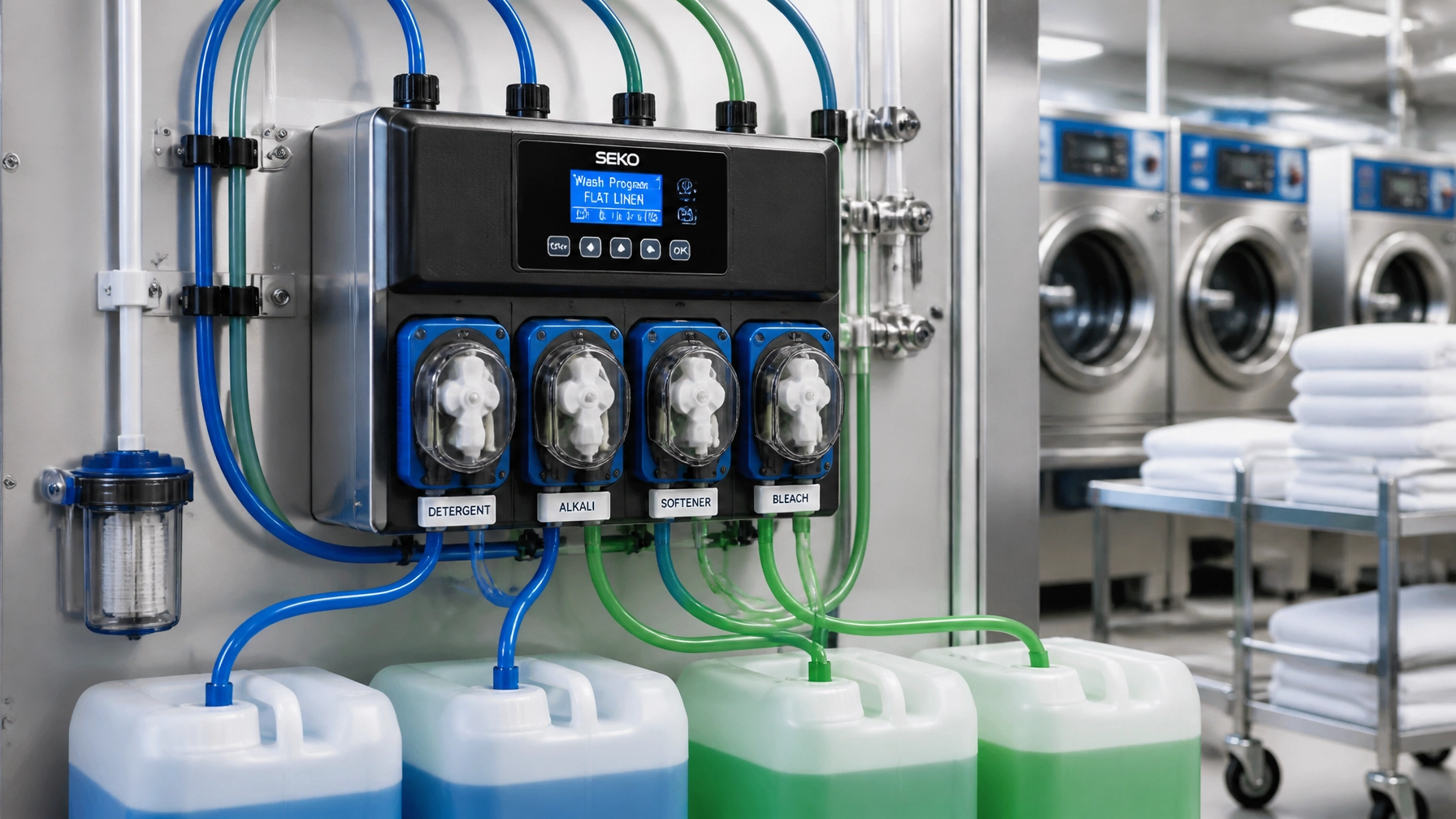
Precision is the hallmark of a high-efficiency laundry facility. Most modern operations utilize automated chemical injection systems to deliver precise dosages of detergent, builder, and softener. However, these systems are not "set it and forget it" solutions. One of the most expensive mistakes we encounter is the failure to regularly calibrate and maintain these dosing pumps.
Over time, peristaltic pump tubes lose their elasticity, and check valves can become clogged with chemical residue. A pump that is out of calibration by even a few milliliters can result in thousands of gallons of wasted chemical over a year. Conversely, under-dosing leads to "reject" loads: linens that are not cleaned properly the first time. The labor, water, and energy required to re-wash a load is double the original cost, representing a massive hit to facility throughput.
Regular audits and expert repair services are essential to ensure that your injection systems are delivering the exact amounts programmed into the wash cycles. At Wash IQ, our 50 years of expertise allow us to service any brand of equipment, ensuring that your automation remains an asset rather than a hidden cost center.

4. Utilizing "One-Size-Fits-All" Wash Formulas
The variety of textiles in a modern facility: from heavy cotton towels to delicate synthetic blends: requires a tailored approach to chemistry. Utilizing a single, aggressive wash program for all loads is a major operational error. This "one-size-fits-all" mentality often results in treating lightly soiled items with the same harshness as heavily stained linens.
Effective optimization requires specific formulas tailored to:
- Fabric Type: Ensuring pH levels are safe for the specific fibers.
- Soil Level: Adjusting the "break" and "suds" cycles based on whether the load is from a guest room or a food service area.
- Load Weight: Ensuring the bath ratio (the ratio of water to fabric) is correct.
Overloading a machine is a common attempt to increase productivity, but it prevents the chemicals from circulating through the fabric properly. Underloading is equally wasteful, as the machine uses nearly the same amount of water and energy for a half-full drum as it does for a full one. By optimizing formulas through digital control interfaces, facilities can achieve superior results while minimizing the environmental and financial impact of each cycle.

The Wash IQ Solution: Strategic Optimization
In today’s industrial landscape, simply purchasing the right equipment is not enough. Success is found in the continuous management of the variables that affect your bottom line. Wash IQ provides more than just machinery; we provide the analytical tools and expertise necessary to transform your laundry facility into a center of efficiency.
Our Efficiency Reports offer a deep dive into your current operations, identifying exactly where chemical waste is occurring and how to rectify it. Whether you are operating a single-location banquet hall or a large multi-site hospital facility, our team works to ensure your chemical spend is an investment in quality rather than a sunk cost.
By addressing the four mistakes outlined above: overdosing, ignoring water quality, neglecting calibration, and using rigid programming: you can significantly reduce your operational expenses. Furthermore, with our 3-year parts and labor warranty on new equipment, you can rest assured that your facility is backed by the best support in the industry.
Conclusion
Operational excellence in laundry management is a journey of constant refinement. In the world of high-volume laundry, small errors in chemical optimization compound into massive financial losses. By partnering with experts who understand the synergy between equipment and chemistry, facility managers can protect their linen assets, reduce their environmental footprint, and ensure long-term profitability.
Don't let hidden inefficiencies drain your budget. Contact Wash IQ today to schedule a comprehensive facility audit and discover how our chemical optimization services can elevate your operation.