The Evolution of Industrial Laundry Equipment: What’s Changed in 50 Years
In today’s competitive market, the operational efficiency of a facility is often determined by the sophistication of its utility infrastructure. In the world of industrial laundry, this reality has undergone a profound transformation over the last five decades. For business owners in the hospitality, healthcare, and commercial laundry sectors, understanding the trajectory of laundry technology is not merely a historical exercise; it is a crucial component of strategic planning and capital investment.
At Wash IQ, we have witnessed these shifts firsthand. With over 50 years of combined industry expertise, our team has navigated the transition from purely mechanical systems to the highly automated, AI-driven environments of today. This evolution reflects a broader industrial movement toward sustainability, precision, and labor optimization.
The 1970s and 1980s: The Mechanical Foundation and Early Electronics
Fifty years ago, the industrial laundry landscape was dominated by electromechanical timers and robust, albeit rigid, machinery. These units were built for sheer endurance, often relying on heavy-duty components that lacked the nuance of modern cycle control. In this era, the primary goal was volume, with little regard for the specific chemical sensitivities of modern textiles or the rising costs of utilities.
The turning point occurred in the mid-1970s with the introduction of the first microcontroller-operated washers. Machines like the Servis Selectronic 301 pioneered the shift away from mechanical gears toward electronic logic. By the early 1980s, these microprocessors allowed for more complex wash programs and improved reliability. For the first time, operators could begin to tailor cycles to soil levels, though these systems were primitive by today’s standards.
The 1990s: The Regulatory Push for Efficiency
As the industry entered the 1990s, the focus shifted from simple programmability to resource conservation. This decade was defined by significant legislative changes, most notably the Energy Policy Act of 1992 in the United States. These regulations mandated a drastic reduction in water and energy consumption, forcing manufacturers to innovate beyond traditional wash actions.
Industrial laundry facilities began to adopt high-capacity front-load washers and dryers that prioritized low water levels and higher G-force extraction. The result was a dual benefit: reduced utility costs and significantly shorter drying times. This era also saw the early adoption of card-operated systems and basic digital interfaces, moving the industry closer to the data-centric operations we see today.

The 2000s: The High-Efficiency (HE) Standard
By the early 2000s, "High-Efficiency" (HE) was no longer a luxury but a standard requirement for commercial operations. The introduction of ENERGY STAR® ratings for commercial laundry equipment provided facility managers with a benchmark for performance. Manufacturers like Milnor and B&C refined drum designs to improve mechanical action while using a fraction of the water required by their 1970s predecessors.
During this period, the integration of advanced chemical dispensing systems became essential. Precise chemical injection ensured that sanitization protocols were met without the waste associated with manual dosing. This synergy between equipment and chemistry allowed for lower wash temperatures, further driving down energy expenses for large-scale facilities like hospitals and banquet halls.
The 2010s: The Digital Transformation and IoT
The last decade marked the most significant leap in how facilities manage their laundry operations: the rise of the Internet of Things (IoT). Laundry equipment became "smart," transitioning from isolated machines to nodes in a connected network. Owners and facility managers gained the ability to remotely monitor machine health, cycle times, and utility usage through web-based dashboards.
This connectivity introduced predictive maintenance, a vital advancement for preventing the "Cost of Doing Nothing." Instead of waiting for a machine to fail, sensors could alert technicians to early signs of bearing wear or belt slippage. At Wash IQ, our repair and maintenance services evolved alongside these technologies, allowing us to provide more proactive support to our clients, ensuring that downtime: the enemy of any high-volume laundry: remains a rarity.

The 2020s and Beyond: Automation, AI, and Sustainability
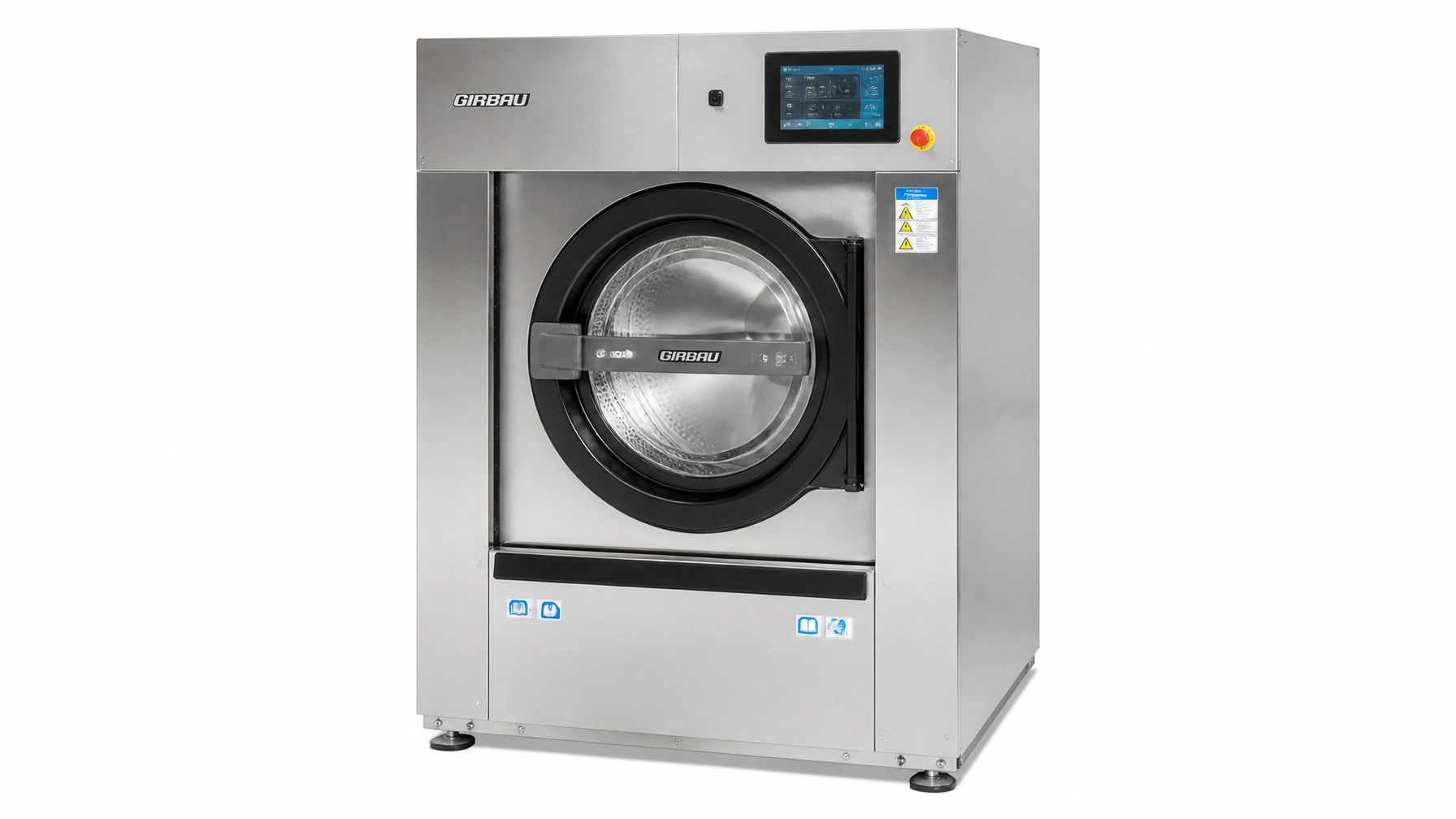
Today, the industrial laundry room is a showcase of automation. We are now seeing the widespread adoption of AI-driven cycles that automatically adjust water levels and chemical concentrations based on the weight and soil type of the load. Furthermore, the integration of robots and automated finishing equipment: such as towel folders and ironers: has addressed the critical labor shortages currently facing the industry.
Modern sustainability goes beyond mere water saving. We are now installing systems with heat-recovery technology and water-recycling capabilities that can reduce total utility consumption by up to 30%. For businesses managing multi-site operations, these efficiencies are not just environmentally responsible; they are essential for maintaining a healthy bottom line in an era of rising operational costs.

Why Experience Matters in a Changing Landscape
With 50 years of evolution behind us, it is clear that the "best" equipment is only as effective as the system in which it operates. A high-tech washer requires a professionally designed facility layout to ensure smooth workflow and optimal throughput. It requires the right chemistry to protect the longevity of your linens and the right maintenance partner to ensure it runs for decades, not just years.
Wash IQ stands as a one-stop shop for this entire journey. From selecting the latest stack dryers for space-constrained urban hotels to providing comprehensive efficiency reports for large-scale medical facilities, we blend our deep historical knowledge with cutting-edge technical solutions.

Conclusion: Partnering with Expertise
The evolution of industrial laundry equipment from the mechanical giants of the 1970s to the smart, sustainable systems of 2026 demonstrates a relentless drive toward operational excellence. For those tasked with managing these critical facilities, the message is clear: staying stagnant is not an option.
In today’s market, leveraging modern technology is essential for reducing overhead, improving product quality, and ensuring the health and safety of your end-users. Whether you are planning a new facility or upgrading an existing one, Wash IQ is here to provide the equipment, chemicals, and expertise necessary to lead your operation into the next 50 years of success.