The Rise of Heat-Pump Drying in Commercial Laundry
In today’s competitive market, facility managers and business owners are increasingly pressured to reconcile high-volume output with stringent sustainability targets and rising utility costs. In the world of industrial laundry, the drying process has historically been the most energy-intensive and cost-prohibitive phase of operation. However, a significant technological shift is underway. The rise of heat-pump drying technology represents a crucial evolution in how hotels, hospitals, and commercial facilities approach their OPL laundry solutions.
At Wash IQ, we have observed that the transition to heat-pump technology is no longer a niche preference but a vital strategic move for operations seeking long-term viability. This article examines the technical mechanics, economic benefits, and operational advantages that are positioning heat-pump dryers as the new standard in commercial laundry.
The Technical Evolution: How Heat-Pump Drying Works
Traditional commercial dryers rely on energy-heavy electric coils or gas burners to generate heat, which is then exhausted: along with significant moisture and energy: through ventilation systems. This "open-loop" system is inherently inefficient, as it requires the constant heating of fresh intake air and the disposal of usable thermal energy.
In contrast, heat-pump dryers utilize a sophisticated "closed-loop" refrigeration system. By employing a compressor, condenser, and evaporator, these machines move heat rather than generating it from scratch.
- Dehumidification: Hot, humid air from the drum is passed over an evaporator.
- Condensation: The moisture is cooled, condensed into water, and drained away.
- Reheating: The now-dry air is passed over a condenser, where it is reheated using the energy recovered during the cooling phase.
- Recirculation: This warm, dry air is cycled back into the drum to continue the process.
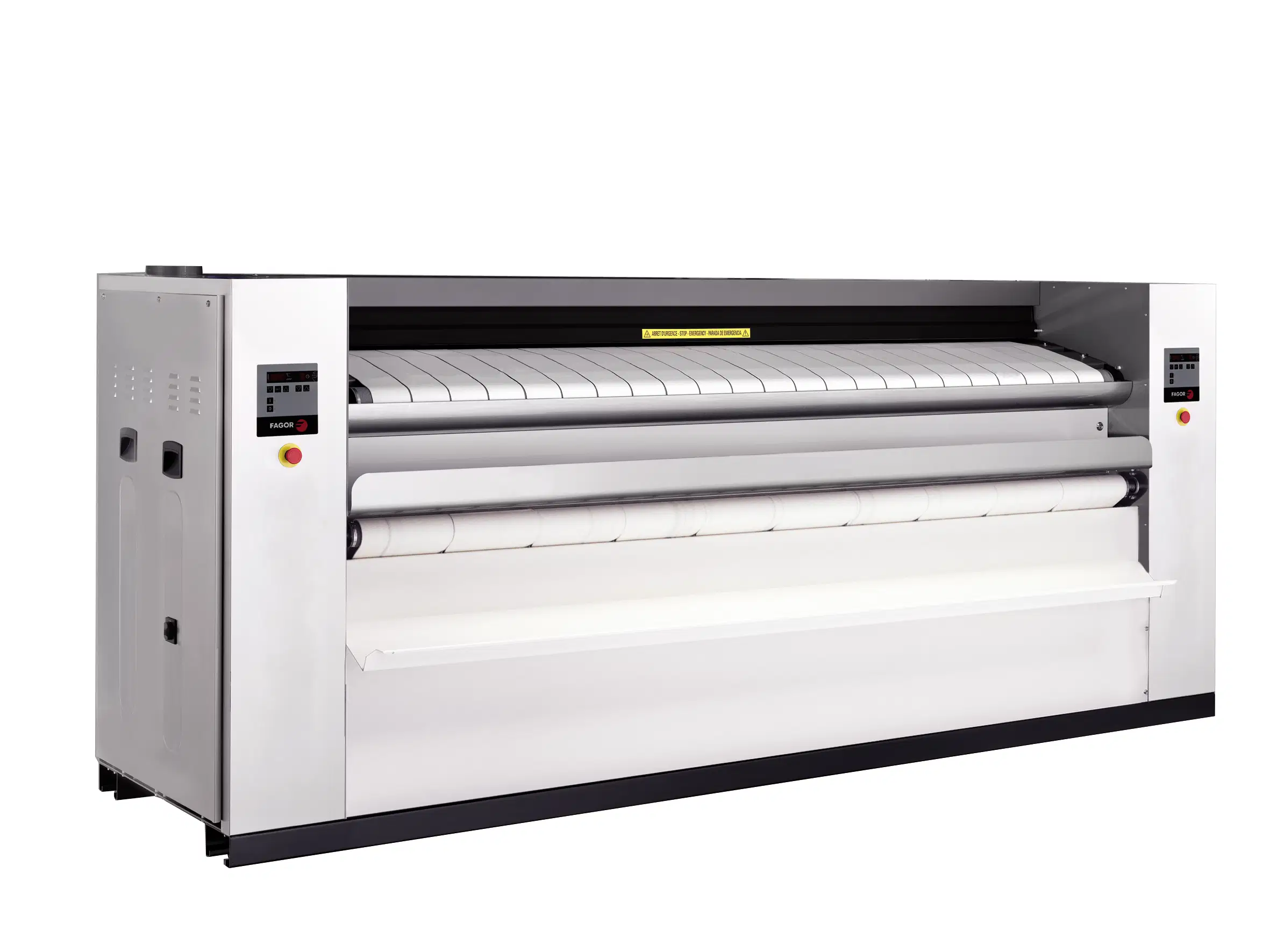
This process is fundamentally more efficient because it recycles heat that would otherwise be wasted. Modern units, such as those from our partners at Fagor or B&C Technologies, now incorporate inverter-driven compressors that allow for precise temperature control and significantly faster cycle times than earlier iterations of the technology.

Operational Excellence through Energy Efficiency
The most immediate impact of implementing heat-pump technology is a dramatic reduction in energy consumption. It is common for commercial heat-pump dryers to reduce energy usage by approximately 60% to 65% compared to traditional vented electric models. For a facility running 3,000 cycles per year, these savings are not merely incremental; they are transformative to the bottom line.
In today's economic climate, reducing operational overhead is essential. The high efficiency of these systems often results in a payback period of approximately two years. Given that industrial laundry equipment is a long-term investment, the cumulative savings over the machine's lifespan provide a substantial return on investment (ROI).
To accurately quantify these potential savings for your specific facility, Wash IQ offers comprehensive Efficiency Reports. We analyze your current utility spend and equipment performance to identify exactly where heat-pump technology can optimize your costs.
Superior Textile Care and Longevity
Beyond energy savings, the gentler nature of heat-pump drying provides a secondary, yet equally important, financial benefit: extended textile life. Conventional dryers often subject fabrics to high temperatures and "over-drying," which leads to fiber degradation, shrinkage, and premature wear.
Heat-pump dryers operate at significantly lower temperatures. This controlled, dehumidification-based approach is far gentler on high-quality linens, uniforms, and patient garments. For hospitality and healthcare facilities that manage large, expensive inventories of linens, increasing the number of wash-and-dry cycles before replacement is a vital component of chemical cost optimization and overall resource management.

(Note: Visual representation of the closed-loop thermodynamic process utilized in modern industrial dryers.)
Installation Flexibility: The Ventless Advantage
One of the most significant challenges in facility design is the requirement for complex ductwork and high-capacity exhaust systems. Traditional dryers exhaust thousands of cubic feet of conditioned air every hour, placing a massive burden on a building’s HVAC system.
Because heat-pump dryers are ventless, they offer unparalleled installation flexibility. They do not require an external exhaust, meaning they can be installed in:
- Basements or interior rooms where venting is physically impossible or cost-prohibitive.
- High-rise buildings where long duct runs reduce dryer efficiency and increase fire risks.
- Historical renovations where structural changes are restricted.
By eliminating the need for external venting, facilities also reduce the risk of lint-related fires: a leading cause of safety incidents in commercial laundry environments. The lint is captured within highly efficient internal filters, ensuring a cleaner and safer workspace.
Maximizing Performance with Equipment Pairing
To realize the full benefits of heat-pump technology, the equipment must be part of an integrated system. The efficiency of a heat-pump dryer is directly tied to the moisture content of the load entering it. Therefore, pairing these dryers with high-spin, high-G-force industrial washers is essential.
Modern washers, such as the soft-mount units from Yamamoto or Milnor, extract significantly more water during the final spin cycle. This reduces the mechanical work required by the dryer, further shortening cycle times and lowering energy input.

Navigating the Transition with Wash IQ
Adopting new technology requires more than just a purchase; it requires a partner with deep industry expertise. With over 50 years of experience, Wash IQ provides the technical support and repair and maintenance services necessary to ensure your transition to modern equipment is seamless and successful.
From the initial facility design to ongoing chemical optimization, we provide a one-stop-shop solution for all your industrial laundry needs. Whether you are managing a single banquet hall or a multi-site hospital network, our commitment to operational excellence ensures that your facility remains at the forefront of the industry.
In summary, the rise of heat-pump drying in commercial laundry is driven by a necessity for efficiency, a demand for textile preservation, and a requirement for installation flexibility. In the pursuit of a more sustainable and profitable operation, the transition to heat-pump technology is not just an option; it is the logical progression for any modern facility.