Automation in 2026: What’s Real, What’s Hype, What’s Worth It
In today’s competitive market, the industrial laundry sector is undergoing a profound transformation driven by rapid technological advancement. As we navigate the landscape of 2026, facility managers and business owners are increasingly confronted with a deluge of "smart" solutions, autonomous systems, and AI-driven promises. In the world of high-capacity textile care, distinguishing between genuine operational breakthroughs and mere marketing noise is not just beneficial: it is crucial for long-term viability.
For businesses operating in the hospitality, healthcare, and commercial sectors, the stakes for equipment investment have never been higher. Reliability and efficiency are the bedrocks of a successful operation, yet the complexity of modern automation can often obscure the path to a clear return on investment (ROI). This article provides a technical evaluation of the current state of laundry automation, identifying which technologies offer vital operational excellence and which remain speculative.
The "Real": IoT and Data-Driven Connectivity
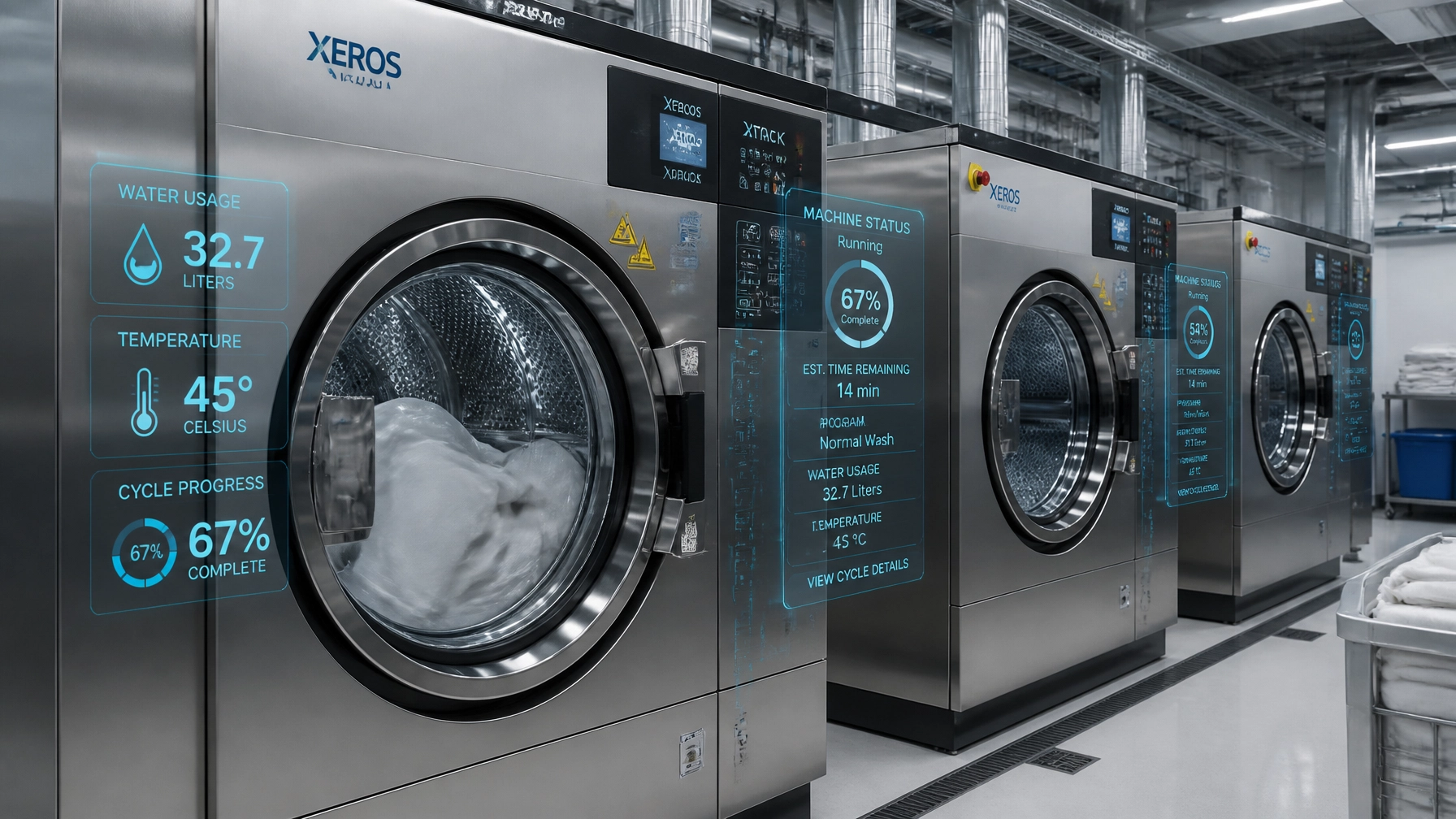
The most significant and practical shift in 2026 is the ubiquity of Internet of Things (IoT) integration within industrial laundry equipment. What was once a premium feature is now an essential standard for modern facilities. IoT-enabled machines provide a continuous stream of real-time data, allowing for a level of oversight that was previously impossible.
Remote Monitoring and Management
In 2026, the ability to manage a laundry facility remotely is no longer a luxury: it is a functional necessity. Modern interfaces allow managers to monitor wash cycles, utility consumption, and machine health from any location. This transparency ensures that standard operating procedures are being followed and that throughput remains consistent across multiple shifts.
Predictive Maintenance
One of the most valuable applications of IoT is the shift from reactive to predictive maintenance. By analyzing vibration patterns, temperature fluctuations, and cycle durations, smart systems can identify potential failures before they lead to catastrophic downtime. For businesses that rely on 24/7 operations, such as large-scale hotels or hospitals, the prevention of an unplanned outage is of paramount importance. At Wash IQ, we leverage these technical insights to enhance our Repair and Maintenance Services, combining 50 years of industry expertise with modern diagnostic data to keep facilities running at peak performance.

The "Hype": The "Dark Factory" and Full Autonomy
While the concept of a "Dark Factory": a facility that operates entirely without human intervention: is a frequent topic in industry journals, the reality in 2026 remains more nuanced. For most commercial operations, full autonomy is currently more hype than a practical standard.
The Complexity of Deformable Materials
The primary hurdle for total automation in laundry is the inherent difficulty of handling deformable materials. Unlike rigid automotive parts, textiles vary in weight, texture, and moisture retention. While vision-guided robotics have made significant strides in picking and sorting, the high capital expenditure required for a fully autonomous loading and unloading system often outweighs the labor savings for mid-sized facilities.
The Role of "Co-bots"
Rather than replacing the workforce, the trend in 2026 is toward "collaborative robotics" or co-bots. These systems assist human operators with repetitive, high-strain tasks such as feeding large linens into industrial flatwork ironers. This hybrid approach maximizes throughput while maintaining the flexibility required to handle varied textile types: a crucial balance for banquet halls and diverse hospitality settings.

The "Worth It": Chemical and Operational Optimization
If IoT is the brain of the 2026 laundry facility, then chemical and utility optimization is its cardiovascular system. These are the areas where automation yields the most immediate and impactful results on the bottom line.
Precision Chemical Dosing
Automated dosing systems are now capable of adjusting chemical concentrations based on real-time load weight and soil levels. This precision is vital for several reasons:
- Cost Reduction: Eliminating the waste of over-sudsing directly lowers operational expenses.
- Textile Longevity: Precise chemical application prevents premature fabric degradation, a significant concern for high-end hospitality clients.
- Sustainability: Reducing chemical effluent is essential for meeting increasingly stringent environmental regulations.
Wash IQ’s Chemical Cost Optimization services focus on these exact metrics, helping businesses reduce expenses while simultaneously enhancing the quality of the finished product.
Advanced Efficiency Reporting
In 2026, data is only as good as the insights derived from it. Automated Efficiency Reports are now standard for high-performing facilities. These reports analyze water-to-weight ratios, energy-per-load, and labor-per-pound metrics. By identifying bottlenecks and utility spikes, facility managers can implement corrective measures that lead to sustained success.

Strategic Facility Design: Integrating Automation
The most common mistake business owners make is attempting to "bolt on" automation to an inefficient floor plan. To truly capture the benefits of 2026 technology, the physical environment must be optimized for flow and connectivity.
The Importance of Layout
Automation requires specific spatial considerations for conveyors, robotic arms, and high-speed folding zones. Our Design Services at Wash IQ emphasize the integration of equipment and infrastructure from the outset. Whether planning a new facility or retrofitting an existing one, a technical, data-driven layout is the foundation of operational excellence.
Space-Saving Solutions
For facilities with limited footprints, such as boutique hotels or urban hospitals, automation often manifests in the form of high-density equipment. Industrial stack dryers and compact folders allow for high-volume processing without the need for facility expansion. Utilizing the vertical dimension is a vital strategy in modern industrial design.

The Human Element in an Automated World
Despite the proliferation of AI and robotics, the human element remains irreplaceable. Automation enhances the capabilities of skilled technicians; it does not render them obsolete. Expert maintenance and repair services are more critical than ever, as the complexity of the machines requires a deeper level of technical knowledge to service.
With over five decades of experience, Wash IQ understands that while the technology changes, the core requirement of our clients remains the same: reliable, high-quality laundry solutions that work day in and day out. We pride ourselves on being a one-stop shop, providing everything from initial design and equipment sales to long-term chemical optimization and maintenance.
Conclusion
Automation in 2026 is a spectrum of possibilities. The "Real" power of IoT and connectivity provides the visibility needed for management; the "Hype" of full autonomy serves as a future goal; and the "Worth It" technologies of chemical optimization and efficiency reporting provide the immediate ROI that businesses demand.
In this evolving landscape, partnering with an industry leader who understands both the technical nuances and the practical realities of industrial laundry is essential. At Wash IQ, we are committed to guiding our clients through these choices, ensuring that every investment in automation leads to a more efficient, reliable, and successful operation.
For a comprehensive analysis of your current facility’s efficiency or to explore the latest in industrial laundry equipment, visit us at www.washiq.net.