
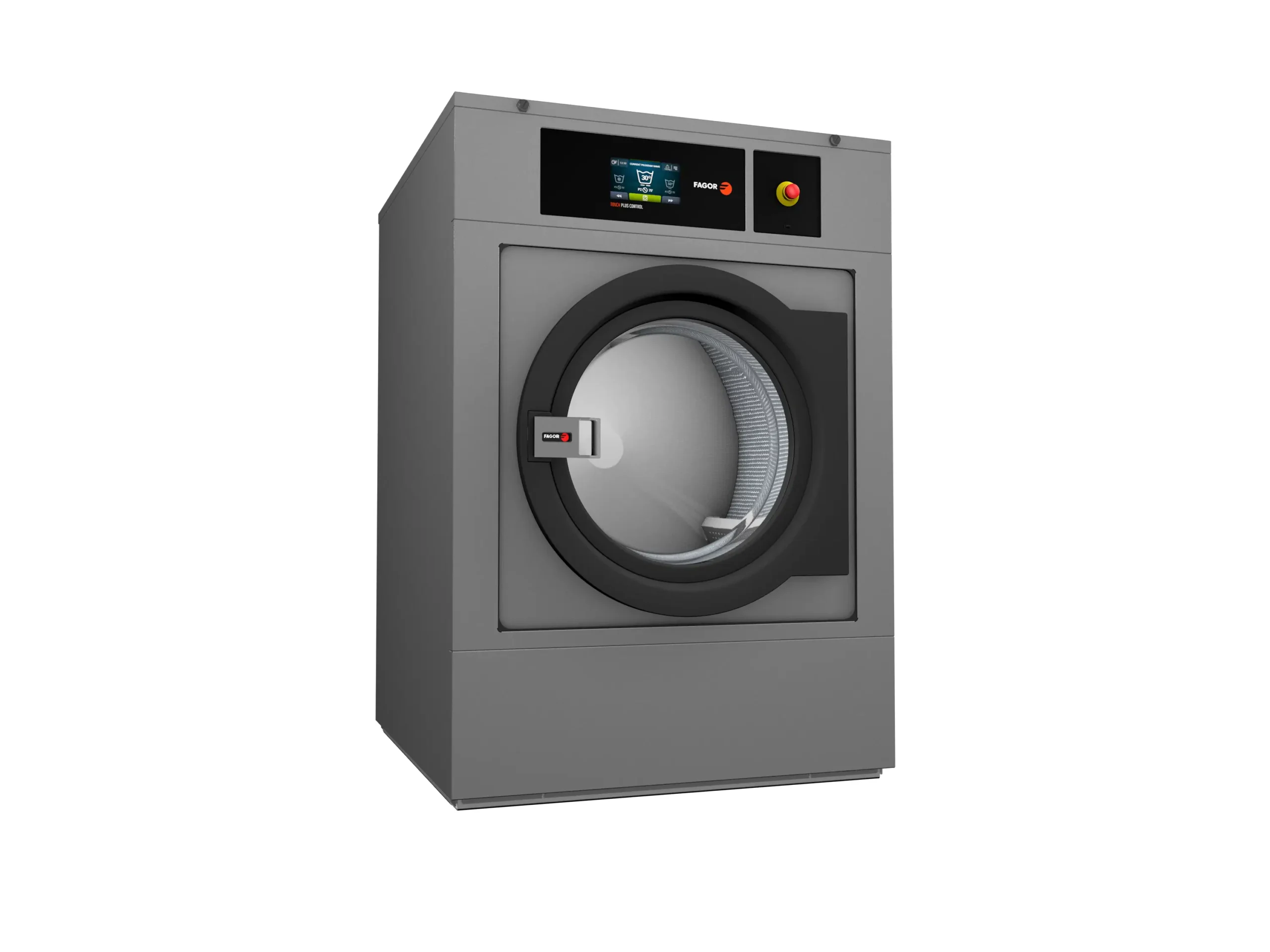
The Facility Manager’s Guide to Load Sizing for Commercial Washers and Dryers
In today’s competitive market, laundry performance is a crucial operational responsibility for hotels, hospitals, banquet facilities, assisted living centers, and commercial laundry plants. The way a facility loads its machines directly affects cleaning quality, chemical performance, utility consumption, labor efficiency, and equipment life.
Load sizing is not simply a matter of filling a drum until it appears full. Commercial washers and dryers are engineered around specific dry-weight capacities. When operators consistently exceed or fall significantly below those capacities, the result is predictable: poorer laundry outcomes, higher operating costs, increased mechanical stress, and a greater risk of unplanned downtime.
A disciplined load-sizing program is therefore an essential part of managing industrial laundry equipment. The following practices help facility managers establish reliable loading standards and protect long-term performance.
Understand Rated Capacity Before Setting Load Standards
Commercial washers and dryers are rated according to the maximum dry weight of goods they are designed to process. A 50-pound washer, for example, is intended to process approximately 50 pounds of dry linen in a standard load.
That rating should always be interpreted as dry weight, not the weight of wet textiles after washing and not the visual volume of goods inside the cylinder. Wet laundry becomes substantially heavier, which is why loading decisions must be made before the wash cycle begins.
Use Weight-Based Loading
The most reliable method is to weigh soiled linen before it enters the washer. A platform scale located near the sorting and loading area allows operators to build consistent loads by category and weight.
Facility managers should establish:
- The rated capacity of every washer and dryer
- Target weights for standard linen classifications
- Reduced target weights for bulky or specialty textiles
- Clear procedures for mixed loads
- A documented response when a load is over or under target
For routine washer loads, a practical operating target is approximately 80% to 90% of the machine’s rated dry capacity. This provides sufficient room for the textiles to move, absorb water, receive mechanical action, and rinse effectively.
A 60-pound washer, for example, may have a standard operating target of 48 to 54 pounds for ordinary linens. The exact target should be confirmed against the equipment manufacturer’s specifications, textile type, and wash formula.
The goal is not to maximize the visible amount inside the drum. The goal is to achieve repeatable, weight-based loads that allow the machine to work as designed.

Why Overloading Damages Quality and Equipment
Overloading is one of the most common and costly loading errors in commercial laundry operations. When a washer is filled beyond its rated dry capacity, the textiles cannot circulate properly. This reduces the mechanical action required to remove soil and prevents water and chemistry from reaching every part of the load.
Overloading Reduces Wash Quality
An overloaded washer can produce:
- Incomplete soil removal
- Stains that require rewashing
- Inadequate chemical distribution
- Poor rinsing and chemical residue
- Uneven moisture removal during extraction
- Increased fabric wear and wrinkling
The problem is especially serious in healthcare and hospitality environments, where consistent hygiene and presentation are vital. A load that appears acceptable after washing may still contain residual soil, detergent, or other chemistry if it was packed too tightly.
Overloading can also prevent the load from balancing correctly during high-speed extraction. The machine may stop, extend the cycle, or repeatedly attempt to redistribute the goods. Those interruptions reduce throughput and increase labor costs.
Overloading Increases Mechanical Stress
A machine that is routinely overloaded must move more weight than its components were designed to handle. Repeated overloading places additional stress on:
- Bearings
- Drive systems
- Motors
- Suspension components
- Door and locking assemblies
- Drain systems
- Frame and cabinet structures
The resulting wear may begin as vibration, unusual noise, extended cycle times, or unbalanced-load errors. If those warnings are ignored, they can develop into a major breakdown requiring emergency Expert repair.
Avoiding loads beyond rated capacity is therefore a direct form of preventive maintenance. Proper loading helps preserve machine components and reduces the likelihood that a production issue becomes an emergency service call.
Why Underloading Also Creates Operational Problems
Underloading may seem safer than overloading, but routinely running small partial loads creates a different set of problems. A commercial washer uses water, energy, labor, and cycle time regardless of whether it contains 20 pounds or 50 pounds of linen.
Underloading Wastes Utilities and Labor
If a 50-pound washer is repeatedly operated with 20- or 25-pound loads, the facility is paying to process fewer pounds of linen per cycle. This increases the utility cost per pound and may create a backlog during high-volume periods.
Underloading can also produce inconsistent mechanical action. The load may not tumble or circulate as intended, particularly when the items are lightweight or absorbent. This can affect soil removal, rinsing, and extraction.
Facility managers should never run underloaded partial loads for long periods as a normal operating practice. Partial loads are sometimes necessary for urgent items, special classifications, or contamination control. However, they should be treated as exceptions and managed through a documented procedure.
Correct the Cause of Repeated Partial Loads
Frequent underloading may indicate:
- Incorrect machine sizing
- Poor linen classification
- Inadequate par levels
- Inefficient collection schedules
- Inconsistent operator practices
- A mismatch between equipment capacity and peak demand
Review the facility’s pounds processed during its busiest operating window. If the available machines are too large for normal loads, or if the workload is spread inefficiently across shifts, a design review may be necessary.
Wash IQ can assist with facility planning, equipment selection, and efficiency reports to identify the appropriate capacity for both single-location and multi-site operations.
Load Sizing and Chemical Optimization
Consistent load sizing is closely connected to chemical optimization. Commercial laundry formulas are commonly developed around a known quantity of dry linen. Chemical levels, water volume, wash time, and temperature are selected to produce the required cleaning result at that load size.
When the load weight changes but the formula remains fixed, chemical concentration per pound of linen changes as well.
What Happens When a Formula Is Not Matched to Load Weight?
If a formula is set for 50 pounds but the operator loads only 25 pounds, the same chemical dose is distributed across half as much fabric. Depending on the formula and chemistry, this can contribute to:
- Excessive alkalinity
- Fabric harshness
- Color loss
- Chemical odor
- Residue or skin irritation
- Premature textile degradation
If an operator exceeds the intended load weight, the opposite problem may occur. There may not be enough detergent, builder, bleach, or other chemistry to treat the additional soil load effectively.
The solution is not to add chemicals by guesswork. Instead, facility managers should work with their chemical provider to validate dosing by dry pound or kilogram of linen. Automated dispensing systems should be programmed for the actual target load and adjusted when partial-load formulas are necessary.
This is one reason load documentation is so important. A chemical program cannot be optimized when operators do not know how much linen they are processing.
For additional guidance, review Wash IQ’s article on laundry chemical optimization.

Apply Separate Loading Standards to Dryers
Dryers require their own loading standards. A dryer must have sufficient space for hot air to circulate through the textiles. If the drum is packed too tightly, drying becomes slower and less uniform.
As a practical guideline, operators should avoid filling a dryer beyond approximately 75% of drum volume, unless the equipment manufacturer specifies otherwise. Dryer loads should also be based on the dry weight of the goods, not the expanded appearance of wet laundry.
When pairing equipment, dryer capacity should generally be equal to or greater than washer capacity. Depending on extraction performance and textile type, facilities may require dryer capacity approximately 1.2 to 2.0 times the washer capacity across the operation. Highly efficient extraction reduces the water remaining in the goods and can lower drying demand.
Signs of Incorrect Dryer Loading
Watch for:
- Loads that remain damp after a complete cycle
- Excessively long drying times
- Unevenly dry towels or linens
- Overheated goods
- Increased lint accumulation
- Repeated high-temperature or airflow alerts
- Excessive wrinkling
Overloading a dryer can increase energy consumption and place additional stress on belts, bearings, heating systems, airflow components, and temperature controls.

Build Load Sizing Into OPL Laundry Solutions
Effective OPL laundry solutions depend on consistent processes. An on-premises laundry operation cannot achieve reliable throughput if every operator estimates load size differently.
A strong OPL loading program should include:
- A posted capacity chart for every washer and dryer.
- A calibrated platform scale in the sorting or soiled-linen area.
- Color-coded carts or bags for major textile classifications.
- Target weights for each standard load.
- Reduced load limits for bulky, delicate, or specialty goods.
- Chemical formulas matched to actual load weights.
- Daily verification of operator compliance.
- A log for rewash, underloaded, overloaded, and unbalanced loads.
Managers should audit several loads per shift during the first weeks of implementation. Once staff members understand the target weights, the process becomes faster and more consistent.
Load records can also reveal patterns that are not visible from production totals alone. A high rewash rate, repeated unbalanced cycles, rising chemical usage, or growing drying times may all point to inconsistent loading.
Prevent Emergency Repairs Through Better Loading
Correct loading does not replace scheduled maintenance, but it significantly reduces avoidable stress on equipment. It also gives maintenance teams better information about developing issues.
Operators should report:
- New or increasing vibration
- Unusual bearing or motor noise
- Door-lock problems
- Frequent balance errors
- Slower extraction
- Longer drying cycles
- Water or chemical leaks
- Unusual odors or overheating
Addressing these indicators early is more efficient than waiting for a machine to fail during a peak production period. Wash IQ provides repair and maintenance services for any brand of laundry equipment, supported by more than 50 years of industry experience.
For new equipment purchases, Wash IQ products also include a 3-year parts and labor warranty, providing additional protection for the facility’s investment.
A Practical Load-Sizing Checklist
Facility managers can begin improving load consistency with the following checklist:
- Confirm every machine’s rated dry capacity.
- Set normal washer targets at approximately 80% to 90% of rated capacity.
- Weigh standard loads instead of relying on visual fullness.
- Never exceed the rated capacity.
- Reduce loads for bulky or specialty textiles when required.
- Avoid routinely running small partial loads.
- Keep dryer loads loose enough for airflow, generally no more than about 75% of drum volume.
- Match chemical formulas to actual pounds of dry linen.
- Track rewash, unbalanced-load, and extended-cycle incidents.
- Schedule preventive maintenance and request Expert repair at the first sign of abnormal operation.
Final Takeaway
Load sizing is a fundamental control point in every commercial laundry operation. Weight-based loading improves wash quality, supports chemical optimization, reduces utility waste, and protects the mechanical systems inside commercial washers and dryers.
For facility managers, the most important standard is consistency. Establish clear target weights, train operators to follow them, monitor results, and address equipment warning signs before they become production failures.
Wash IQ provides industrial laundry equipment, facility design support, efficiency reporting, chemical programs, preventive maintenance, and Expert repair services. Contact Wash IQ to develop a reliable loading and equipment strategy for your operation.