Industrial Laundry Operational Excellence & Equipment Guides
In today’s competitive market, laundry performance directly affects labor costs, linen quality, hygiene, customer satisfaction, and operational continuity. For hotels, hospitals, banquet facilities, and commercial laundries, an efficient laundry room is not simply a back-of-house utility. It is a critical production environment that must deliver consistent results under demanding conditions.
Operational excellence requires more than purchasing high-capacity machines. Facility managers must align equipment selection, workflow design, preventive maintenance, chemical programs, employee procedures, and performance measurement. When these elements work together, businesses can reduce rewash, control utility consumption, extend textile life, and protect the long-term value of their investment in industrial laundry equipment.
What Operational Excellence Means in a Laundry Facility
Operational excellence is the disciplined management of every process from soil collection through clean storage and distribution. The objective is consistent output with the least possible waste, downtime, labor, and reprocessing.
A high-performing laundry operation typically focuses on five priorities:
- Productivity: Processing the required volume within available labor and operating hours.
- Quality: Delivering clean, dry, finished textiles that meet established standards.
- Cost control: Managing labor, water, energy, chemicals, and replacement textiles.
- Reliability: Keeping critical equipment available and reducing unplanned downtime.
- Safety and hygiene: Protecting employees, guests, patients, and the facility environment.
These priorities should be converted into measurable key performance indicators. Useful metrics include pounds processed per labor hour, rewash rate, utilities cost per pound, chemical cost per pound, on-time preventive maintenance completion, and unplanned downtime by machine.
Managers should review operating metrics weekly and financial results monthly. A consistent reporting cadence makes it possible to identify process drift before it becomes a significant cost or service issue.
Design the Workflow Before Selecting Equipment
The most effective OPL laundry solutions begin with facility planning. Equipment should be selected according to the workflow, production volume, available space, staffing model, and future growth: not simply by machine capacity.
A properly designed laundry follows a logical, one-way progression:
Soiled receiving and sorting → Washing → Drying → Finishing → Folding and packing → Clean storage
This flow is essential for minimizing unnecessary handling and reducing the risk of cross-contamination. It is particularly important in healthcare and senior-care environments, where clean and soiled materials must be carefully separated.
Facility managers should evaluate the following during a workflow review:
Capacity and peak demand
Equipment should be sized for peak operating requirements rather than average daily volume. Hotels may experience sharp changes during high-occupancy periods, while hospitals and care facilities must maintain output despite fluctuating patient volumes.
Undersized equipment creates bottlenecks, overtime, and delayed linen availability. Oversized equipment can create inefficient load patterns and unnecessary capital expense. A volume assessment should consider pounds per day, pounds per hour, textile categories, operating shifts, and anticipated growth.
Material movement
Layout decisions should reduce walking distance, cart congestion, and repeated handling. Sorting stations should be located near soil receiving. Washers should support a smooth transition into drying, while folding, finishing, and packing areas should be positioned close to clean storage.
Ergonomic loading heights, adequate aisle clearance, proper cart placement, and accessible chemical connections are also vital. These details improve employee safety and help maintain consistent productivity throughout the shift.
Standard operating procedures
Every stage should have written procedures for sorting, loading, cycle selection, unloading, drying, finishing, inspection, and storage. Standardization prevents individual operators from creating inconsistent results through different loading practices or cycle choices.
Full loads should be the standard, but overloading must be avoided. Excessive loading reduces mechanical action, restricts water movement, extends drying time, and places additional stress on motors, bearings, and suspension components.
Select Commercial Washers and Dryers for Total Cost of Ownership
The correct commercial washers and dryers form the foundation of a dependable laundry operation. Equipment must be evaluated according to throughput, extraction performance, energy consumption, controls, serviceability, and expected operating life.

Washer-extractors
Washer-extractors should provide dependable mechanical action, accurate water levels, programmable cycles, and high-speed extraction. A strong final extraction removes more water before the textile reaches the dryer. This can reduce drying time, energy demand, and exposure to high heat.
Programmable controls are equally important. Facilities should maintain approved cycles for towels, sheets, uniforms, heavily soiled workwear, healthcare textiles, and other fabric categories. Lockable or controlled programming helps ensure that established quality and hygiene standards are followed on every shift.
Machine capacity must also match the available water, drainage, electrical, gas, and ventilation infrastructure. An equipment specification that exceeds the facility’s utility capability may produce inconsistent performance and recurring service issues.
Industrial dryers
Dryers frequently represent one of the largest energy loads in a laundry facility. High airflow, properly sized exhaust systems, moisture control, and accurate temperature management are essential for controlling operating cost.

Over-drying damages fibers, increases shrinkage, raises energy consumption, and accelerates linen replacement. Under-drying creates quality failures, odor concerns, and potential hygiene issues during storage. Drying programs should therefore be matched to textile type and verified through routine quality checks.
Lint screens and exhaust pathways must remain clean. Restricted airflow lengthens cycle times, reduces dryer performance, increases energy use, and creates a significant fire risk. Daily inspection and cleaning should be treated as a non-negotiable safety procedure.
Protect Equipment Through Expert Repair and Preventive Maintenance
Equipment longevity depends on proactive maintenance. Waiting for a breakdown is one of the most expensive maintenance strategies because failures typically occur during production, when replacement capacity is limited and service interruptions have the greatest impact.
A structured preventive maintenance program should include:
- Inspection of belts, bearings, seals, gaskets, hinges, and door locks.
- Testing of emergency stops, safety interlocks, and control functions.
- Inspection of water, steam, gas, electrical, and drainage connections.
- Cleaning of lint screens, exhaust ducts, and accessible machine areas.
- Verification of water pressure, temperature, drain performance, and extraction.
- Review of vibration, unusual noise, leaks, and cycle-time changes.
- Documentation of repairs, replaced parts, failure causes, and recurring issues.
Preventive maintenance completion should be tracked as a performance metric. A target of at least 95% on-time completion provides a practical management standard, although the appropriate frequency depends on machine type, workload, operating hours, and facility conditions.
When failures do occur, timely Expert repair is critical. A capable service partner should be able to diagnose mechanical, electrical, control, water, gas, and ventilation problems across multiple equipment types. With more than 50 years of industry experience, Wash IQ provides repair and maintenance support for laundry equipment of any brand, helping businesses restore production and prevent recurring failures.
Use Chemical Optimization to Improve Quality and Control Cost
Chemical performance affects cleanliness, linen life, equipment condition, employee safety, and customer satisfaction. A detergent program that is not matched to water quality, soil type, textile category, and machine programming will produce inconsistent outcomes.
Chemical optimization begins with accurate dosing. Over-dosing increases chemical expense, may leave residues, can contribute to buildup, and may irritate skin. Under-dosing can result in poor soil removal, odor retention, staining, and rewash.
Facilities should establish documented formulas for each major textile category and monitor:
- Chemical cost per pound or kilogram processed.
- Rewash rate by textile type and shift.
- Water hardness and incoming water conditions.
- Product concentration and dispensing accuracy.
- Linen discard caused by chemical or mechanical damage.
- Residual alkalinity, odor, softness, and finishing quality.
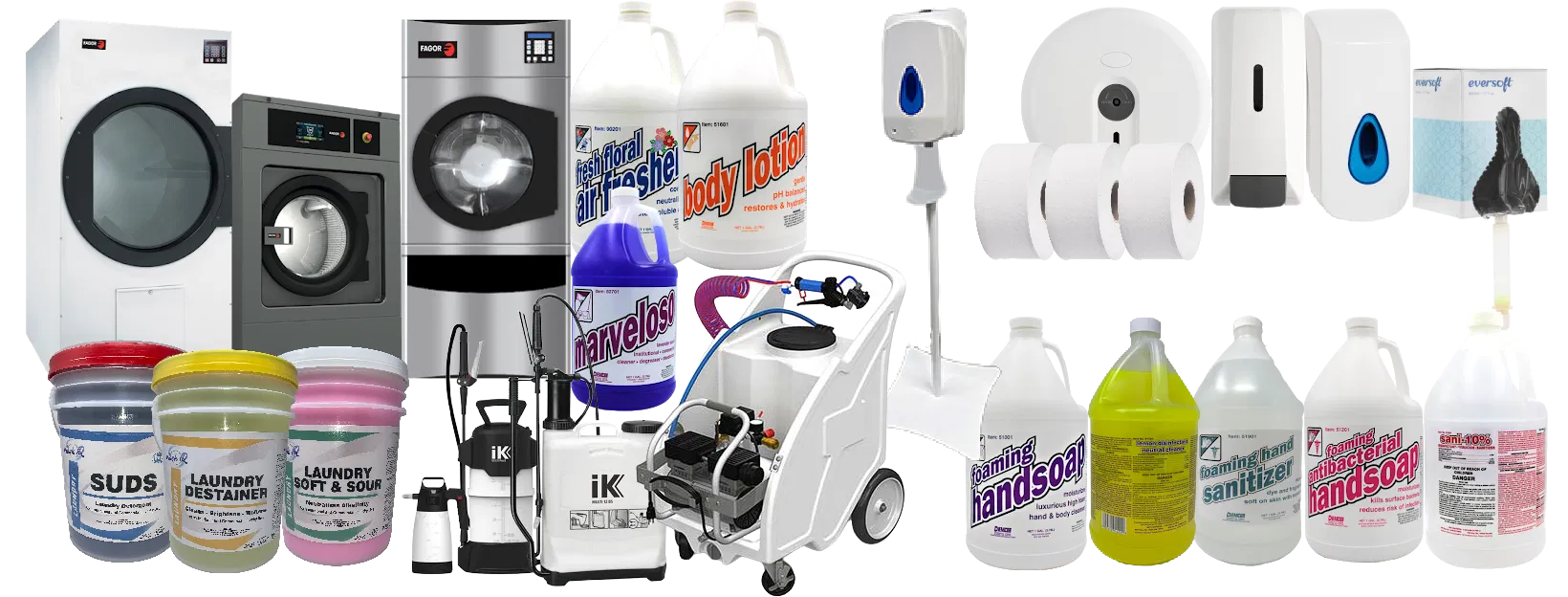
Wash IQ’s commercial-grade laundry detergent is formulated for institutional and commercial requirements and is suitable for high-efficiency and regular machines. The broader laundry detergent product category also includes destainers and softener products that can support a complete chemical program.

Chemical programs should be reviewed whenever there is a change in water quality, textile inventory, soil conditions, equipment, or wash temperature. A chemical supplier or laundry specialist can help verify dosing, cycle timing, and product selection through an operational assessment.
Measure the Results and Correct Process Drift
Operational excellence is sustained through measurement. Facility managers should establish a simple dashboard that connects laundry performance to business outcomes.
Recommended measurements include:
- Pounds processed per labor hour.
- Rewash percentage.
- Utilities cost per pound.
- Chemical cost per pound.
- Dryer cycle time and average drying temperature.
- Equipment availability and downtime hours.
- Preventive maintenance completion rate.
- Linen discard and replacement rate.
- Customer or department complaints.
- On-time delivery of clean textiles.
Performance data should be reviewed by machine, shift, product category, and operator team where practical. For example, a rise in rewash on one shift may indicate incorrect loading, cycle selection, dosing, or sorting. A gradual increase in dryer time may point to restricted airflow, inadequate extraction, or a developing mechanical issue.
The goal is not to collect data without action. Each unfavorable trend should lead to a defined corrective measure, responsible owner, and follow-up date.

A Practical Roadmap for Facility Managers
A structured improvement program can be implemented in stages:
- Assess current performance: Map the workflow and establish baseline production, quality, cost, and downtime metrics.
- Identify constraints: Locate bottlenecks in sorting, washing, drying, finishing, staffing, utilities, or storage.
- Standardize procedures: Document loading, cycle selection, chemical handling, inspection, and maintenance requirements.
- Optimize equipment use: Match load sizes and programs to textile categories and peak demand.
- Implement preventive maintenance: Schedule tasks, assign responsibility, and document completion.
- Review chemical performance: Calibrate dosing and connect chemical cost to rewash and quality results.
- Train and verify: Use shift huddles, checklists, and regular audits to maintain consistency.
- Plan for growth: Reassess capacity, layout, and equipment condition as volume changes.
Build a Reliable Laundry Operation for the Long Term
Industrial laundry operational excellence is achieved through disciplined coordination of equipment, people, processes, and service support. High-quality industrial laundry equipment provides the necessary production capacity, but workflow optimization and maintenance discipline determine whether that investment delivers its full value.
By designing a logical flow, selecting efficient commercial washers and dryers, applying chemical optimization, and scheduling Expert repair before failures become disruptive, facility managers can improve reliability while controlling total operating cost.
Wash IQ supports businesses from single locations to multi-site operations with equipment sales, design services, efficiency reports, chemical support, and ongoing maintenance. Explore Wash IQ’s complete laundry solutions to create a more efficient, reliable, and sustainable operation.