
How to Cut Chemical Costs Without Sacrificing Linen Quality in Your OPL Laundry
In today’s competitive market, on-premise laundries must control operating costs while delivering clean, presentable linen on schedule. Chemical spend is one place to look for savings, but reducing doses without understanding the wash process can lead to stains, rewashes, residue, and avoidable linen wear.
Effective chemical optimization is not simply about using less product. It is about delivering the right chemistry, in the right amount, at the right point in the wash formula. For hotels, hospitals, banquet halls, and commercial laundries, a measured approach can help reduce chemical costs while protecting linen quality and operational consistency.
Start with a chemical-use audit
Before changing a formula, establish how the laundry currently operates. Build an inventory of the products in use and record the formula, washer, load type, typical load weight, and programmed dose for each. Compare the programmed amount with actual chemical consumption, using product inventory or calibrated dispensing data where available.
Review results alongside usage. Useful measures include:
- Chemical cost per pound or kilogram of linen
- Product volume used per load and by formula
- Rewash rate and common stain or odor complaints
- Linen condition, including graying, residue, and fabric wear
- Water hardness, wash temperatures, and final-rinse pH
Segmenting this information by washer, shift, and linen type can reveal variation that a site-wide average conceals. A formula used for heavily soiled kitchen linens may not be appropriate for lightly soiled guest sheets. Sorting laundry by fabric and soil level helps match the wash process to the work instead of treating every load as a worst-case load.
The U.S. Chemical guide to institutional laundry describes how time, temperature, mechanical action, product concentration, water quality, equipment, and soil all influence results. Those factors should be considered together when reviewing an OPL, not as isolated settings.

Avoid both overdosing and underdosing
Overdosing may seem like a way to ensure that linen comes out clean, but excess chemistry does not guarantee better results. It adds unnecessary product cost and can contribute to residue, difficult rinsing, fabric damage, or irritation from improperly rinsed textiles. Excess softener can also affect absorbency. An important concern for towels and some healthcare textiles.
Underdosing creates a different set of costs. Insufficient chemistry for the soil, water conditions, load, or wash formula can leave soils behind, dull whites, or produce odor and stains. The resulting rewash consumes more chemicals, water, energy, labor, and machine time. It can also delay linen returning to service.
Neither problem should be corrected by making a blanket dose change. If results are poor, first check other causes: Was the load weighed and loaded appropriately? Is the washer reaching the intended water level and temperature? Are the correct products being injected at the right point in the formula? Is hard water affecting cleaning performance? A controlled trial, changing one variable at a time and checking linen quality, gives a clearer answer than increasing every product at once.
Improve control with calibrated dosing
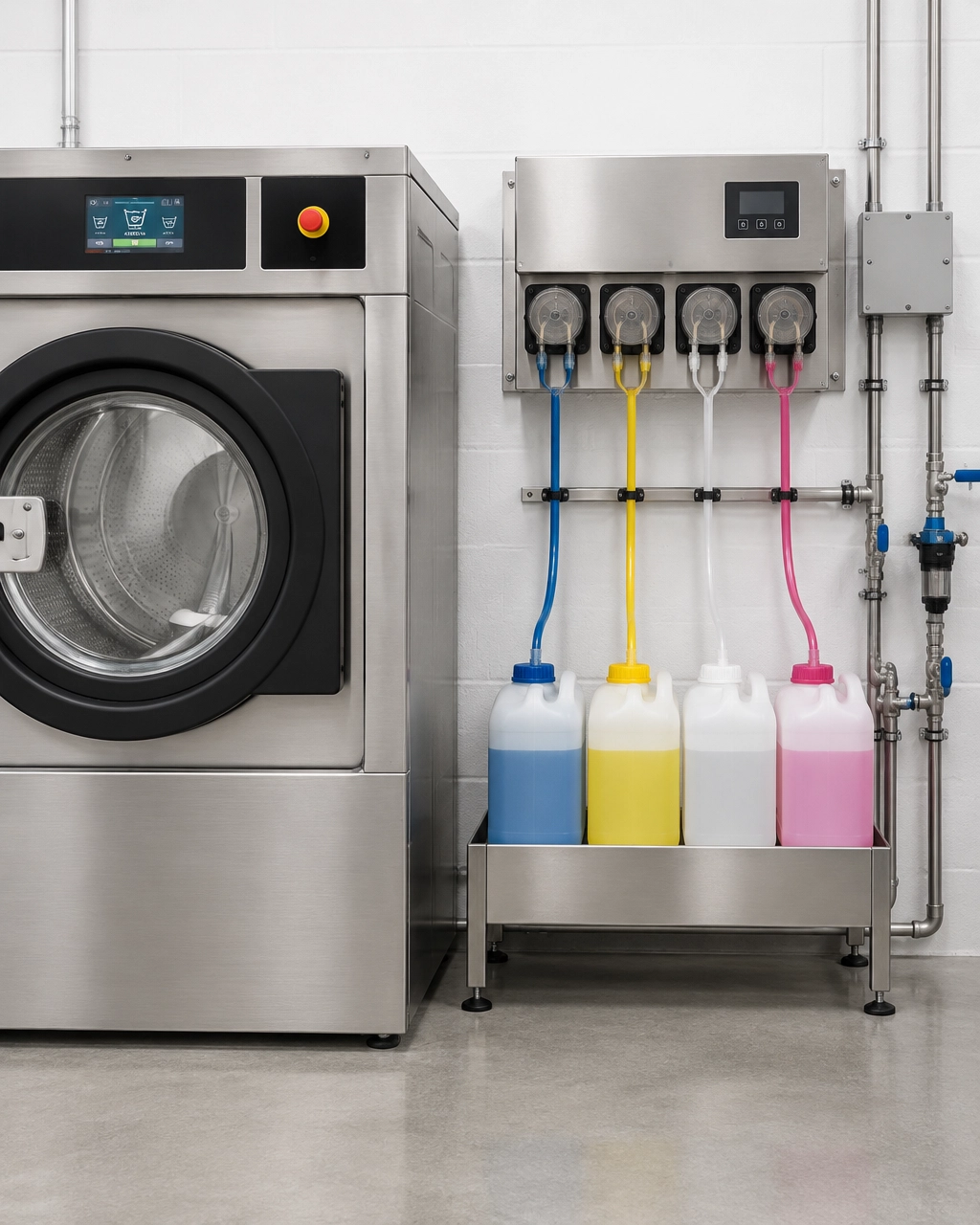
Manual measuring can vary by operator and shift. Automatic dosing equipment can deliver formula-specific amounts more consistently, while a closed-loop setup can connect dosing to the washer program and, where supported, the load weight. This can help prevent a fixed dose from being applied indiscriminately to loads of different sizes.
Automation is only as dependable as its setup and maintenance. Pumps should be calibrated and checked regularly; product lines should be inspected for leaks, restrictions, or wear; and formula settings should be reviewed after changes to equipment, chemistry, or laundry practices. Confirm that the intended product is being dispensed at the correct stage of the cycle. Follow chemical manufacturer instructions, product safety data sheets, and applicable hygiene requirements.
The Electrolux Professional EDS installation manual provides an example of a washer-synchronized dosing system. It describes weight-based dose adjustment, formula storage, pump calibration, and report functions. The specific features available depend on the equipment and configuration installed at a facility.

Compare concentrates by cost per finished load
Concentrated formulas can reduce the volume of product that needs to be stored and handled. But comparing a concentrated product with a standard formula by container price alone can be misleading. The more useful comparison is the verified cost to process a consistent amount of linen at an effective dose.
During a trial, track product cost per load or per pound of linen, cleaning results, rewash, rinse requirements, and any compatibility considerations for pumps and tubing. Keep soil mix, load weight, and wash conditions as consistent as possible. A concentrate is a sound choice when it meets linen-quality requirements and improves the operation’s overall economics, not simply because less product is poured.

Account for water hardness and temperature
Water quality has a direct effect on chemical performance. Calcium and magnesium in hard water can interfere with cleaning chemistry and contribute to mineral deposits, graying, or redeposition on fabric. The U.S. Chemical guide notes that softening is recommended above 7 grains per gallon of hardness, though the right response for any facility depends on its water and wash process. Test both hot and cold supplies, and verify that any water-softening equipment is operating as intended.
Temperature matters as well. It affects how well some products work, but raising wash temperatures can increase energy use; lowering them without validating the formula can affect cleaning or hygiene outcomes. Do not assume that more heat, or more detergent, will fix a problem caused by water quality, loading, equipment, or formula timing. Test actual wash conditions, consult chemical and equipment providers, and follow the facility’s validated hygiene protocols, especially for healthcare linen.
Use an efficiency report to identify practical savings
An efficiency report connects chemical consumption to laundry outcomes. It can compare product use by formula or machine, highlight unexpected consumption, and help identify where dosing settings or operating practices may warrant review. Read those findings alongside rewash, linen condition, and water and temperature data: a lower chemical figure alone does not demonstrate a successful improvement.
Wash IQ provides chemical cost optimization as part of its support for industrial laundry operations. An efficiency review can help identify opportunities such as inconsistent dosing, a mismatch between formula and soil level, issues with water conditions, or a need to check equipment. Findings should lead to practical, prioritized recommendations, not untested dose reductions. Learn more about Wash IQ’s services on the Wash IQ website.
Make changes carefully and verify the results
A dependable optimization process starts with a baseline, examines dosing and operating conditions, and tests proposed changes against measurable quality requirements. Document approved formulas so that results remain consistent across staff and shifts. Then review cost per unit of linen, rewash, linen condition, and relevant hygiene measures over time.
For an OPL, the goal is not simply to buy less chemistry. It is to use chemistry efficiently while delivering safe, clean, ready-to-use linen. With a thorough audit, calibrated dosing, attention to water conditions, and an evidence-based efficiency report, facilities can pursue lower chemical spend without making linen quality a risk.