The Facility Manager’s Guide to Winter Laundry Operations at Hotels and Resorts
In today’s competitive hospitality market, reliable laundry operations are essential to guest satisfaction and event readiness. For hotels and resorts, winter can bring a demanding mix of conference bookings, holiday banquets, changing occupancy patterns and colder conditions that affect equipment and building systems.
Preparing early helps facility managers protect linen availability, maintain consistent wash quality and reduce the risk of an equipment outage during a peak service period. This guide covers the key winter considerations for your laundry room, and practical steps to take before the rush begins.
Plan for demand, not just occupancy
Room occupancy is only one part of a hotel’s laundry forecast. Conference turnover can increase guest-room linen volume, while banquets add tablecloths, napkins, kitchen textiles and uniforms. These peaks may arrive on different schedules, and a single large event can create a concentrated demand for clean, finished linen.
Review booking and event calendars with housekeeping, food and beverage, and banquet teams. Use recent usage data to estimate daily and peak-day demand, then compare that forecast with available labor, machine capacity and operating hours.
Set linen par levels with service intervals in mind: how long washing, drying, finishing and delivery take, and how much reserve is needed if an event runs late or equipment is temporarily unavailable. A par level should support the real operating cycle, not simply the average day. Confirm which items are most critical and agree on a priority plan for event nights.
Keep humidity and condensation under control
Cold weather changes how moisture behaves in the laundry room. Warm, humid air can condense on cold exterior surfaces, windows and ductwork, especially when ventilation is poorly balanced. Persistent dampness can damage finishes, contribute to mold growth and affect linen storage.
Check room temperature and humidity during operating hours, and look for visible condensation, damp insulation, musty odors or water staining. These signs call for investigation of ventilation, insulation and moisture sources, not just wiping surfaces or adding a portable dehumidifier.
Dryers need adequate make-up air as well as effective exhaust. If the laundry room is starved of replacement air, dryers may take longer to dry and exhaust systems may draw air from corridors or adjacent spaces. Have an HVAC or laundry-equipment professional assess system balance before making seasonal adjustments to dampers or ventilation controls.
Inspect dryer venting and lint controls
With windows and exterior doors kept closed, proper mechanical ventilation becomes even more important. Lint screens are a daily control, but lint can also accumulate in dryer ducts, fan housings and exterior terminations. Restricted airflow can affect drying performance and raise safety concerns.

Before winter, inspect accessible lint screens, duct cleanouts and exterior vent terminations. Check for damaged connections, lint buildup, loose seals, obstructions and signs of moisture. Where ducts pass through unheated areas, ask a qualified contractor to assess insulation, drainage and the potential for condensation or ice.
Do not block vents, bypass safety devices or alter ductwork without checking equipment instructions and local code requirements. PNNL’s guidance on proper clothes dryer venting explains why properly designed, maintained vent systems matter. Set a cleaning schedule based on actual lint accumulation and laundry volume, and document inspections so changing performance is easier to identify.
Protect exposed lines, valves and vents from freezing
A cold snap can affect more than water pipes. Supply lines, shutoff valves, drain lines, chemical tubing and exterior dryer terminations may all be vulnerable, especially in older buildings or unheated service areas.
Walk the route of exposed plumbing and dosing lines. Check insulation and seals where lines pass through exterior walls, and confirm that mechanical and chemical rooms remain within the operating temperature ranges specified by equipment and chemical suppliers. Include valves and pipe connections in the inspection; a short exposed section can be the weak point in an otherwise protected line.
Inspect exterior vents for snow, ice or other obstructions during severe weather. If airflow appears restricted or equipment shows an alarm, stop and follow the manufacturer’s instructions and your facility’s procedures. Do not chip ice or clear a vent while a dryer is operating. For freeze protection or shutdown procedures, consult qualified professionals and the relevant manufacturer guidance rather than improvising.
Check water temperature and chemical delivery
Incoming water temperature can vary by season, and that variation may affect wash results, cycle performance and chemical use. Monitor actual water temperatures at the equipment and compare them with the programmed formulas and supplier recommendations. Do not assume the displayed setting reflects the temperature reaching every machine.
Cold weather can also affect chemical storage and delivery. Some products or dosing components may perform differently outside their stated temperature range. Keep products stored according to their labels and safety data sheets, and inspect tubing, pumps and valves for leaks, air ingress or visible changes after a temperature drop.
Avoid increasing chemical doses by guesswork. Confirm pump delivery and review wash results, rewash rates and linen quality with your chemical supplier. Chemical optimization is especially useful when occupancy rises: the objective is to deliver the right product and quantity for the water, load and soil conditions, not simply more product per cycle. Wash IQ’s commercial laundry guidance on hard water offers additional context on a factor that can influence wash performance.

Match throughput to your peak schedule
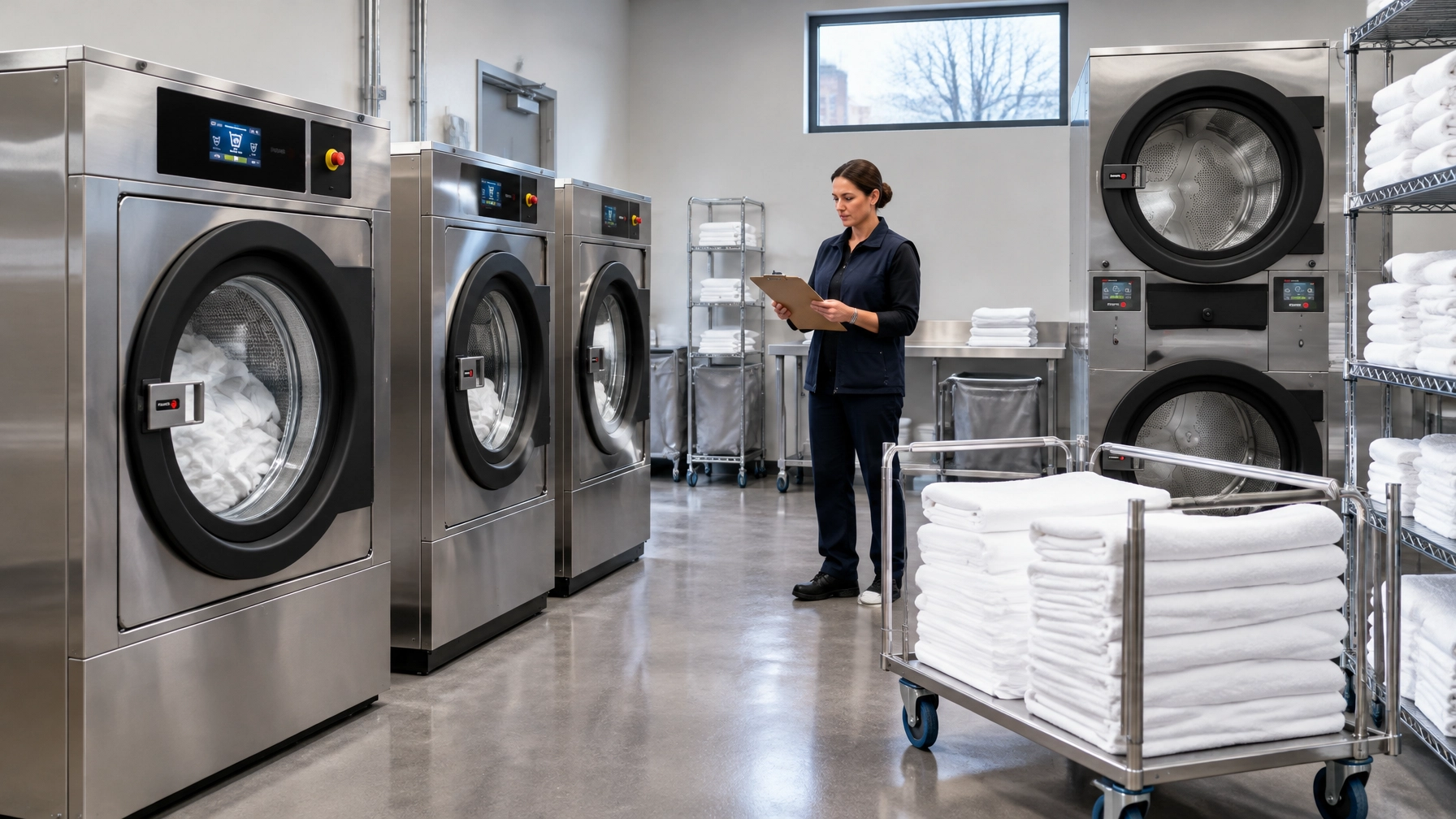
When demand rises, the entire process needs to keep pace: sorting, loading, washing, drying, finishing and delivery. Commercial washers and dryers should be assessed as a coordinated system. A washer’s capacity may exceed the drying or finishing capacity available downstream, creating queues even when the wash floor appears adequately equipped.
Map typical and peak-hour workflow. Identify where carts accumulate, where staff wait for equipment, and whether machine capacity matches the size and type of hotel loads. Confirm that staff follow recommended load weights and cycle settings; overloading can compromise results and undermine projected throughput.
For properties seeking to expand or reorganize, OPL laundry solutions should be planned around workflow, utilities, ventilation, staffing and future demand, not just the footprint of the machines. Wash IQ provides industrial laundry equipment and design services to help businesses assess layout and operational needs. Its installation and maintenance service overview describes support from planning through ongoing service.
Schedule preventive maintenance before the holiday rush
A machine failure during a banquet weekend can quickly become a linen and staffing problem. Schedule preventive maintenance and any needed expert repair before peak demand begins, rather than waiting for an issue to appear mid-season.
Ask a qualified technician to inspect machine operation, safety controls, water and drain connections, seals, belts and other serviceable components according to manufacturer recommendations. Review dryer airflow and performance, and report changes such as longer cycles, unusual vibration, leaks or inconsistent results. A small issue identified early may be easier to address than a failure during full occupancy.

Wash IQ provides repair and maintenance for any brand of laundry equipment and brings more than 50 years of industry experience. Routine service can help protect uptime and make repair planning more predictable; see Wash IQ’s article on routine commercial laundry maintenance. Wash IQ also offers a three-year parts and labor warranty on its products. Review the terms for specific equipment when planning a purchase.
Winter readiness checklist
Before the seasonal rush, confirm that your team has:
- Reviewed occupancy, conference and banquet calendars against daily and peak-day laundry capacity.
- Checked linen par levels and established priorities for high-demand events.
- Monitored room humidity and investigated condensation or dampness.
- Inspected lint screens, accessible ducts and exterior dryer terminations.
- Confirmed make-up air and exhaust systems are operating as intended.
- Checked exposed water, drain and chemical lines, valves and insulation.
- Verified chemical storage temperatures, pump operation and wash results.
- Reviewed equipment condition and scheduled preventive maintenance.
- Recorded emergency contacts, service procedures and equipment shutdown guidance.
Winter readiness is not a one-time inspection. Track cycle times, rewash rates, lint accumulation and service issues through the season, then adjust maintenance and staffing plans as conditions change. For support with equipment, facility planning, efficiency reviews or chemical optimization, contact Wash IQ to discuss the needs of your hotel or resort.